Serving Eagan, MN & nearby
(651) 401-2195
Eagan, MN

Replacing a Garage Door in Eagan: What the Housing Stock and Climate Mean for You

Most Eagan houses went up between 1956 and 2004, median year 1973. Here's how that build era and our cold climate affect a replacement door decision.

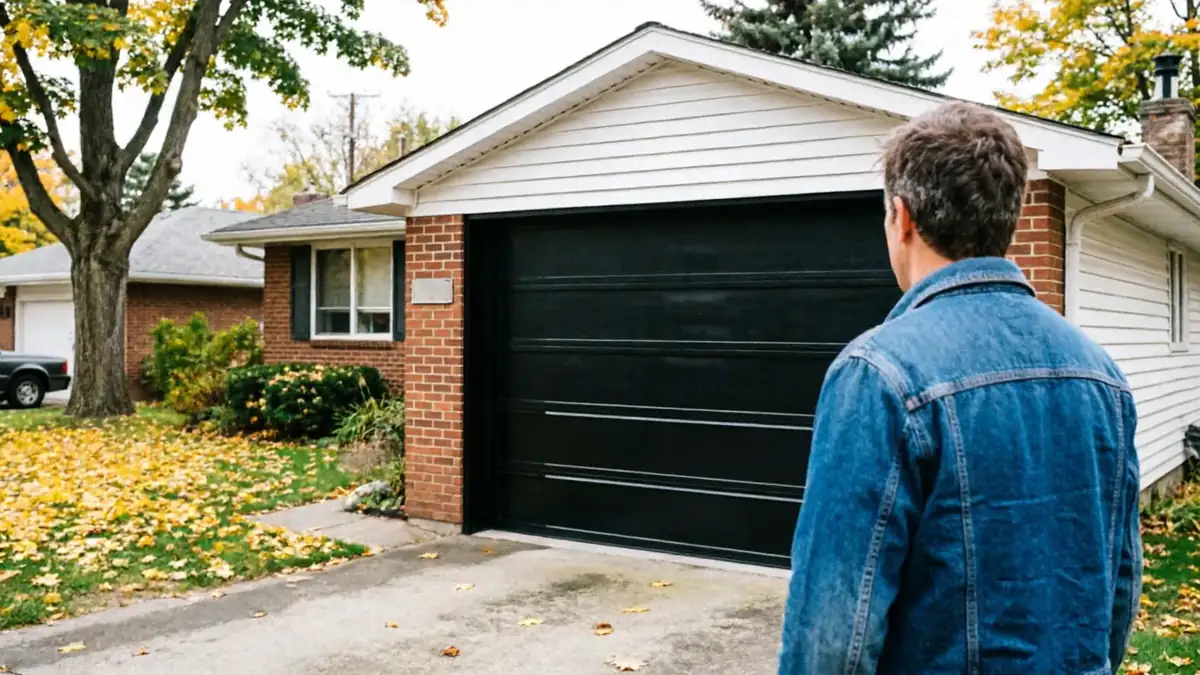
A technician in a denim jacket stands facing a black garage door on a brick house.

Checking It Yourself

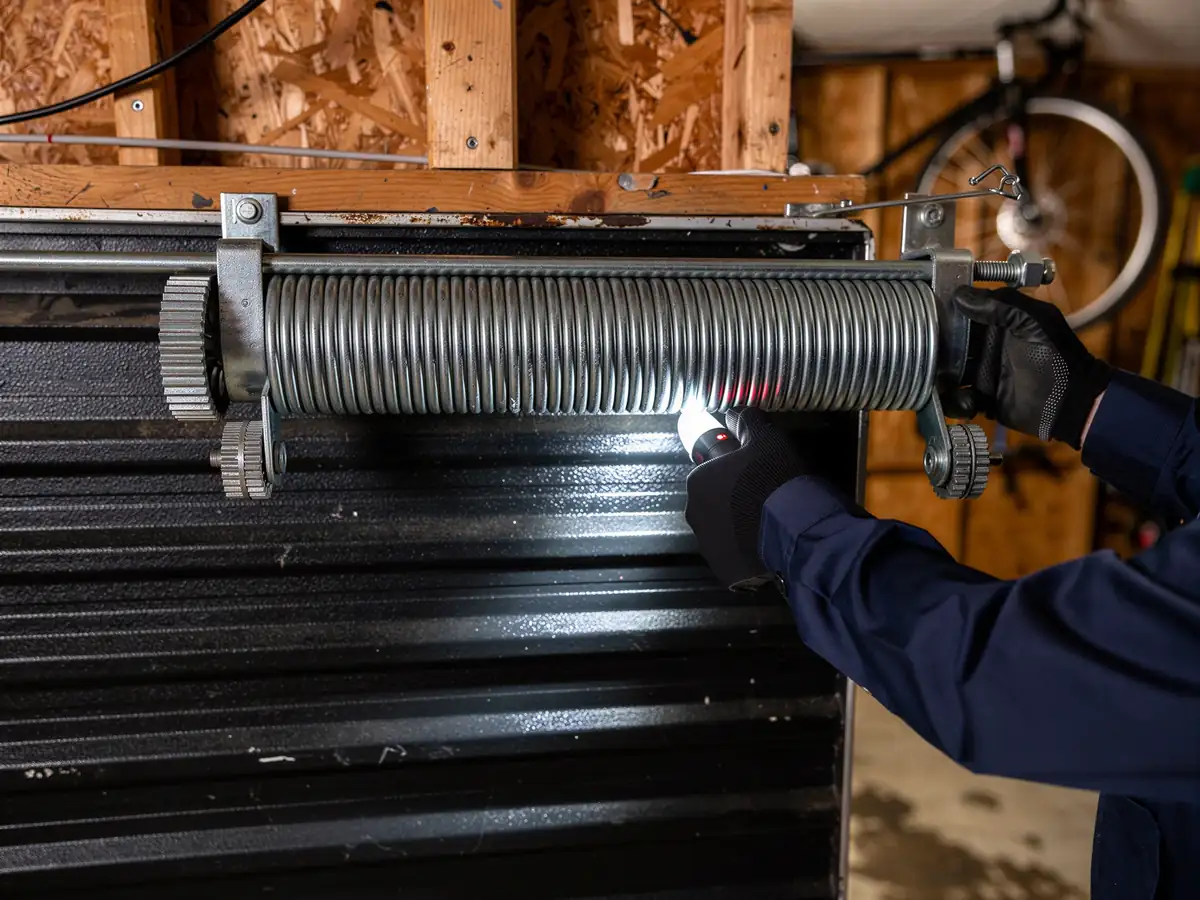
Walk out and look at the door from the driveway, not just up close. If your house falls in the 1956 to 2004 range that covers most of Eagan - and the median build year here is 1973 - there's a decent chance the door in front of you isn't the original, but the opening and track spacing might still be sized to older hardware. Check the panel seams for rust bubbling at the bottom few inches, since that's where moisture sits longest. Press your thumb against the inside of a panel: if it flexes with no resistance, there's no insulation layer, which matters more here than in a milder climate. Look at the spring - one thick torsion spring overhead, or two stretched springs along the horizontal track on either side. Older housing stock in this area tends toward the single torsion setup if it's been updated at all, and the original extension-spring doors if it hasn't. Neither is wrong, but parts availability differs between them, and that's worth knowing before you call anyone for a quote. If the door still opens and closes square, without binding, you may not need a conversation about replacement at all.

Doing Nothing For Now

Not every issue means a new door. A dented panel that still seals and still balances evenly on the track is a cosmetic problem, not a structural one, and we'll tell you that straight if that's what's in front of us. Doors from the 1973-median build era that have had even one spring replacement along the way often have plenty of working life left in the frame and panels. Where we draw the line is insulation and seal failure in a door that's original to a house built in that 1956 to 2004 window - a door with no foam core is going to cost you more in heating loss every winter than it would to replace, given our cold climate band. That's a judgment call, not a hard rule, and we won't push a sale on a door that's sound. One limitation worth naming: we don't carry every obsolete panel profile for doors from the earliest end of that build range, so matching a single damaged panel on a 1960s door sometimes isn't possible, and full replacement becomes the practical answer rather than a repair.

The Problem

The bulk of Eagan's housing stock dates to the 1960s and '70s, and a lot of garage doors out there are either the originals or a first-generation replacement from decades back. Those doors were built for a climate expectation that didn't account for the insulation standards homeowners expect now. Non-insulated steel and older wood doors transmit cold directly into an attached garage, and in a cold moderate climate band like ours, that means a wall-adjacent room - sometimes a laundry or mechanical room - runs colder than it should all winter. Add to that springs and cables sized to the lighter weight of a single-layer door; if you swap in a heavier insulated door without resizing the torsion spring, the opener strains and the door doesn't balance right. That's the actual failure point we see: a homeowner buys an insulated replacement, a installer doesn't recalculate the spring, and the new door is harder to lift by hand than the old one ever was. Getting the spring sized to the new door's weight is the part that gets skipped, and it shouldn't be.

How Local Conditions Play In

Eagan's service area runs roughly 241,852 households, with about 104,140 of those owner-occupied houses - a large base of homeowners making this exact call every year, not renters who can defer it. Median household income here sits at $92,940, which is enough that most owners can choose an insulated door up front rather than patch a non-insulated one twice and pay for it in heating costs anyway. The cold moderate climate band is the other half of the decision: a door rated for a mild climate loses its advantage fast once temperatures drop for months at a stretch, so the R-value conversation matters more here than it would somewhere with a shorter winter. None of this changes the mechanics of measuring an opening or choosing a panel style - that part's the same everywhere. What changes is the math on insulation payback and the spring weight calculation, both of which depend on the age and type of door already hanging in the opening, and that's specific to what's actually out there in this housing stock.
How it works

From “it’s stuck” to “it’s fixed”

  1. 1
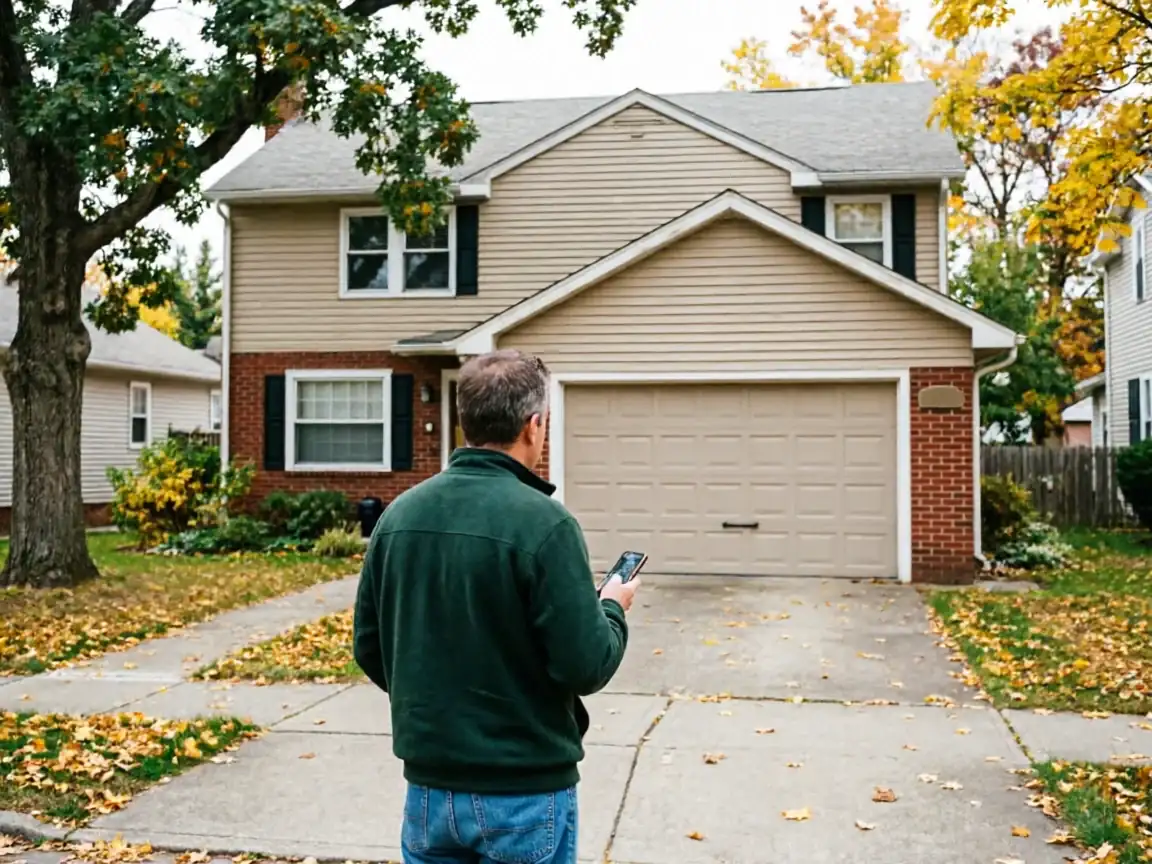
    A man stands in a driveway looking at a phone in front of a house.

    Tell us what’s wrong

    Describe the symptom - won’t open, loud bang, opener runs but the door won’t move.

  2. 2
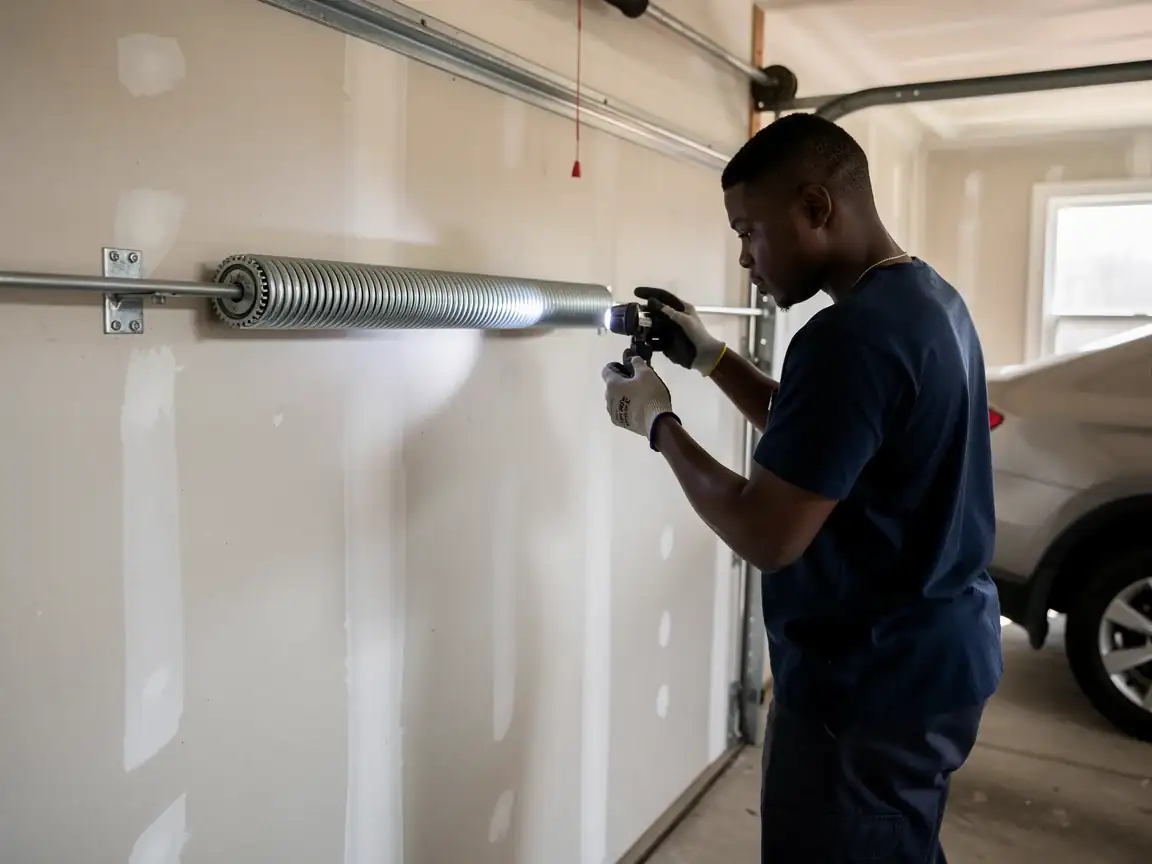
    A technician shines a light on a garage door torsion spring.

    On-site diagnosis

    A technician tests the door under power and by hand and finds what actually failed.

  3. 3
    A technician in a blue uniform talks to a man in front of an open garage.

    Clear, up-front plan

    You get the fix that’s needed and what drives the cost - before any work starts.

  4. 4
    A technician in gloves adjusts a beige garage door.

    Repaired & tested

    The repair is done, the door is set true and tested, and the work area left clean.

Not sure which repair your door needs in Eagan, MN? Describe what it’s doing - every job starts with a diagnosis.

How we work

What to expect

Diagnosis firstEvery visit starts by finding what actually failed - not a pre-written parts list.
The right part for the doorSprings and openers matched to the door’s weight and age, so the fix holds up.
Straight answersWhen a repair makes more sense than a replacement - or the reverse - you hear it plainly.
Clean, careful workTension released safely, hardware set true, the door tested under power before we leave.
What we do

Garage Door Services

Repair and installation work for Eagan homes and businesses.

Questions

Frequently asked

Straight answers about garage door repair in Eagan. Still unsure? Ask us directly.

Is my garage door original to the house if my home was built in the 1970s?

It's possible but not guaranteed. A lot of Eagan houses from that median 1973 build year have had at least one door replacement by now, especially if the original spring failed. The giveaway is usually the panel material - steel doors from that era often show rust patterns and a flatter, less textured face than anything installed in the last twenty years.

Do I need an insulated door if my garage isn't heated?

Even an unheated garage benefits in a cold moderate climate, because an insulated door slows how fast the space drops to outdoor temperature, which protects anything stored there and reduces the cold wall effect on an attached living space. It's not mandatory, but given our winters it's usually worth the difference in cost.

Why did my new insulated door feel heavier to open by hand than my old one?

Insulated doors weigh more than single-layer steel, and the torsion spring has to be sized to that new weight. If the installer reused the old spring instead of recalculating for the heavier door, the opener and the spring are both undersized for the job, which is a common miss on replacement jobs in older homes.

Ready to get your garage door sorted?

Tell us what it’s doing and where you are in Eagan - we’ll take it from there.

Request a QuoteCall