Checking It Yourself
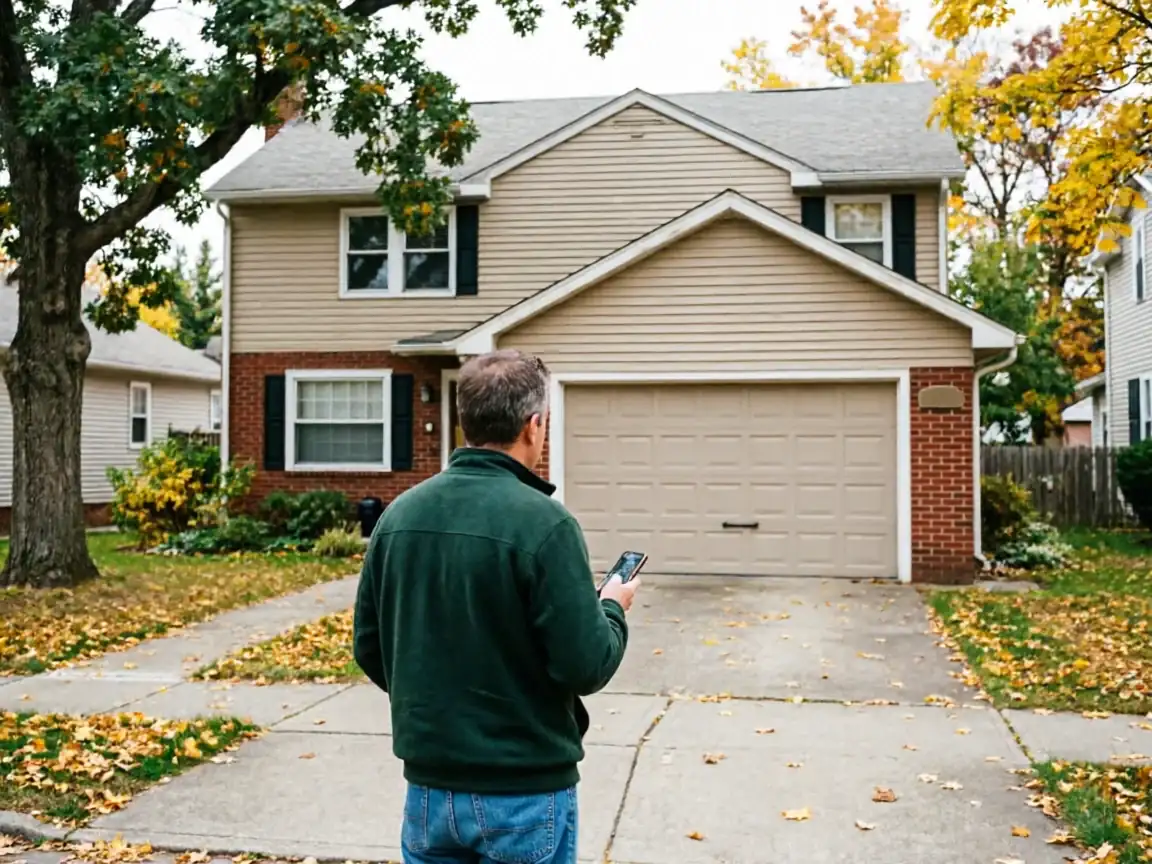
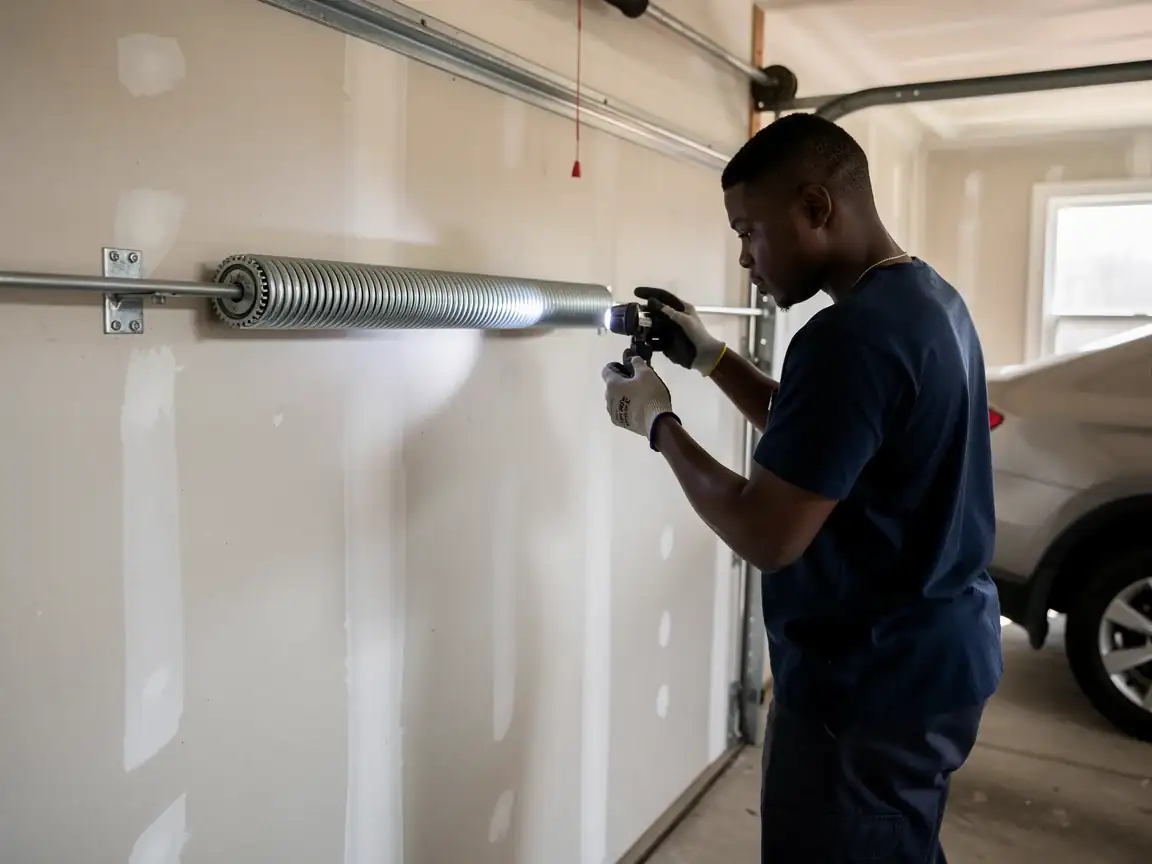
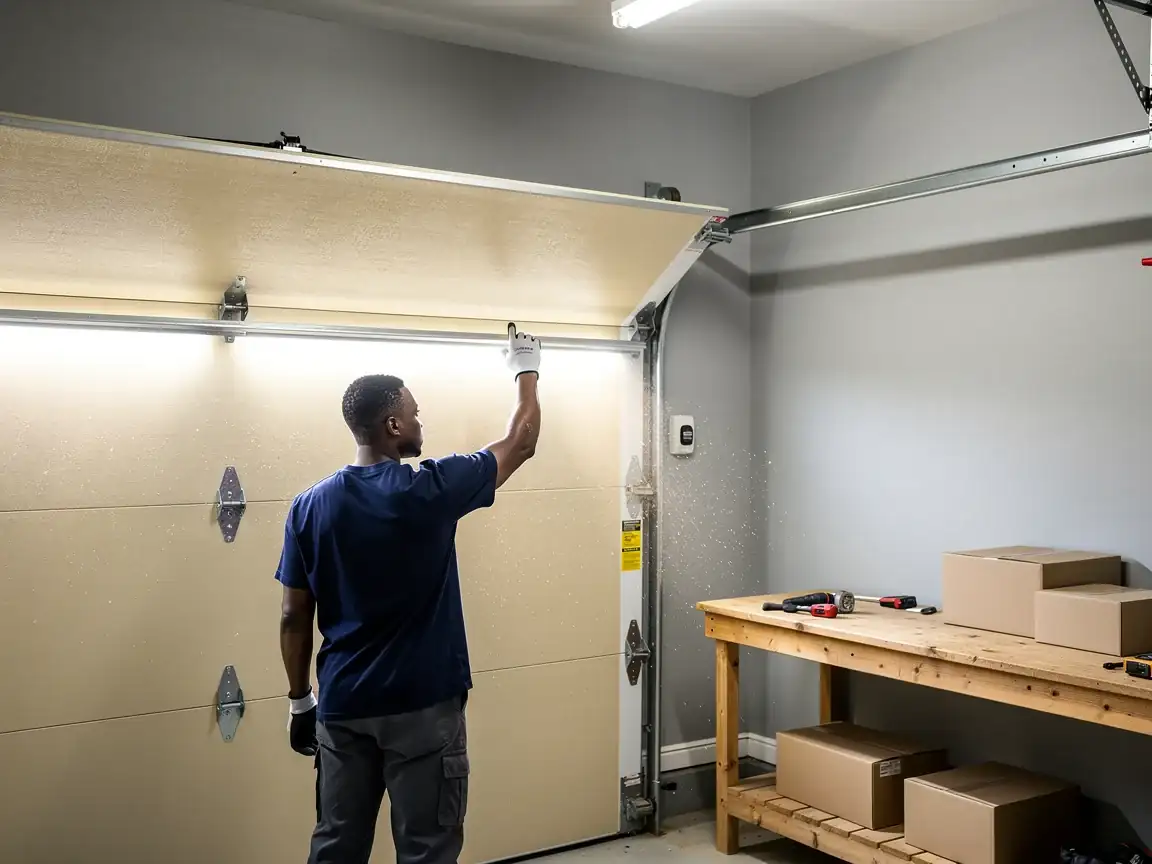
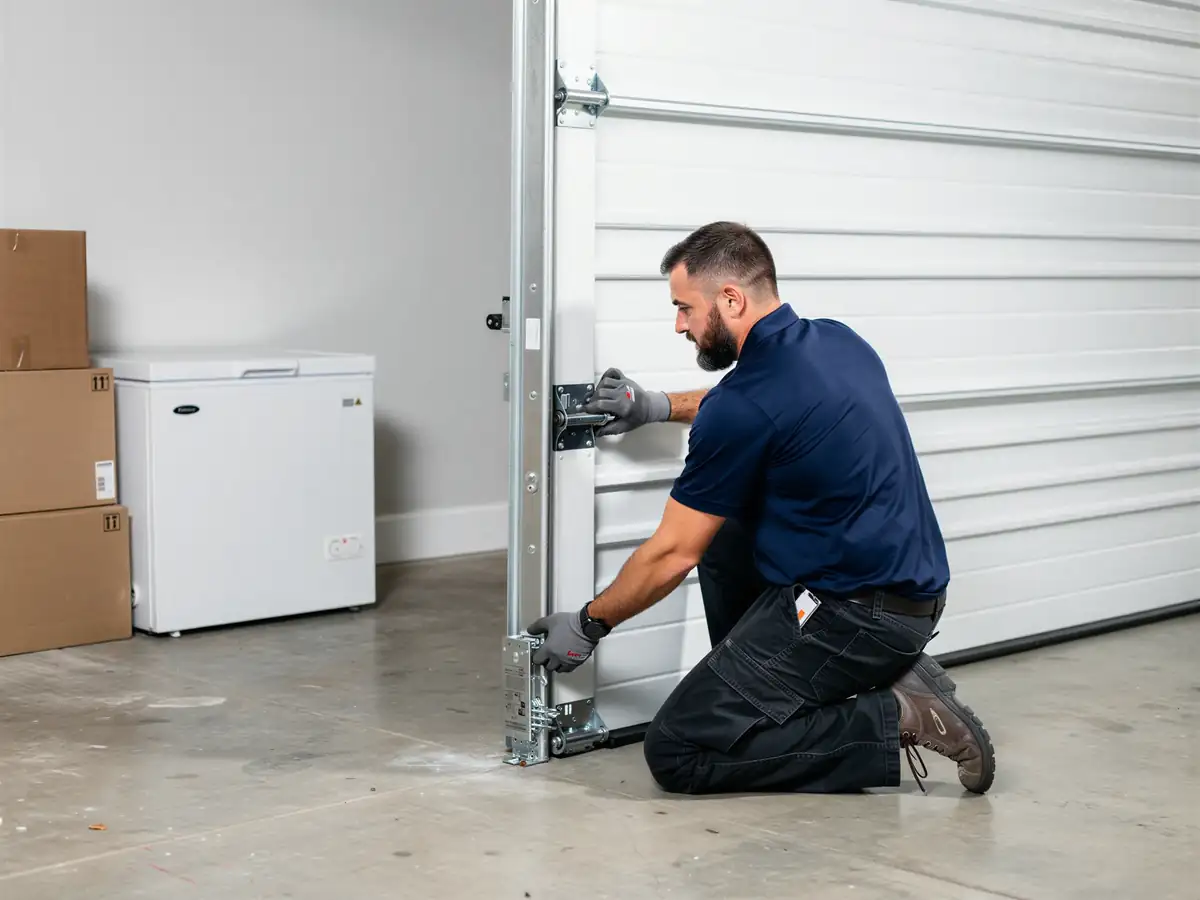
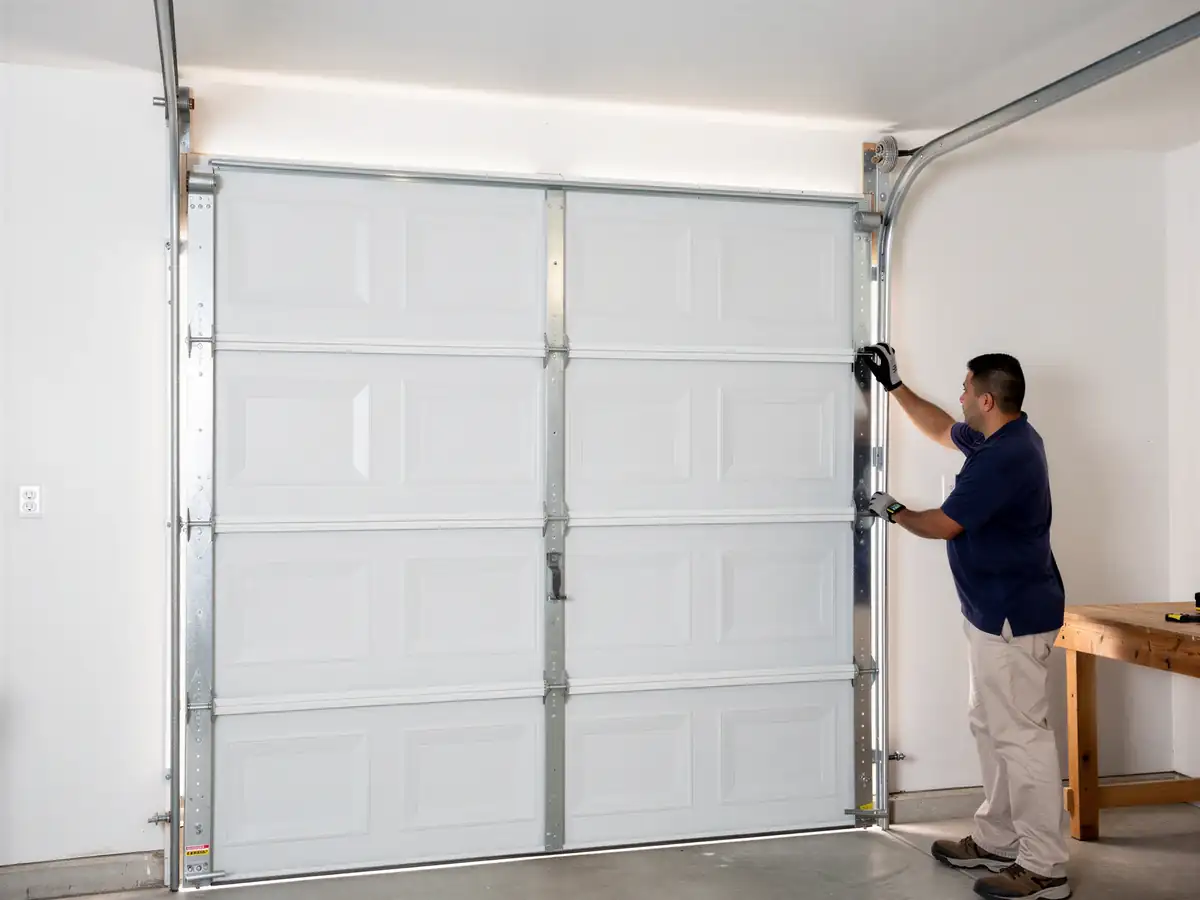
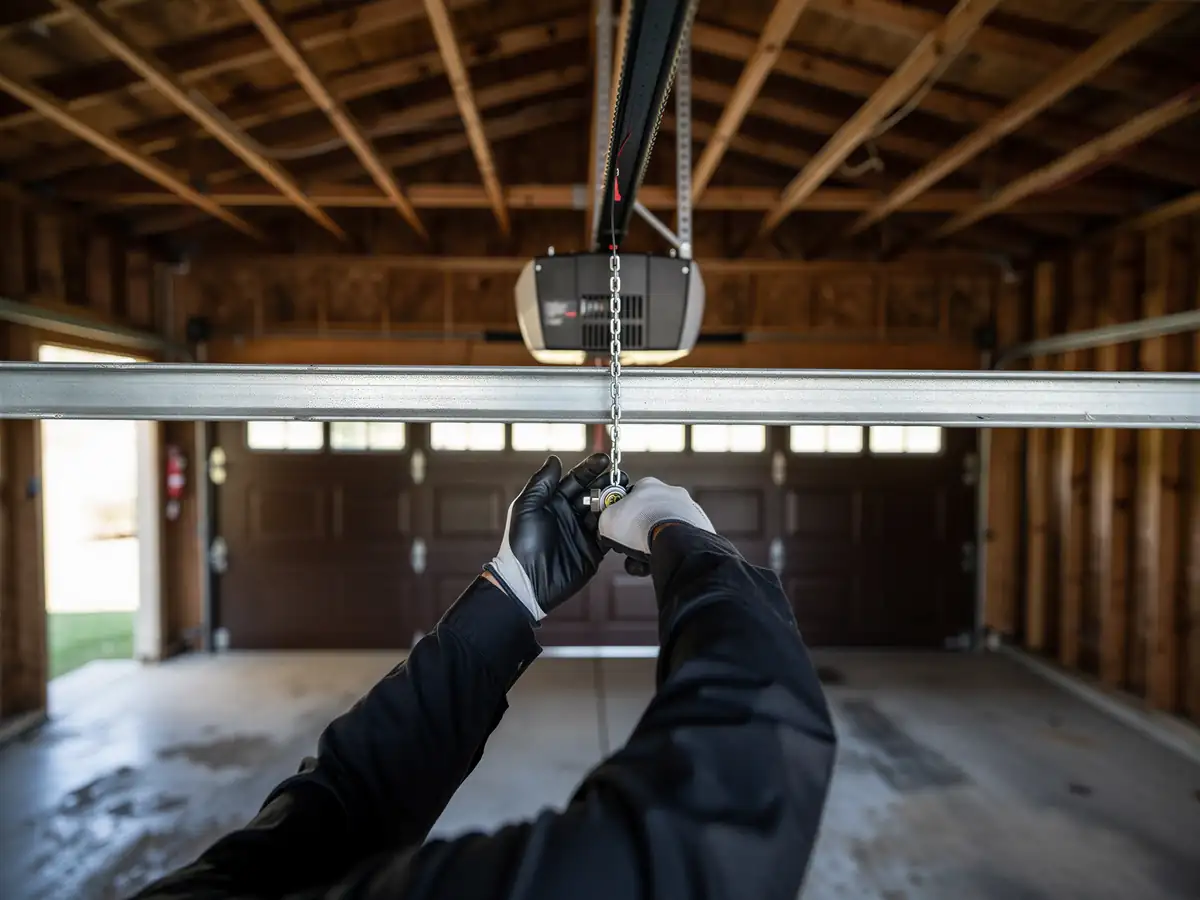
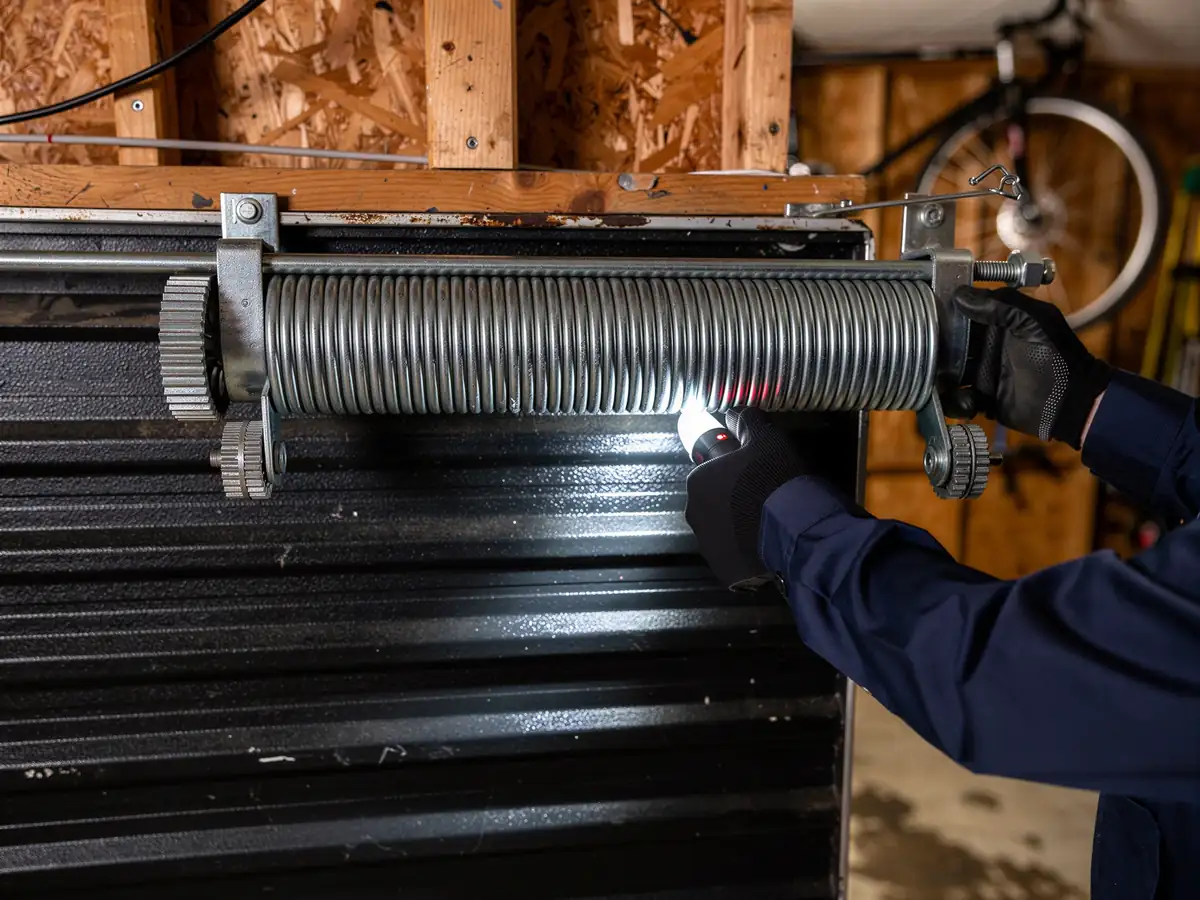
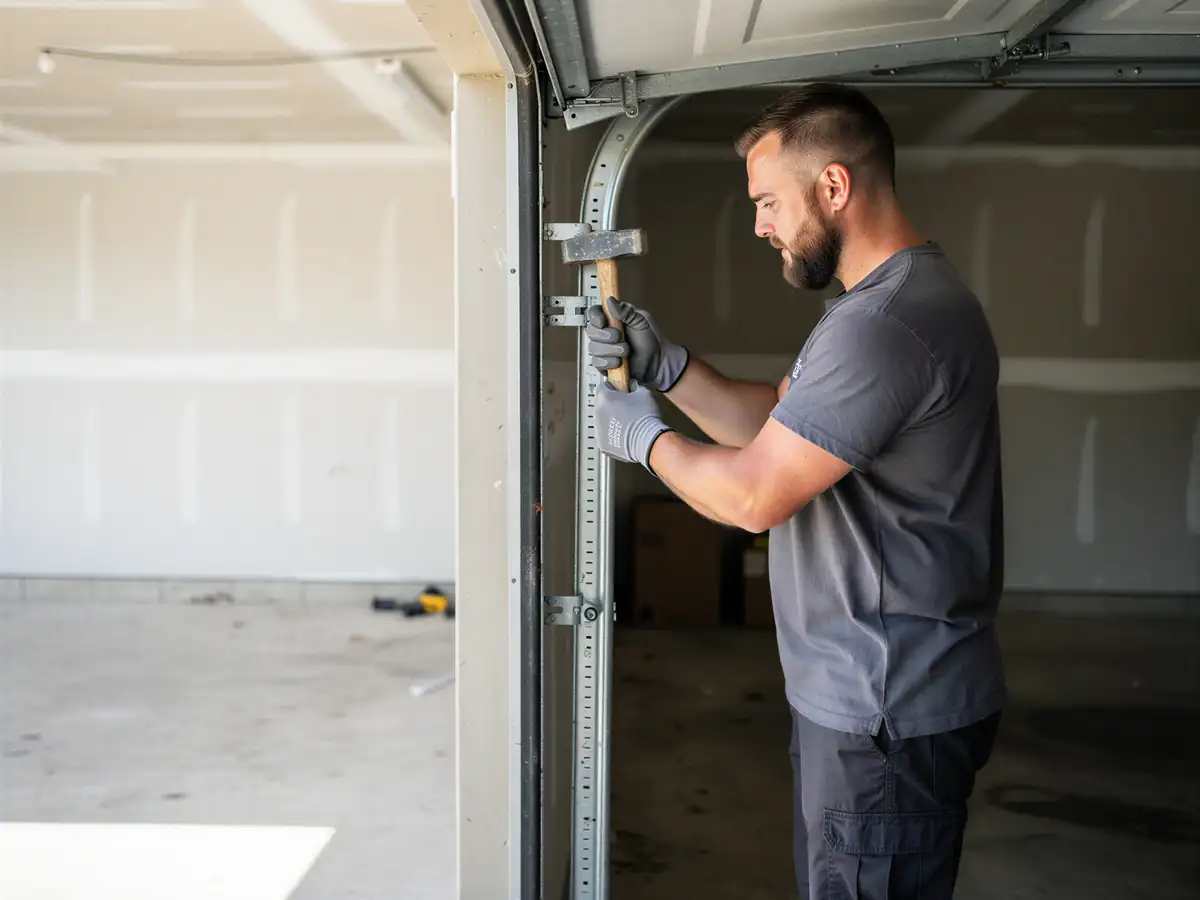
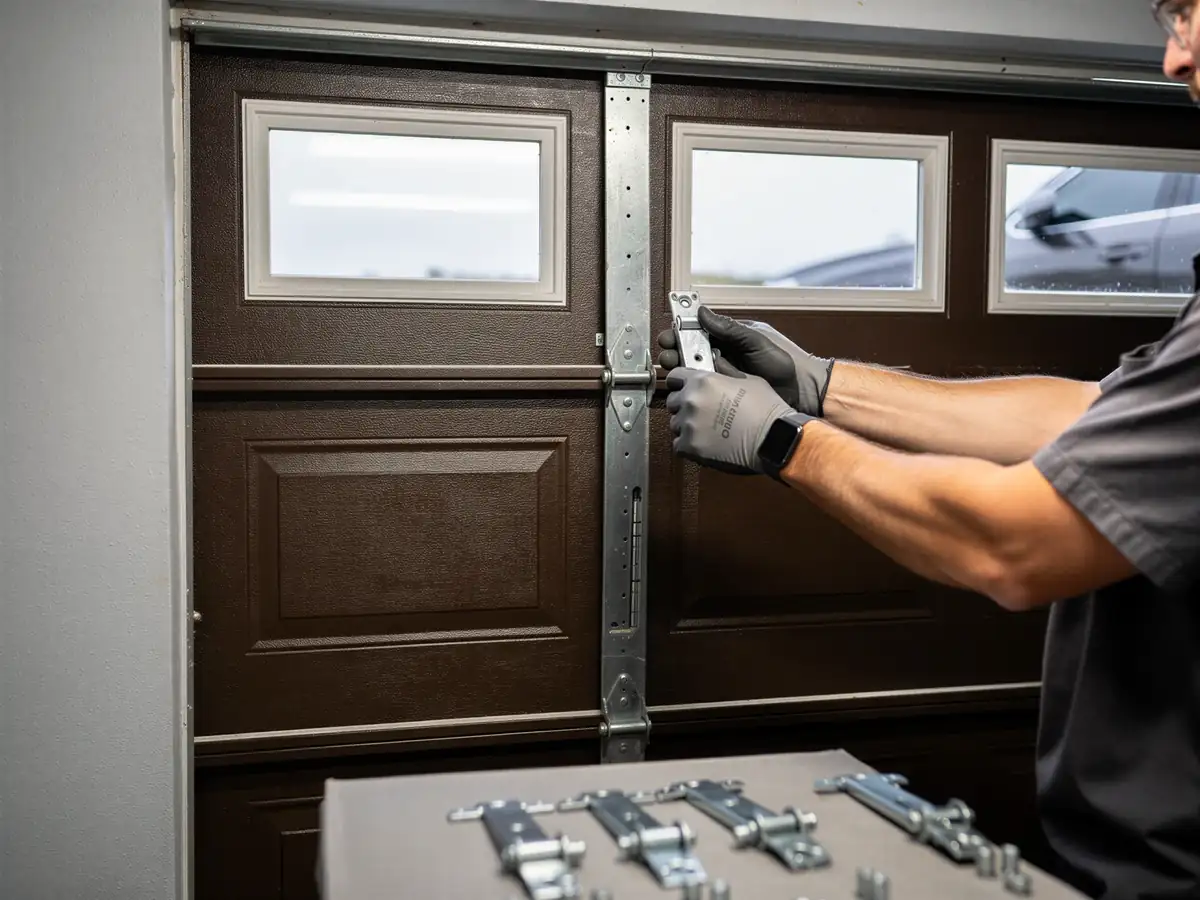
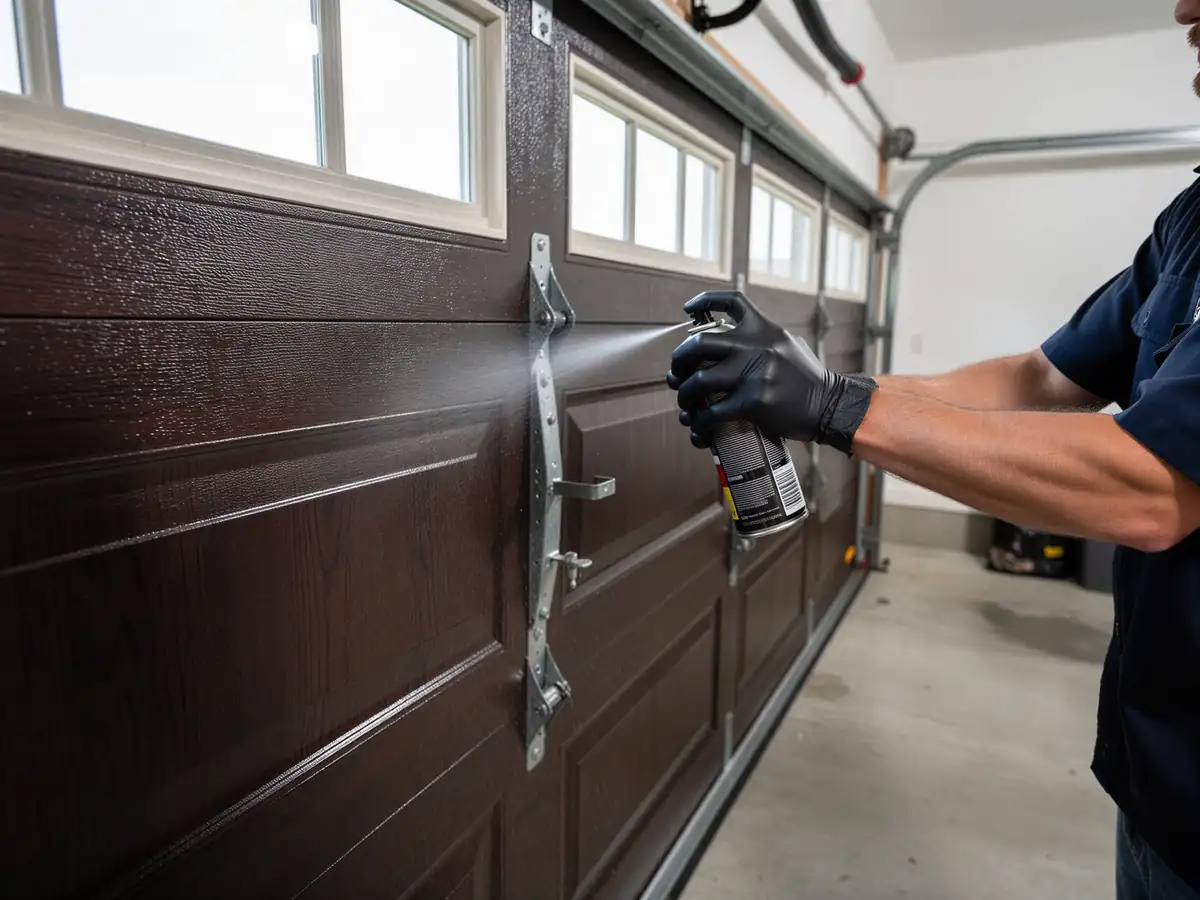
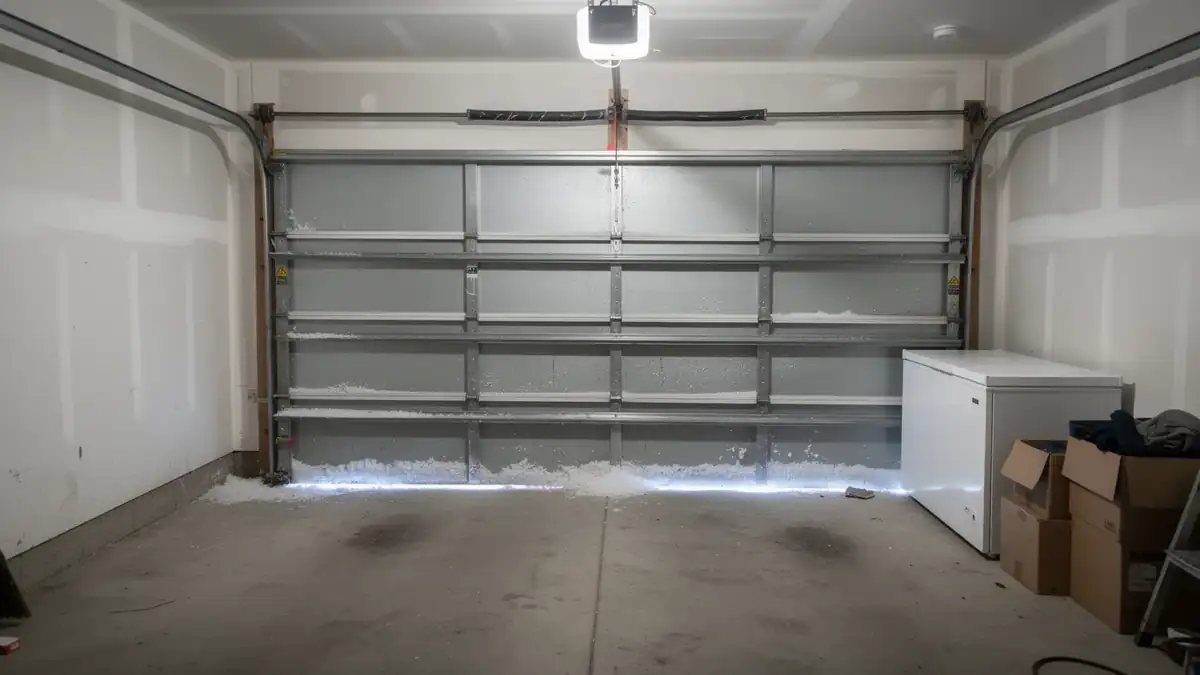
Most houses in Eagan went up between 1956 and 2004, with the median landing around 1973. That matters because a door built in that era is running on torsion hardware that's been through fifty-some Minnesota winters, even if the panel itself got swapped out somewhere along the way. Start with the obvious: pull the release handle, lift the door by hand to waist height, and let go. If it drops or shoots up, the spring is carrying the wrong tension and you're done testing - that's a call, not a DIY fix. Check the track brackets for rust bloom where water sits after snowmelt, and look at the bottom panel for daylight gaps, which tell you the weatherstrip has hardened past the point of sealing. Listen for grinding when the opener runs; on hardware this old it's usually a dry roller bearing, not the motor. What you shouldn't do is touch the spring itself, winding or unwinding, no matter how simple the cable looks. We don't walk homeowners through spring adjustment over the phone - too many ways for it to go wrong fast, and we'd rather you keep your fingers.
The Problem
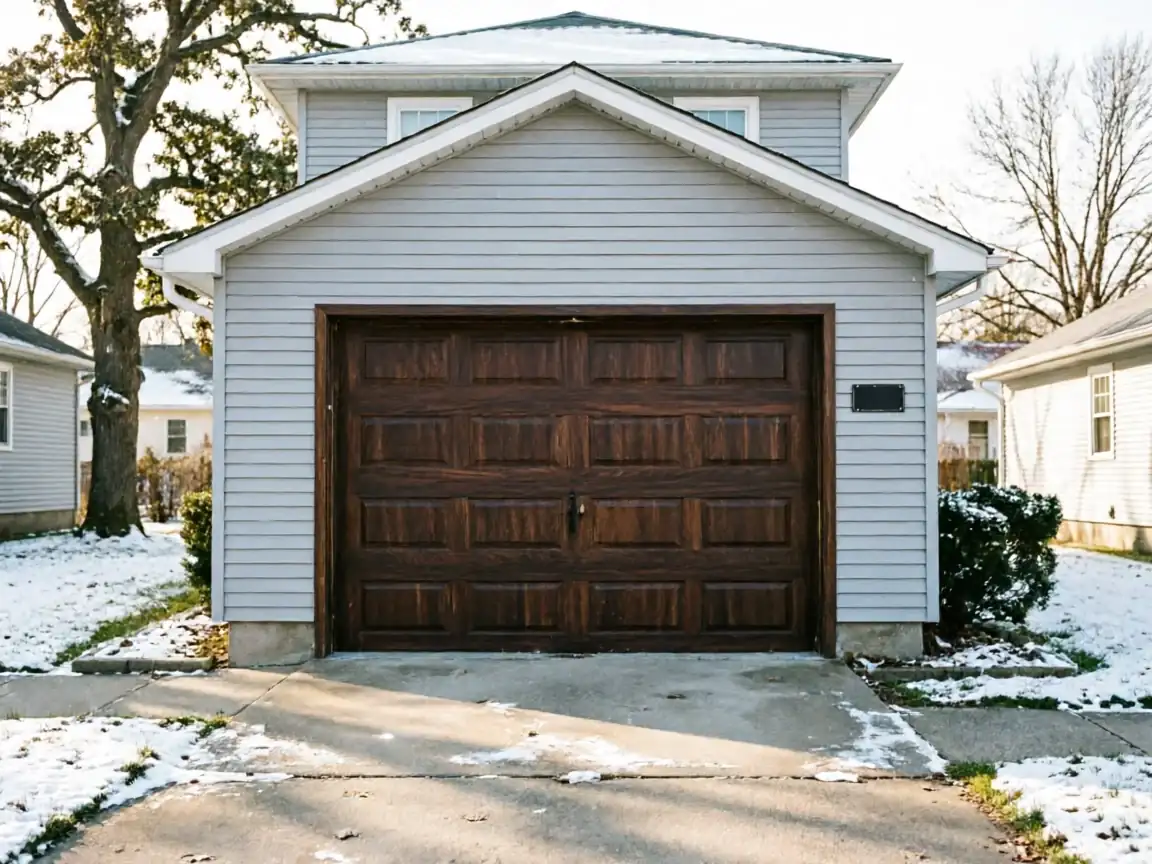
The pattern we see across Eagan's older sections comes down to timing: houses built in the 1960s and 70s clustered their garage doors on the same generation of torsion spring hardware, and springs rated for a certain cycle count don't care what decade it is when they hit that number. A lot of these are doors on houses built before insulation rules existed, so the panel itself is thin steel or hollow-core wood with no foam core, which means it's lighter than code expects today but also more prone to warping at the bottom where moisture collects. Pair that with a spring that's thirty-plus years old and you get the classic Eagan service call: a door that worked fine Tuesday and won't budge Wednesday morning, usually right when the temperature drops. We can't tell you from a phone description whether a given spring has five years left or five days - that's a hands-on call, by feel and by counting winds, not a guess.
How Local Conditions Play In
Eagan sits in a cold moderate climate band, and that cycle of hard freeze and thaw is rough on the grease inside a torsion spring and on the galvanized coating protecting it. Cold steel contracts and gets more brittle right when the spring is under full tension holding the door shut overnight, which is why breaks cluster in the first real cold snap rather than spread evenly across the year. Across the service area there are roughly 104,140 owner-occupied houses among 241,852 households, a lot of them carrying that same mid-century hardware, and with median household income near $92,940 most owners here are weighing a straightforward choice: replace an aging spring now on your schedule, or replace it later on a dead-of-winter emergency schedule when the door won't open and the car's stuck inside. We'd rather have that conversation in October than in January.