Checking It Yourself
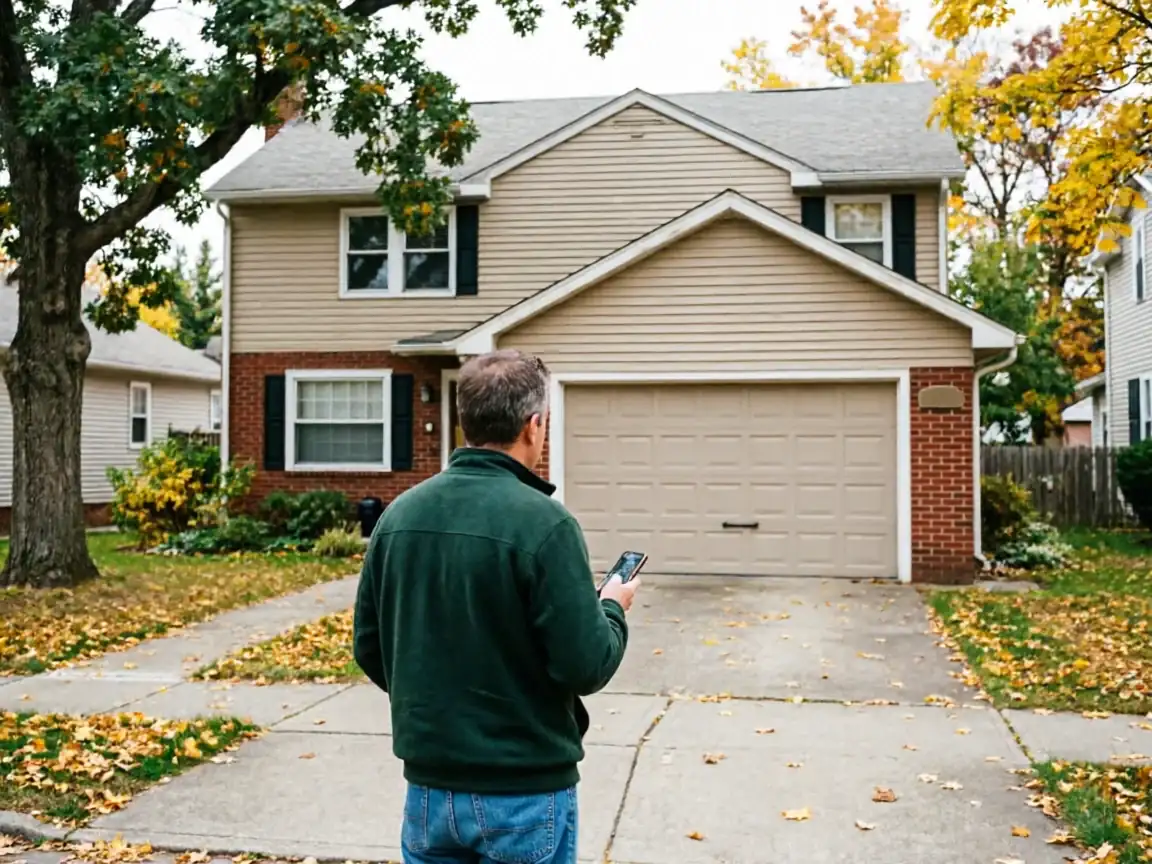
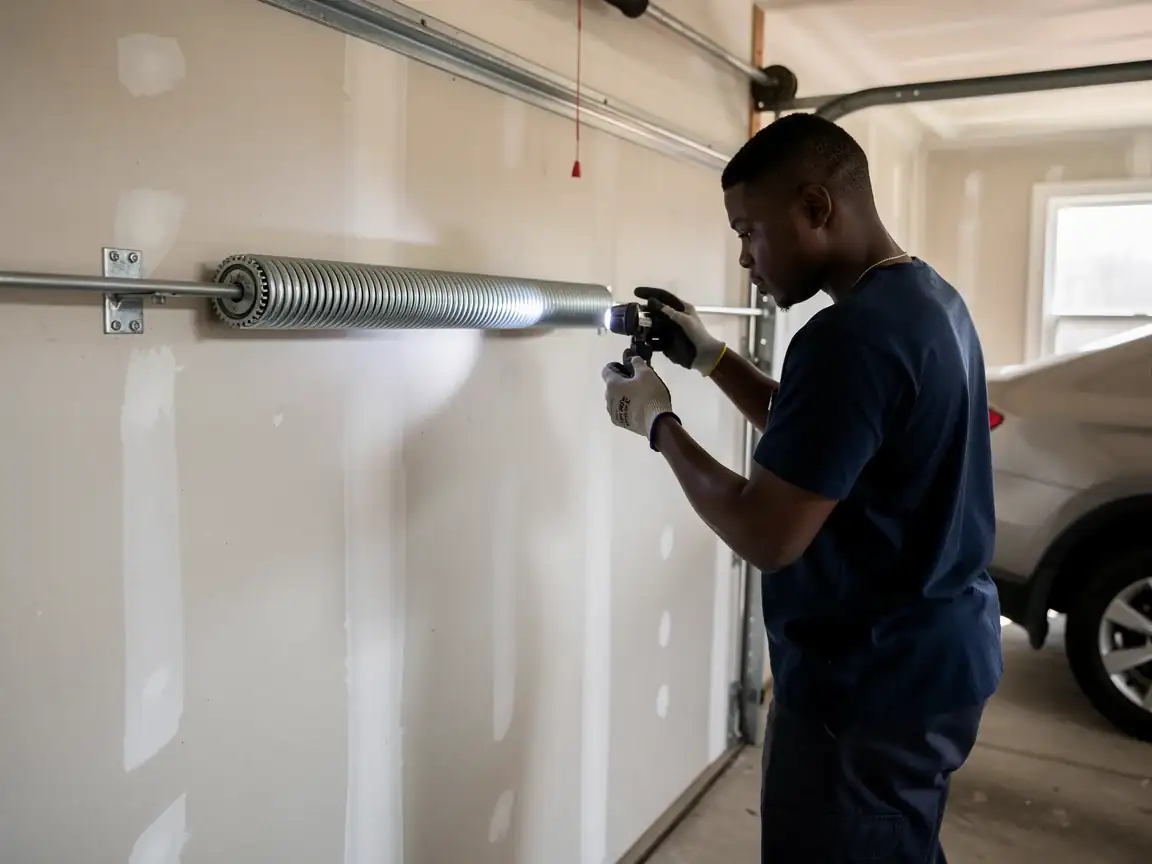
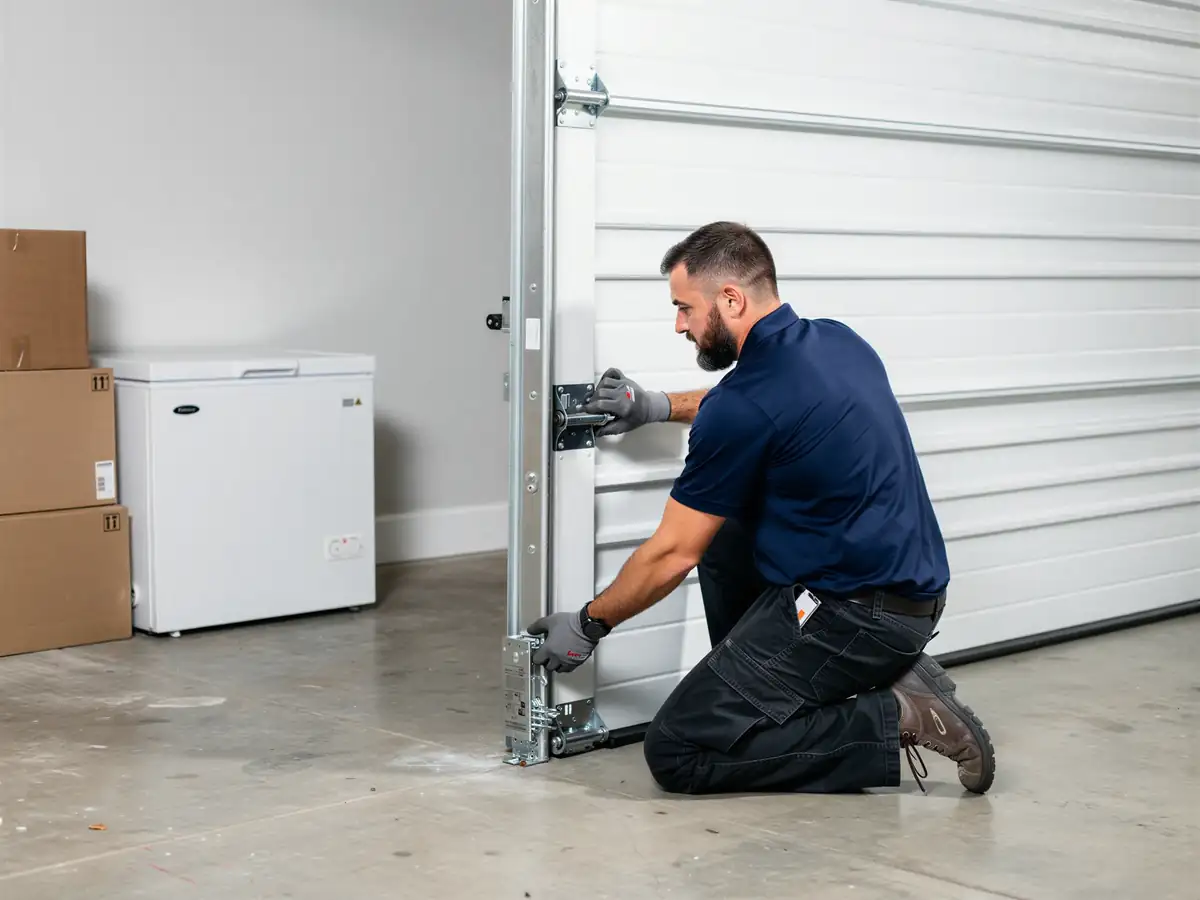
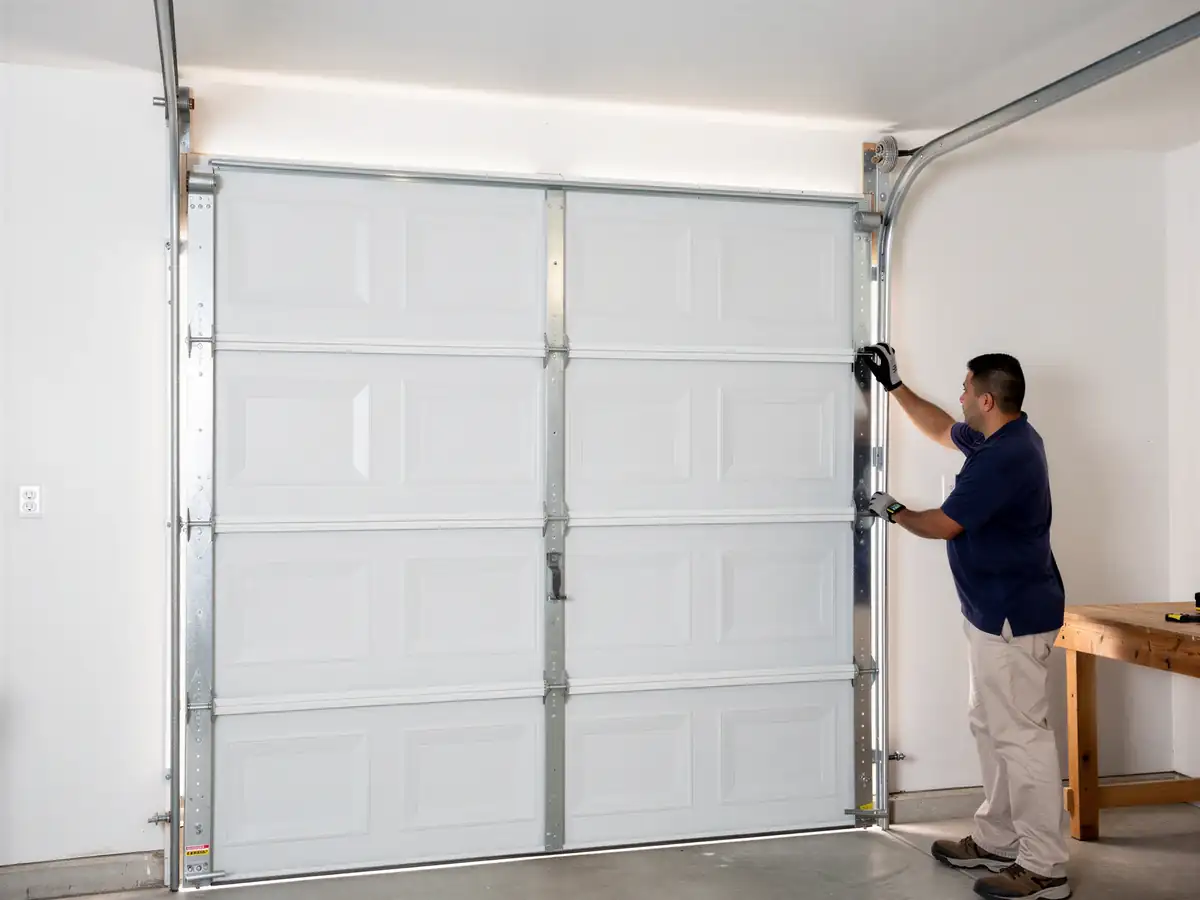
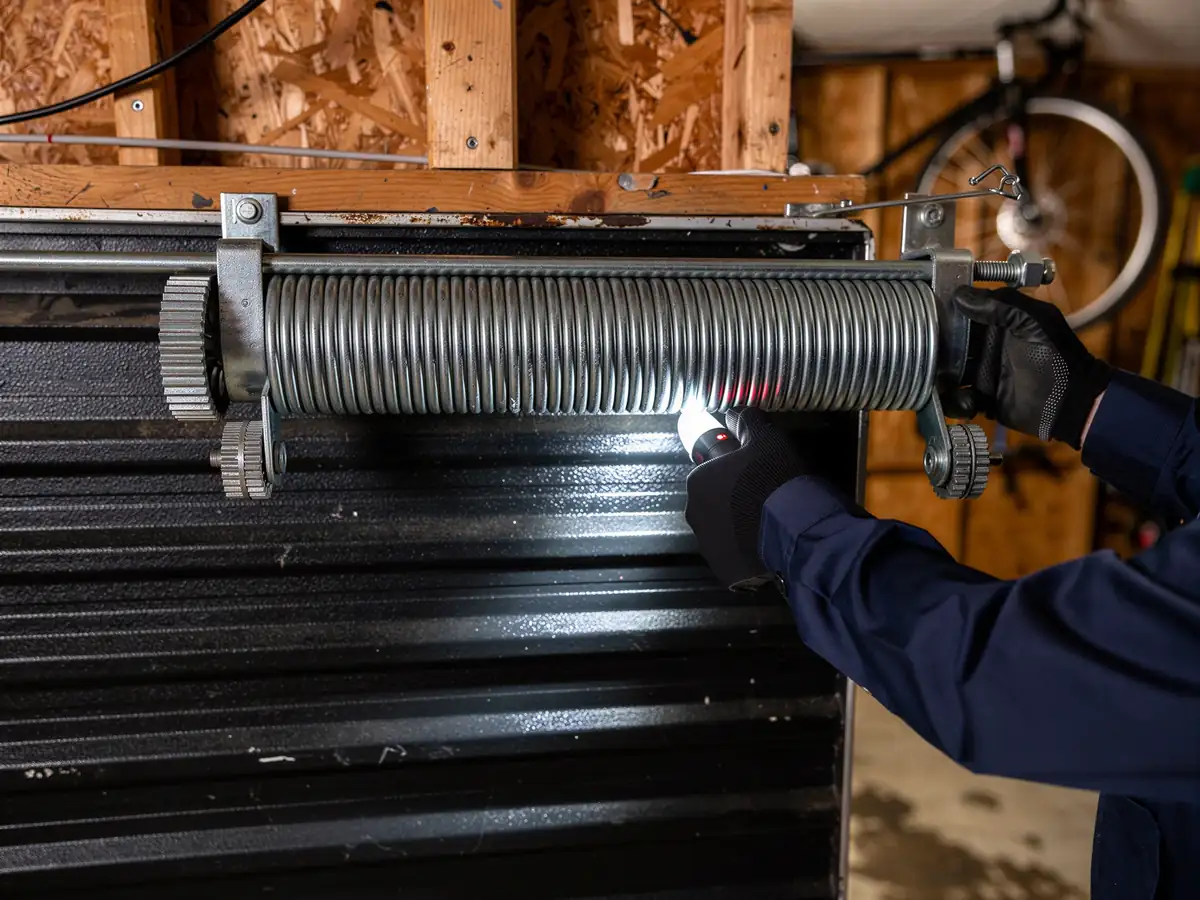
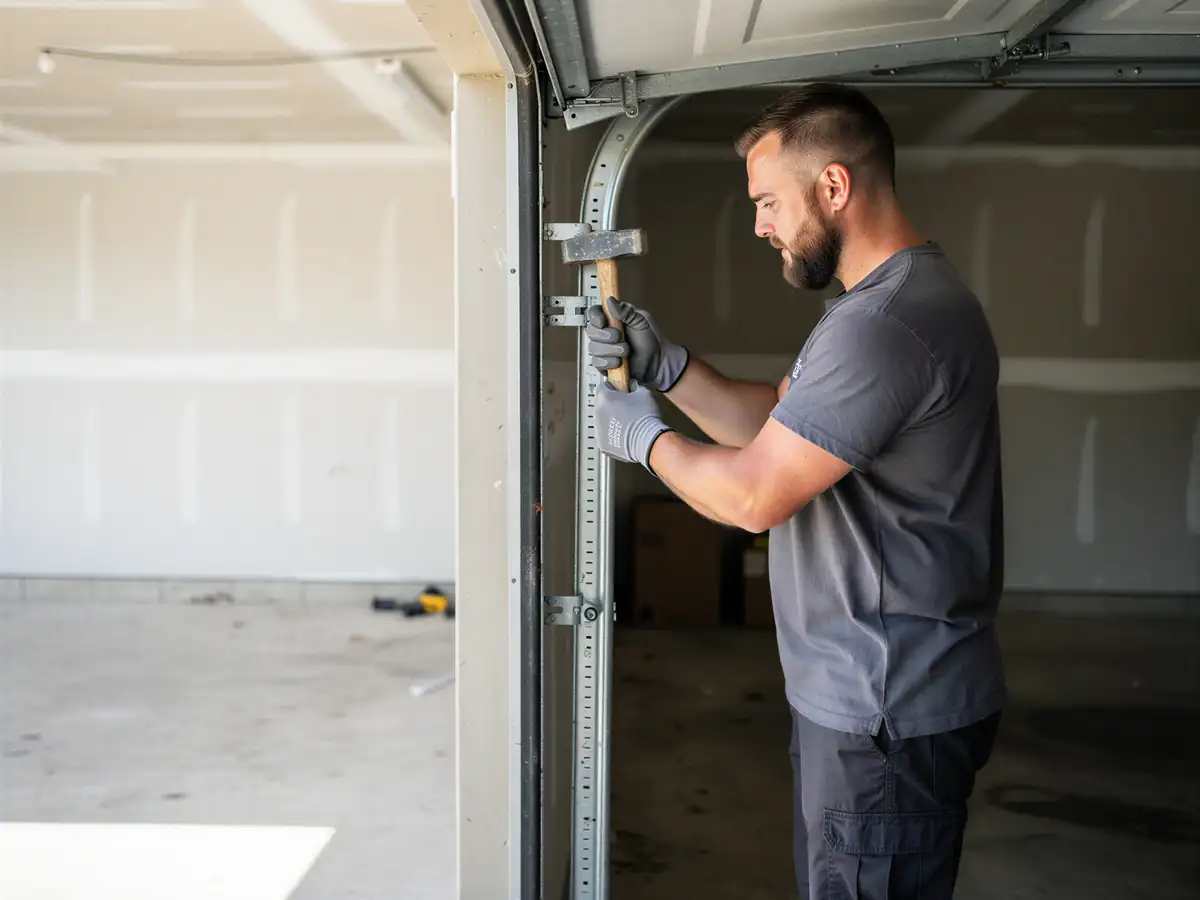
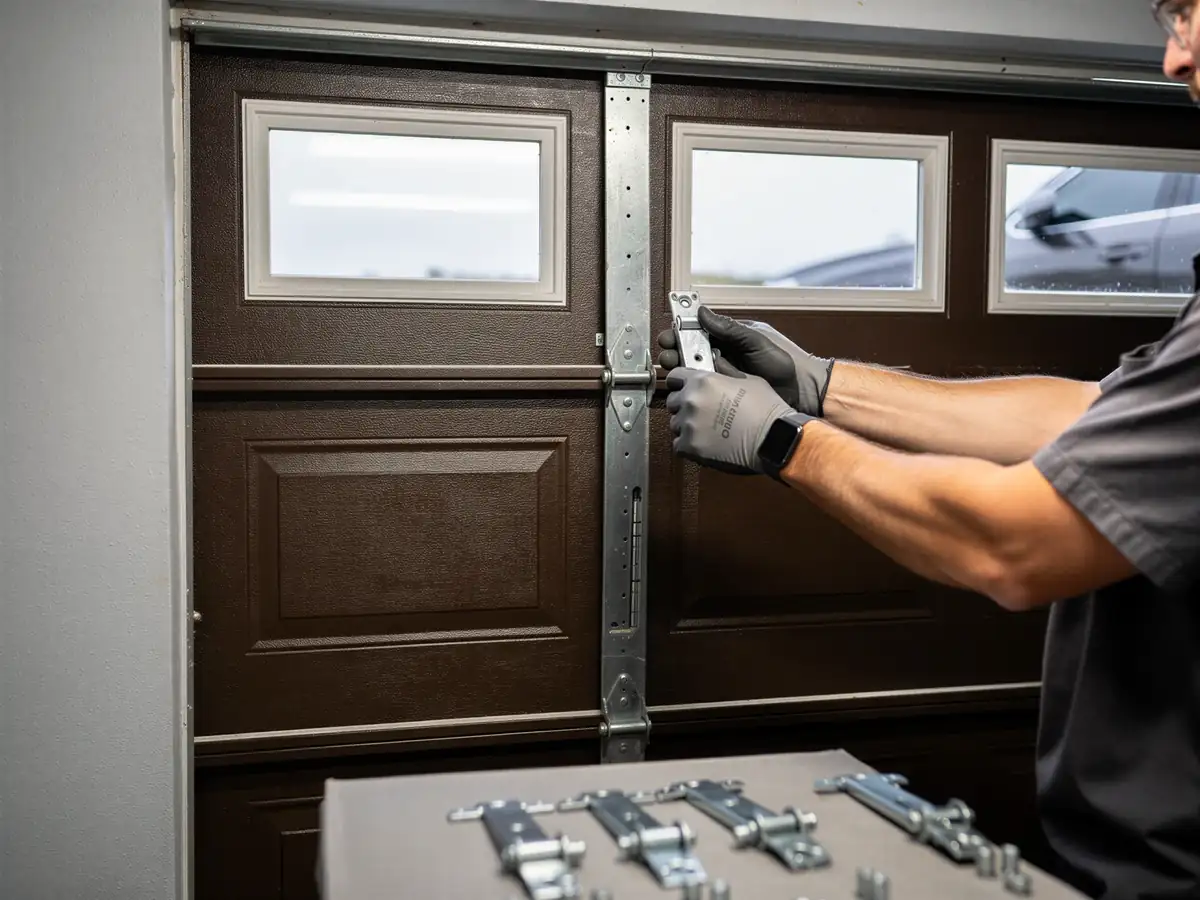
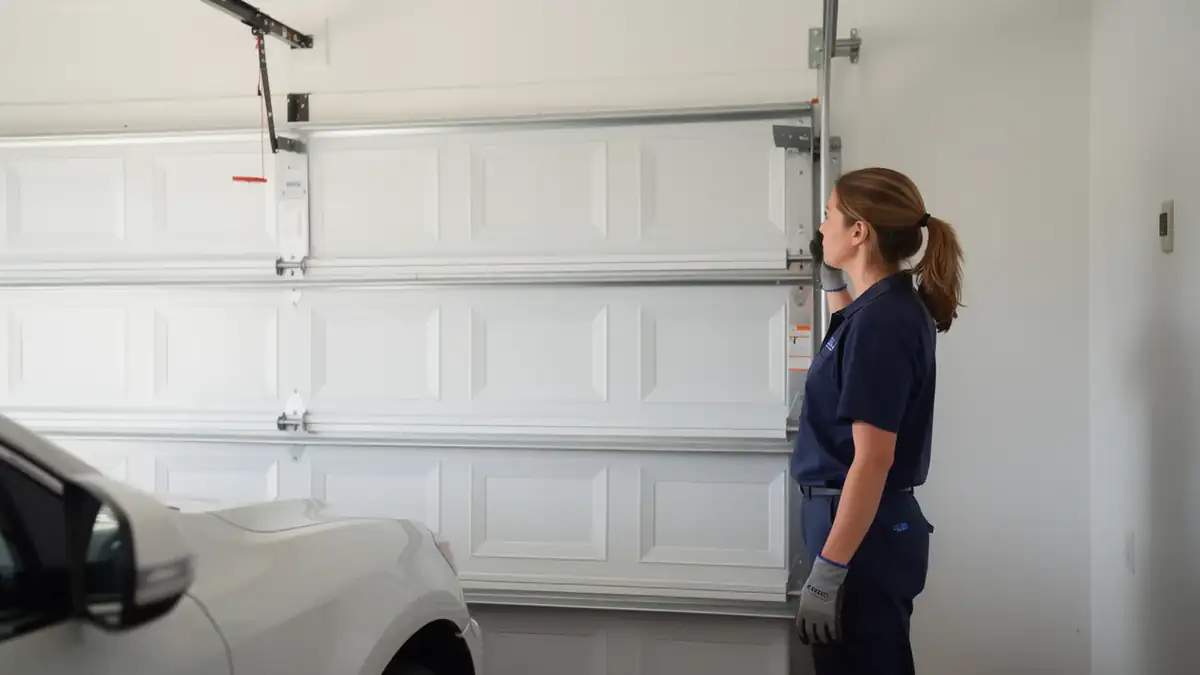
Before you call anyone, stand in the driveway and listen with the door moving slow, not fast. A lot of the houses in this part of the metro went up in the 1960s and 70s - Eagan's housing stock overall runs 1956 to 2004 with a median build year of 1973 - and that means a good share of doors are still running on original or close-to-original track and roller hardware. A metallic rattle usually means loose roller brackets or a hinge that's worked itself out of square over decades of use. A deep grinding sound, especially right as the door starts to lift, points to a torsion spring bearing that's dry or worn - common on hardware this old. A sharp pop or bang is almost always the spring itself, and that one you don't keep testing. If the noise only happens in the first ten feet of travel, check the bottom rollers; if it happens the whole way, check the springs and the torsion bar bearing plates. Write down where in the cycle the noise happens and whether it's getting louder week to week - that detail matters more than a recording of the sound itself.
The Problem
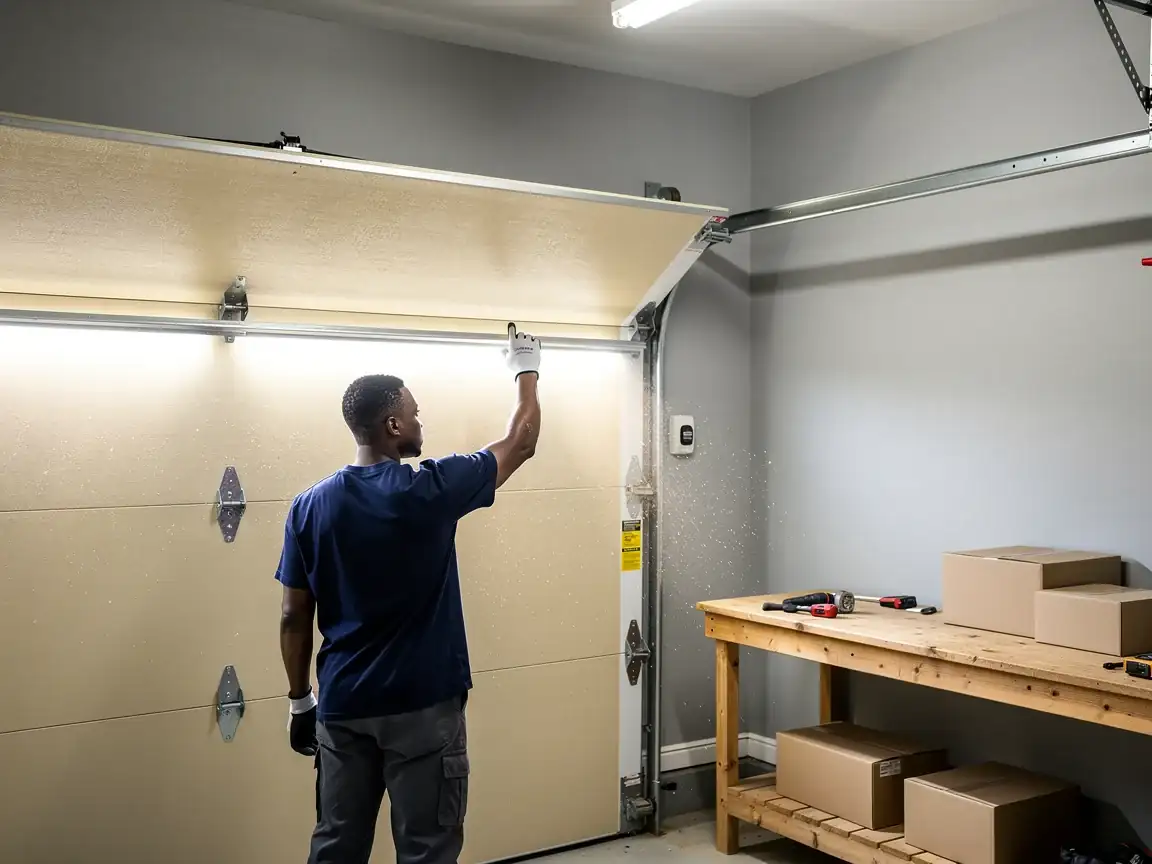
The actual failure path behind most of these noises is wear catching up to age. Eagan's housing stock is mostly 1960s and 70s construction across the dozens of neighborhoods that make up this service area, and a torsion spring rated for roughly 10,000 cycles has, on a door that old, usually been through all of them more than once if it's never been replaced. Grinding at lift means the spring is working harder than it should to counterbalance the door's weight, because it's lost tension over the years. A loud bang mid-cycle, if it isn't the spring snapping outright, is often a cable that's frayed and finally jumped the drum. None of this is dramatic until it is - a spring under full tension failing while someone's hand is near the bottom panel is the actual reason you don't wait on that particular noise. The honest reality is that on hardware this old, repair sometimes isn't the cheaper long-term move once you're replacing the spring, the bearings, and the rollers all in the same visit - at that point you're paying labor three times instead of once.
How Local Conditions Play In
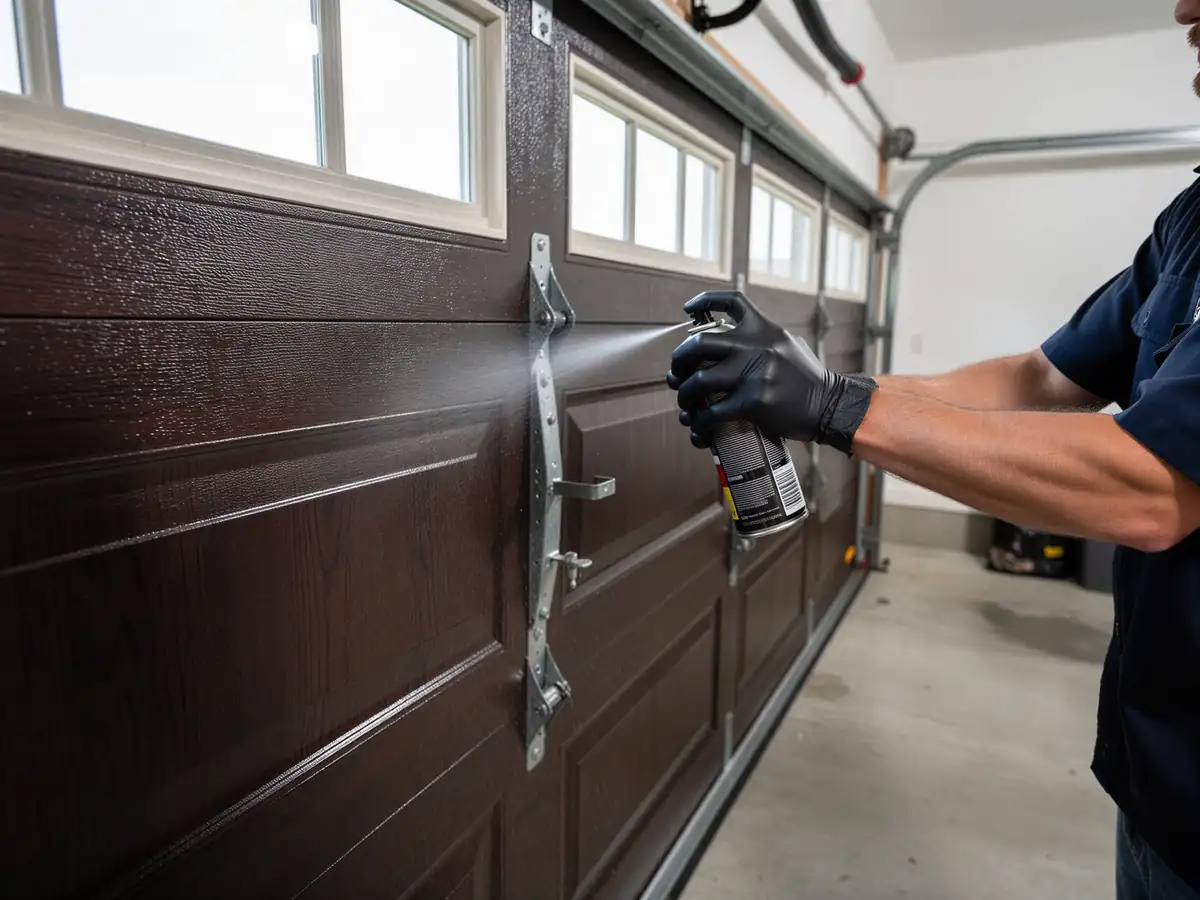
Eagan sits in a cold, moderate climate band, and that matters for anything metal moving on a track outside heated space. Winter cold thickens old grease and stiffens seals, which is why a door that ran quiet in August can start grinding in January without anything mechanically new going wrong - the lubricant just isn't doing its job at the temperature it's sitting at. On original hardware from the 1960s and 70s stock common across this area, that seasonal stiffening speeds up whatever wear is already there instead of causing a new problem on its own. Homes closer to Mendota Heights, five miles northeast, or Inver Grove Heights, five miles south, sit in the same general housing era and see the same pattern - it isn't an Eagan-specific quirk, it's a function of when this whole corridor was built and what winter does to it every year. With median household income here around $92,940, a lot of owners lean toward keeping a door running with targeted repair rather than full replacement, which is reasonable - but a repair on cold-stiffened, decades-old hardware only buys so much time before the next part in line fails.