Checking It Yourself
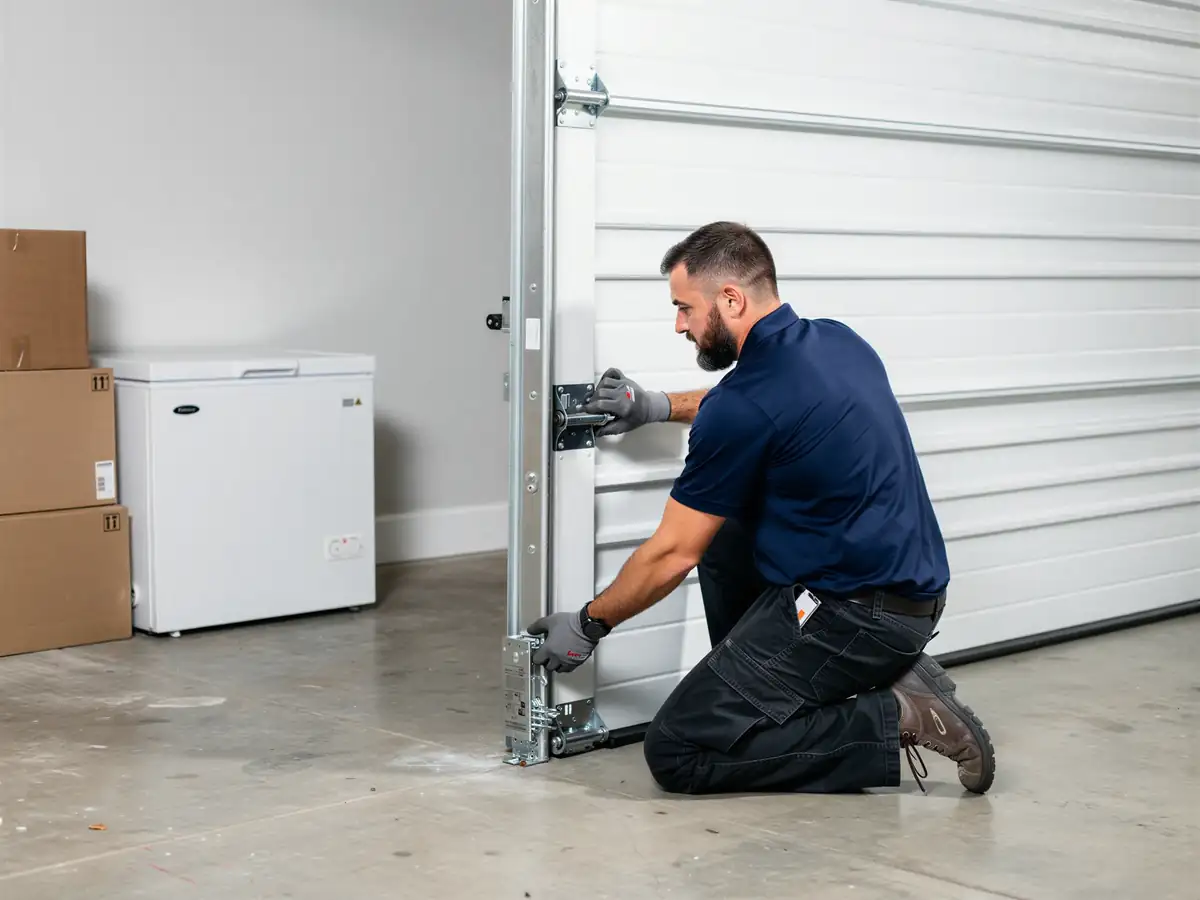
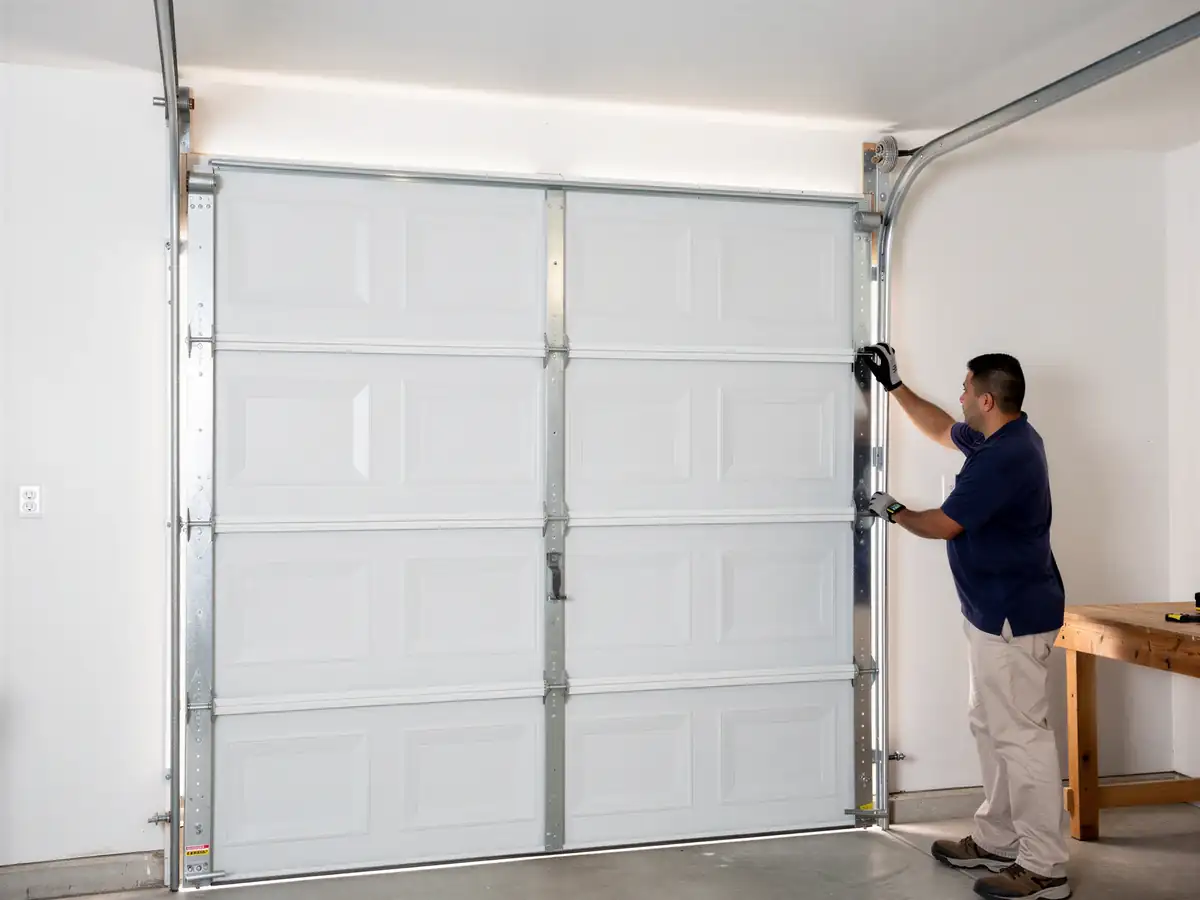
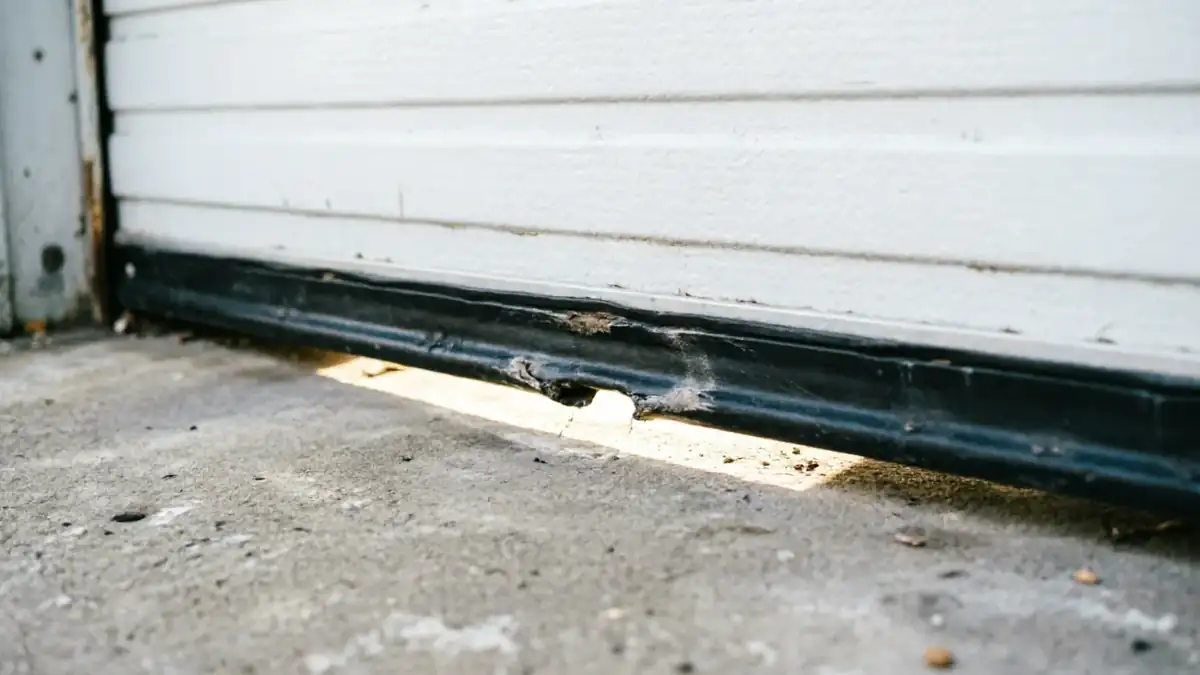
Start at the bottom corners of the door. Most houses in Eagan went up between 1956 and 2004, with the median landing around 1973, so a lot of garages still run the weatherstripping and hardware that came with the house. Press a hand along the bottom seal and the two side jambs on a cold day. If you feel air moving, that's not a draft you can caulk away - it's a seal that's hardened past the point of doing its job. Weather seals and draughts go together in a door this age; rubber that was flexible in 1975 is brittle now.
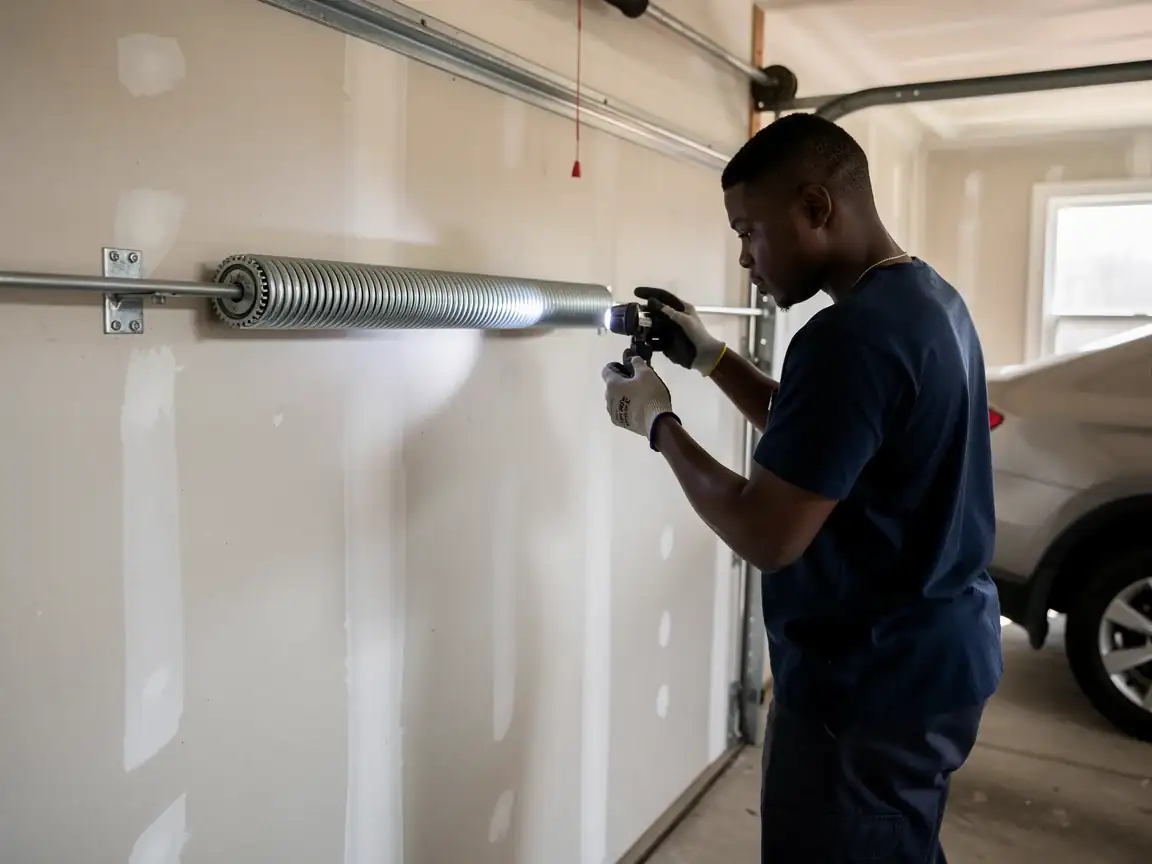
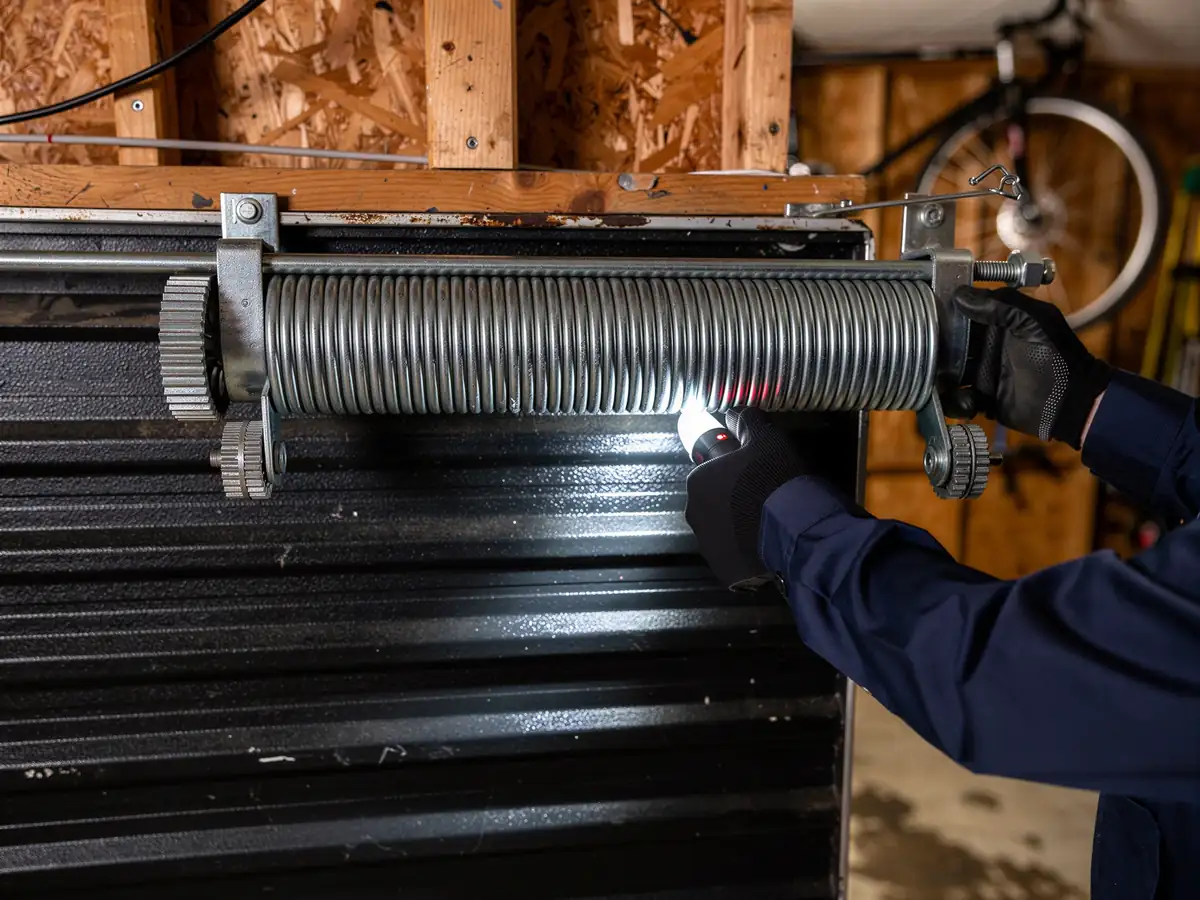
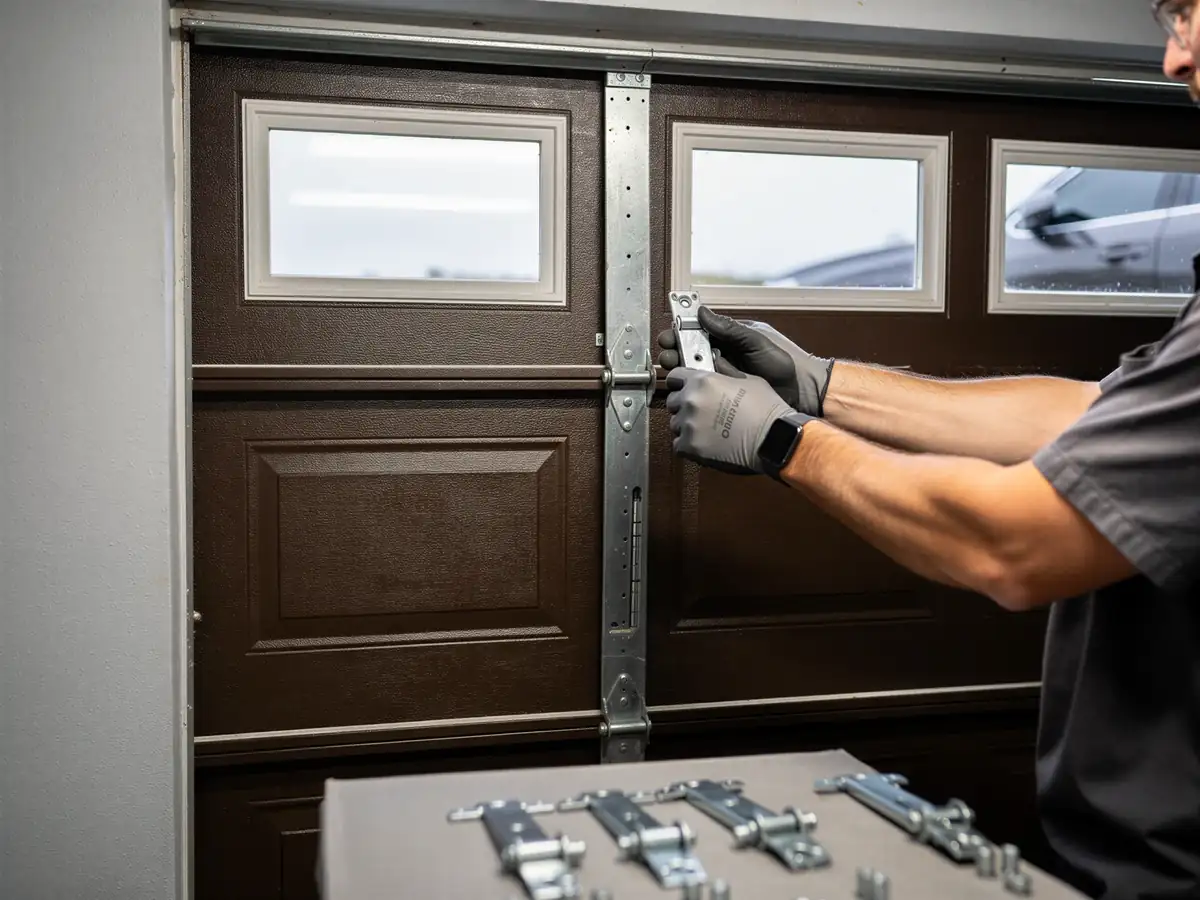
Next, look at the spring. If you've got a single torsion spring mounted center-top, that's original-era hardware on a lot of these homes, and it wasn't built with today's cycle counts in mind. Don't touch it - just note whether it looks rusted, stretched, or uneven compared to the other side on a double-spring setup.
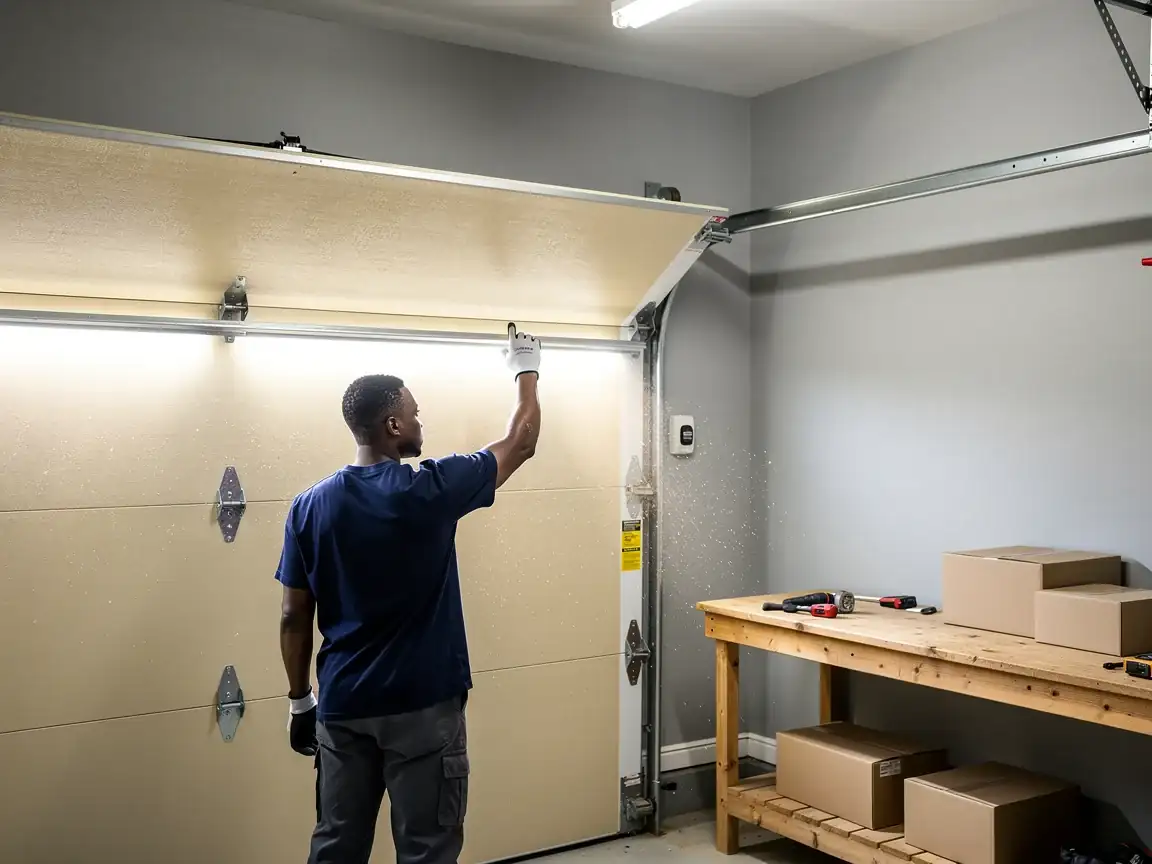
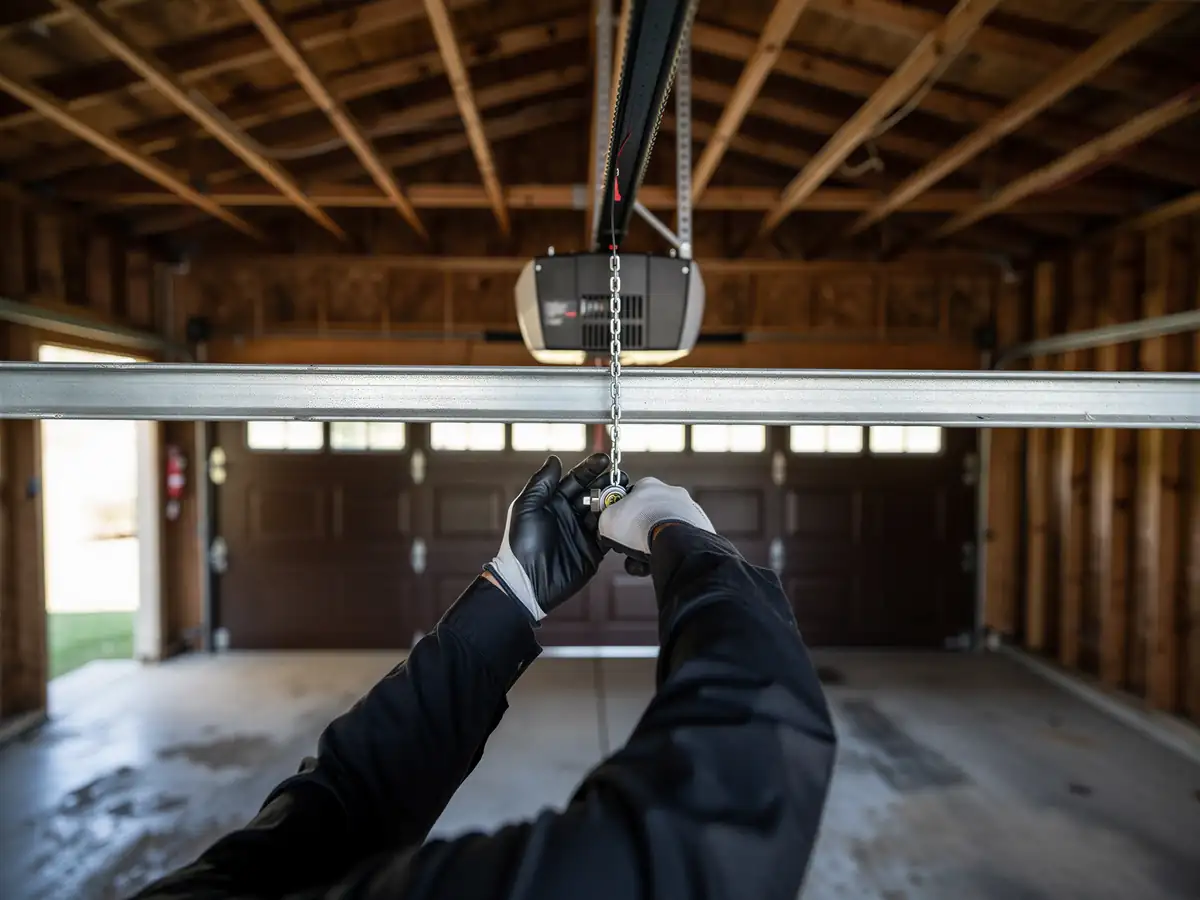
Last, run the door by hand with the opener disconnected. It should move smoothly and stay wherever you let go. If it drifts up or down, the spring tension is off, and that's not a DIY adjustment - torsion springs under load have put people in the ER.
Doing Nothing For Now
Not every noisy door needs a call
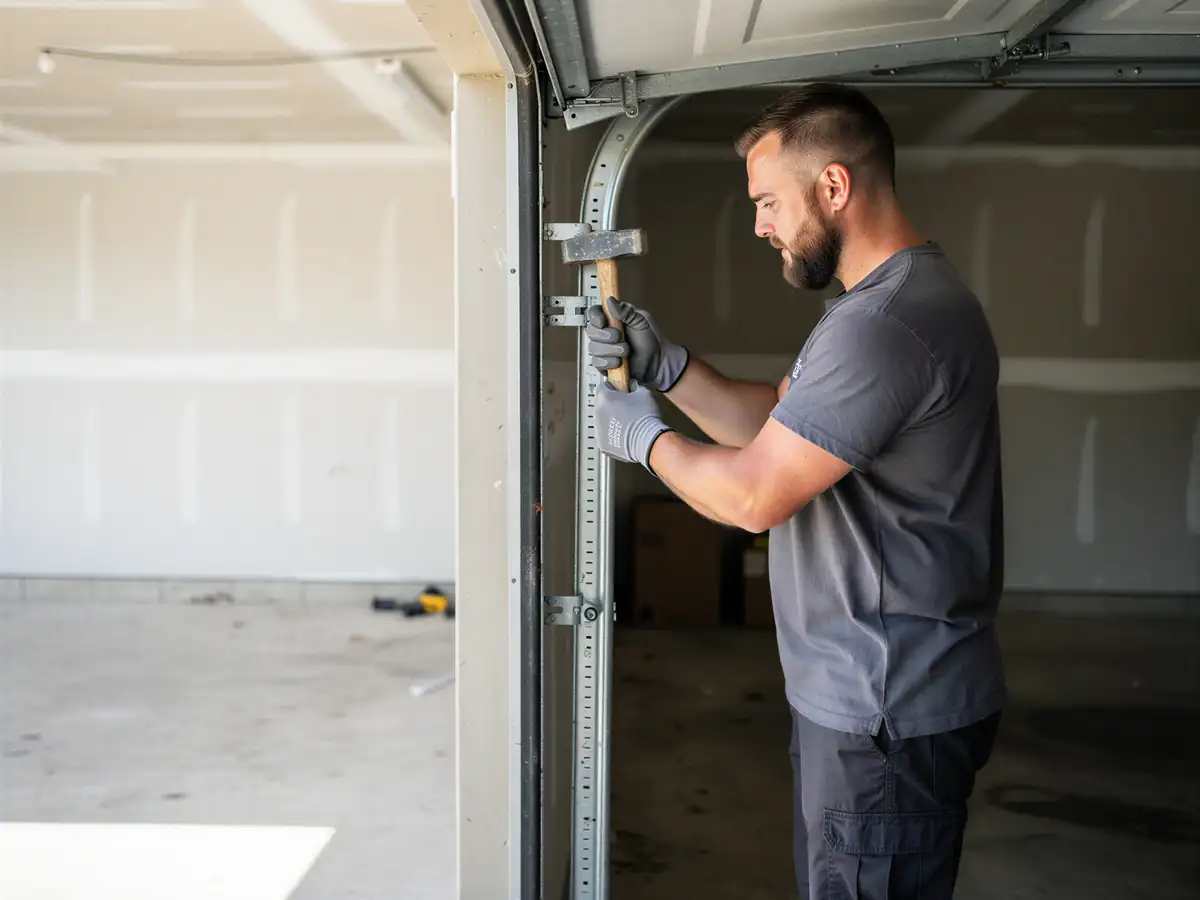
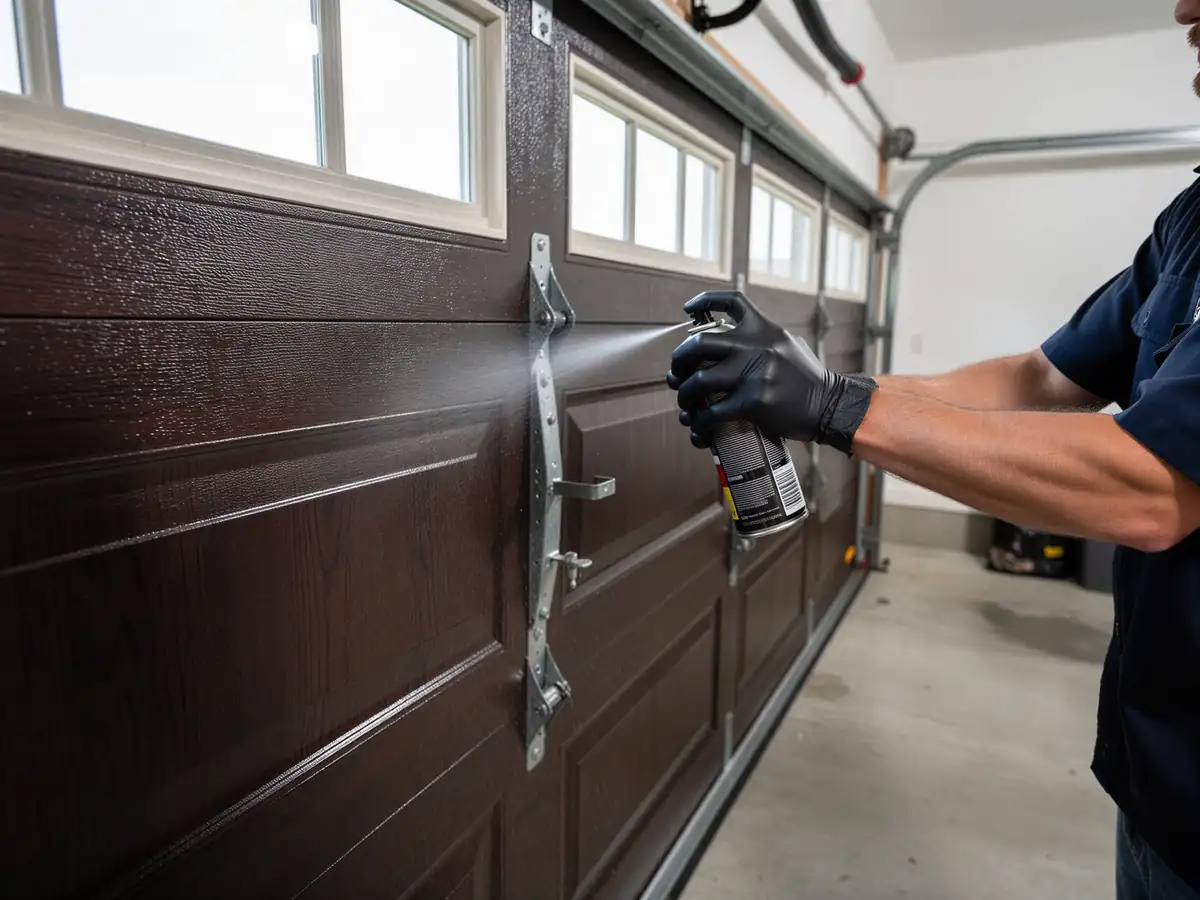
A squeak that goes away with a shot of garage-door lubricant on the rollers and hinges is a maintenance item, not a repair. Same with a track that's slightly out of alignment but still running smooth - tighten the mounting brackets and watch it for a week before you decide it's worse.
Here's the honest limit: we don't do cosmetic panel touch-ups
If a dent doesn't affect how the door seats or seals, that's a decision about how the garage looks, not whether it works, and it's yours to make on your own schedule.
Where waiting costs you is the seal
On a house built in the 1973 median era, a worn bottom seal isn't just a comfort issue - it's the one gap in an otherwise closed building envelope. Letting it ride through another winter means another winter of cold air pooling in a garage that may share a wall with living space. That's the one item on this list I wouldn't defer.
The Problem
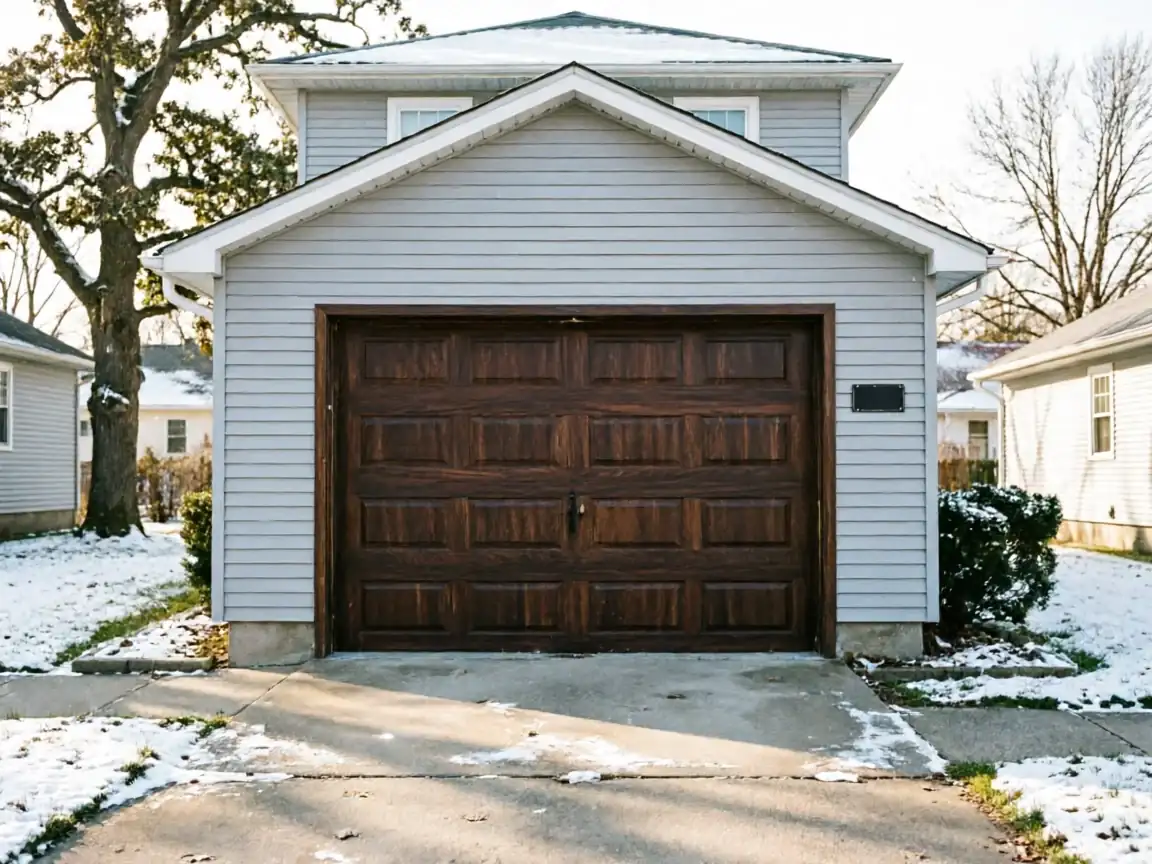
Across the 37 named areas that make up Eagan's housing stock, the heaviest concentration is 1960s-70s construction. That generation of garage doors came in two flavors: single-layer steel with no insulation, or an early insulated panel that's since lost most of its R-value as the foam inside degrades. Neither was designed against the weatherstripping standards a door gets built to now.
The practical result is a door that looks fine from the driveway and still loses heat like a window left cracked. Original hardware on these homes was sized for a lighter door and a different duty cycle than decades of daily openings have put on it. Torsion springs sag, cables fray at the drum, and the steel track that was plumb in 1973 has usually shifted a little as the slab settled.
None of that is dramatic. It's slow wear on hardware that's outlived its intended service life, on a door style that predates the insulation standards homeowners now expect. That combination - old hardware, thin or failing insulation - is the actual problem on most calls in homes from this era, more than any one dramatic failure.
How Local Conditions Play In
Eagan sits in a cold, moderate climate band, which means the garage door isn't a seasonal concern here - it's a year-round pressure point for roughly five or six months running. A door that doesn't seal tight loses real heat for months, not just on the coldest nights, and that shows up as a drafty attached garage and, often, a cold wall in whatever room backs onto it.
With a median household income of $92,940 across the service area, replacement is within financial reach for most owners here, but plenty still choose to patch an old door rather than swap it - and for a door with sound hardware and a bad seal, that's often the right call. Across 241,852 households and 104,140 owner-occupied houses in this service area, the majority are carrying garage hardware installed well before current weatherstripping and insulation standards existed, which is exactly why seal and hardware condition matter more here than they would in a milder climate. The cold doesn't create new damage so much as it finds every gap that was already there and makes you feel it.