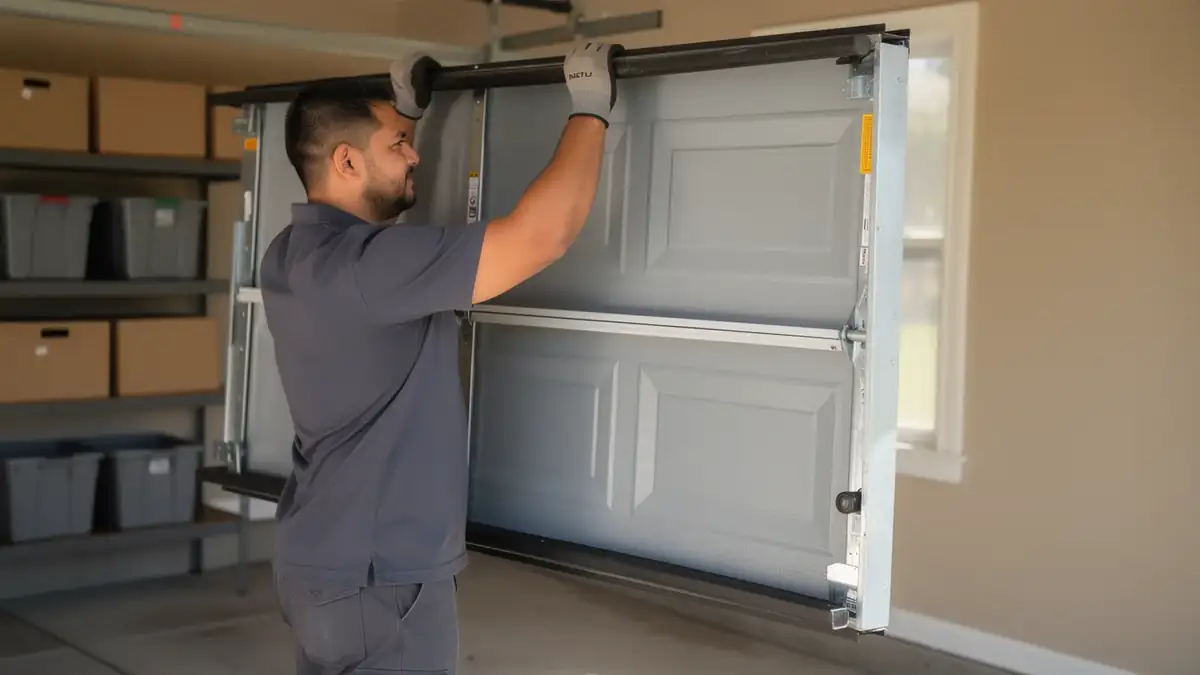
Checking It Yourself
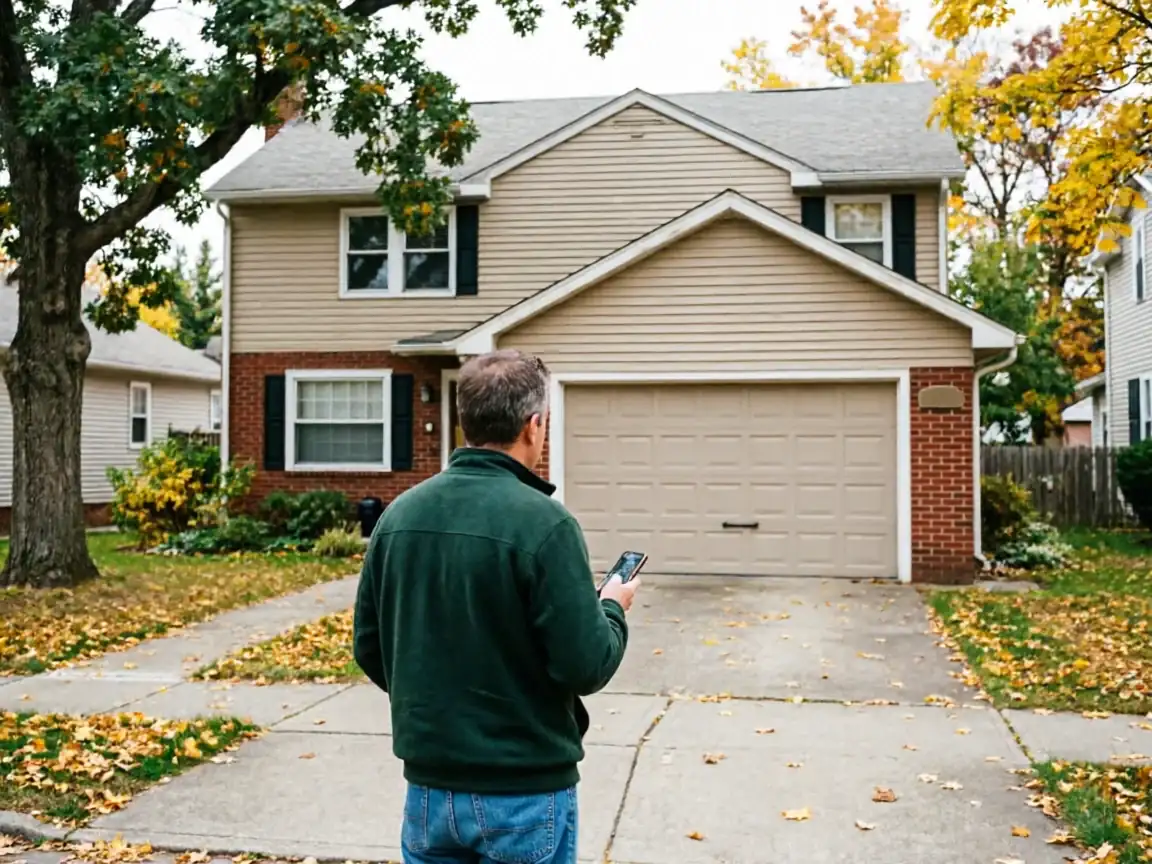
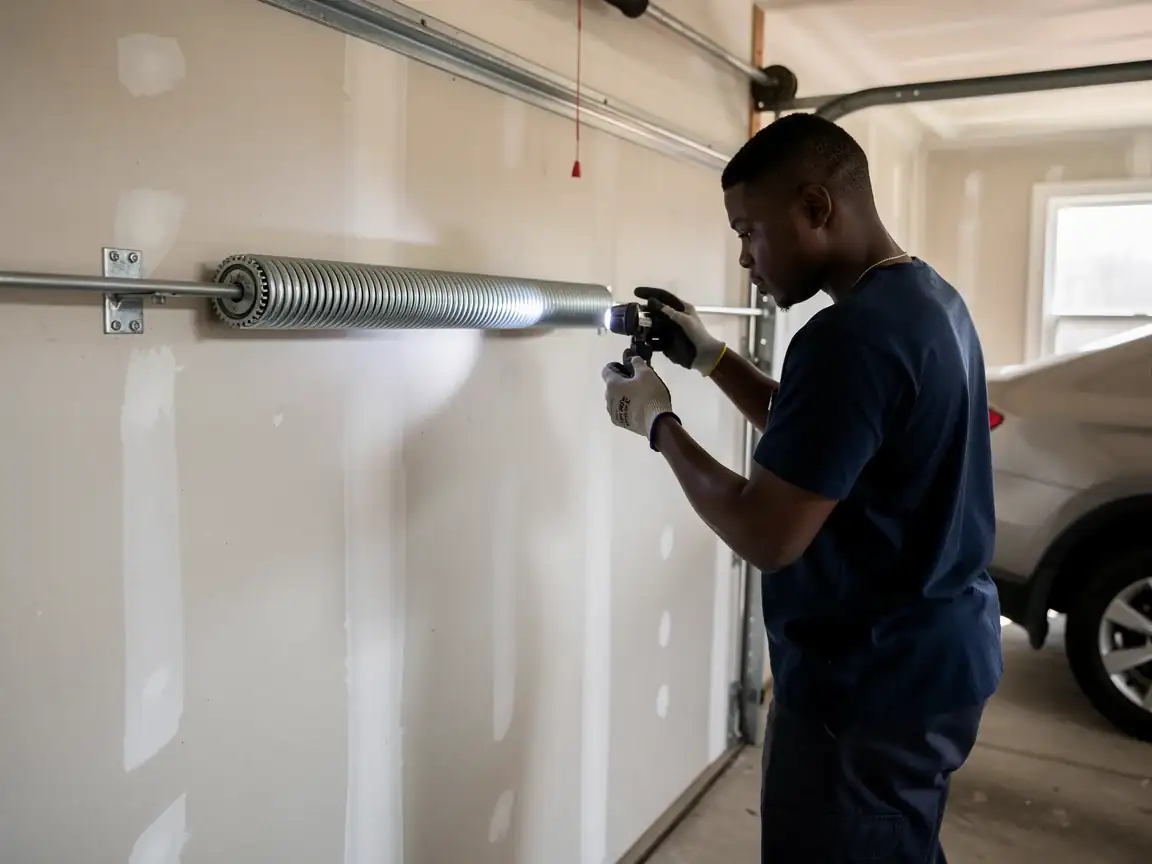
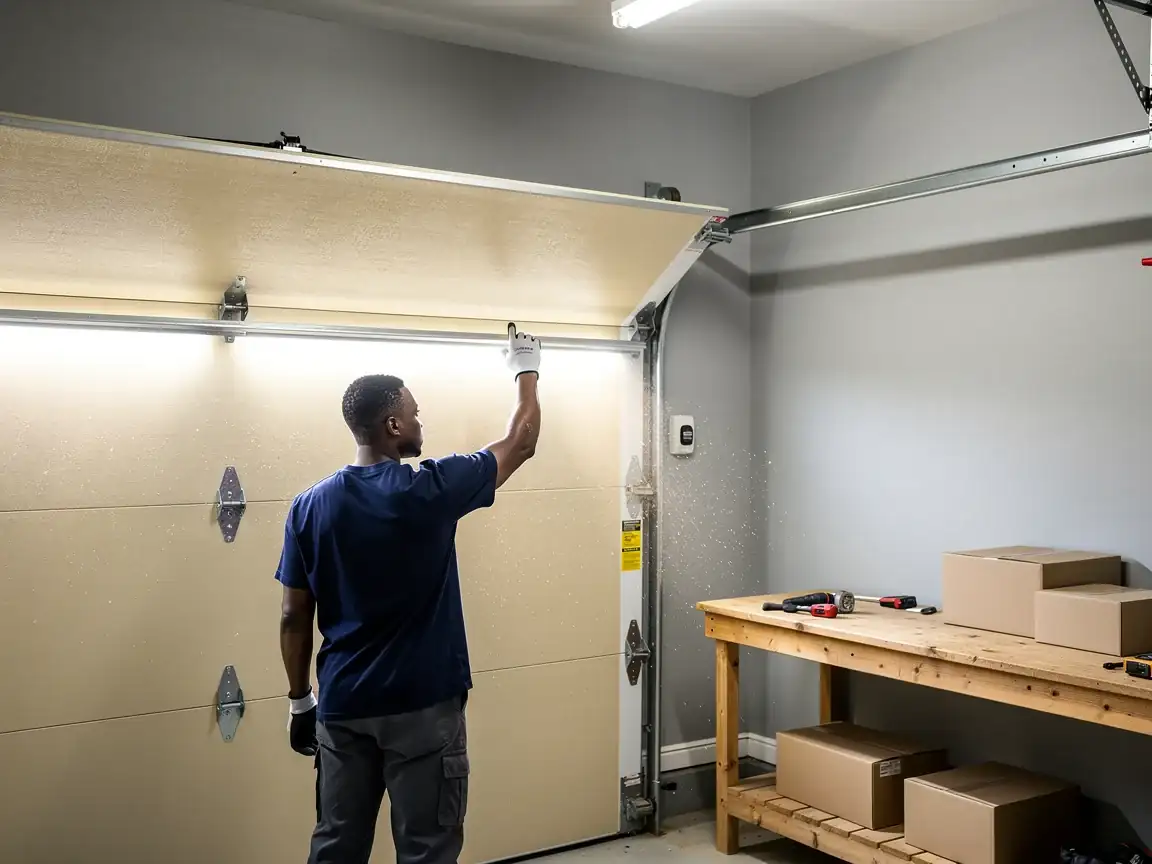
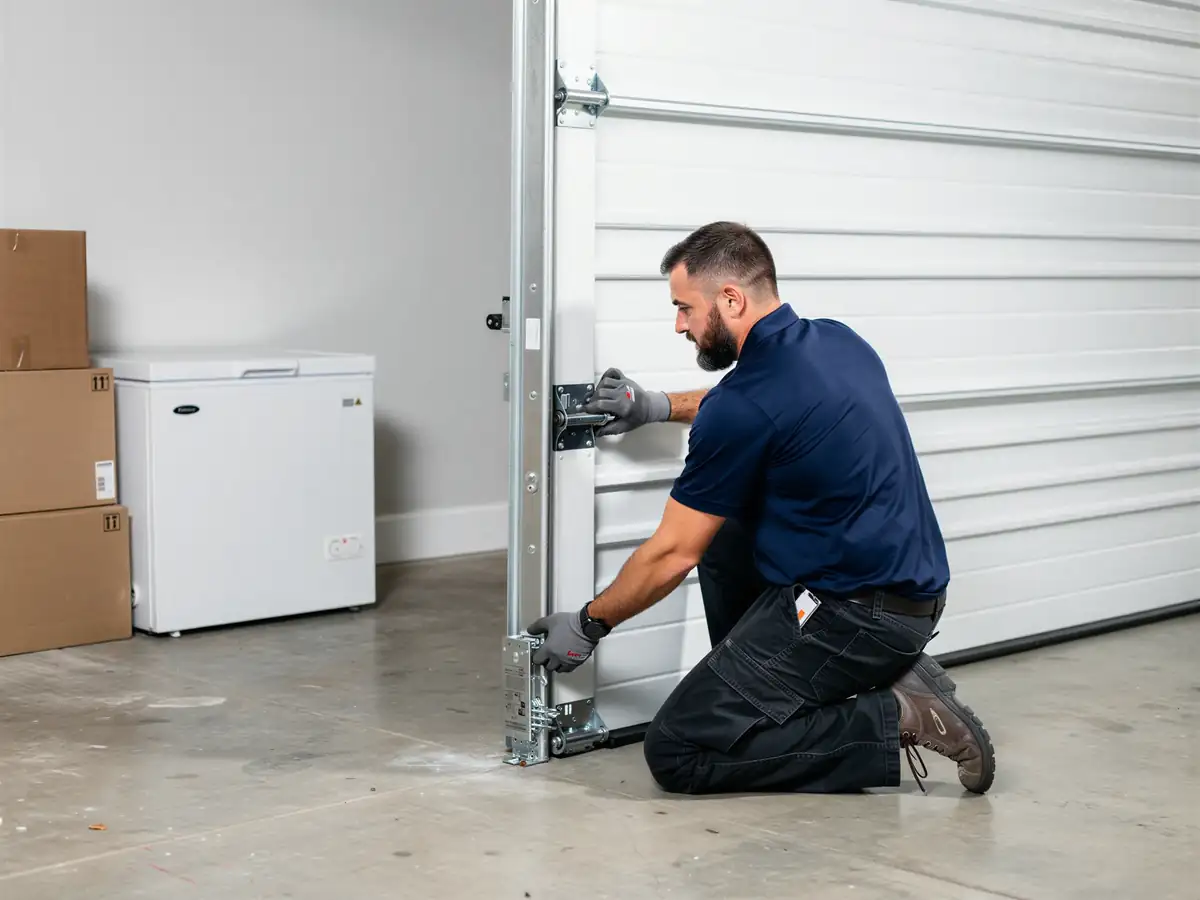
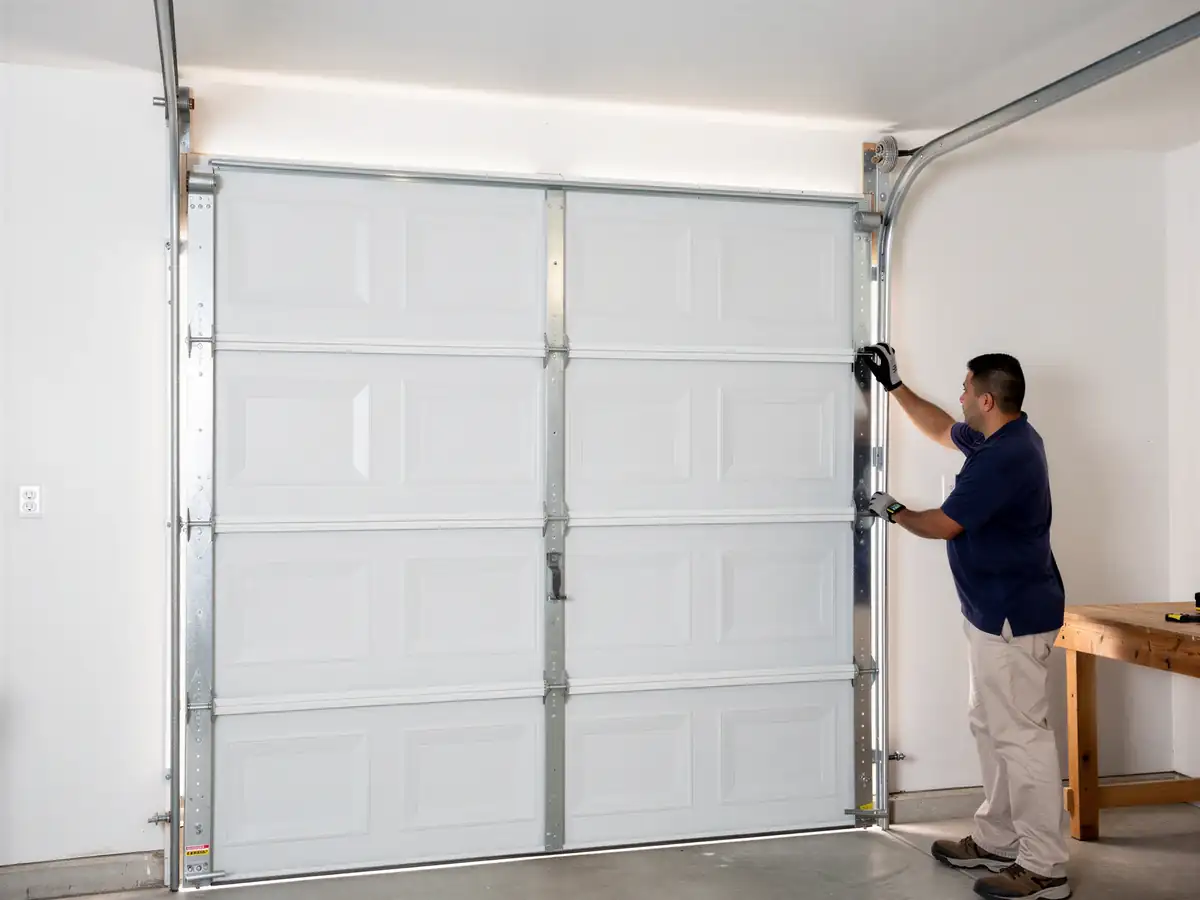
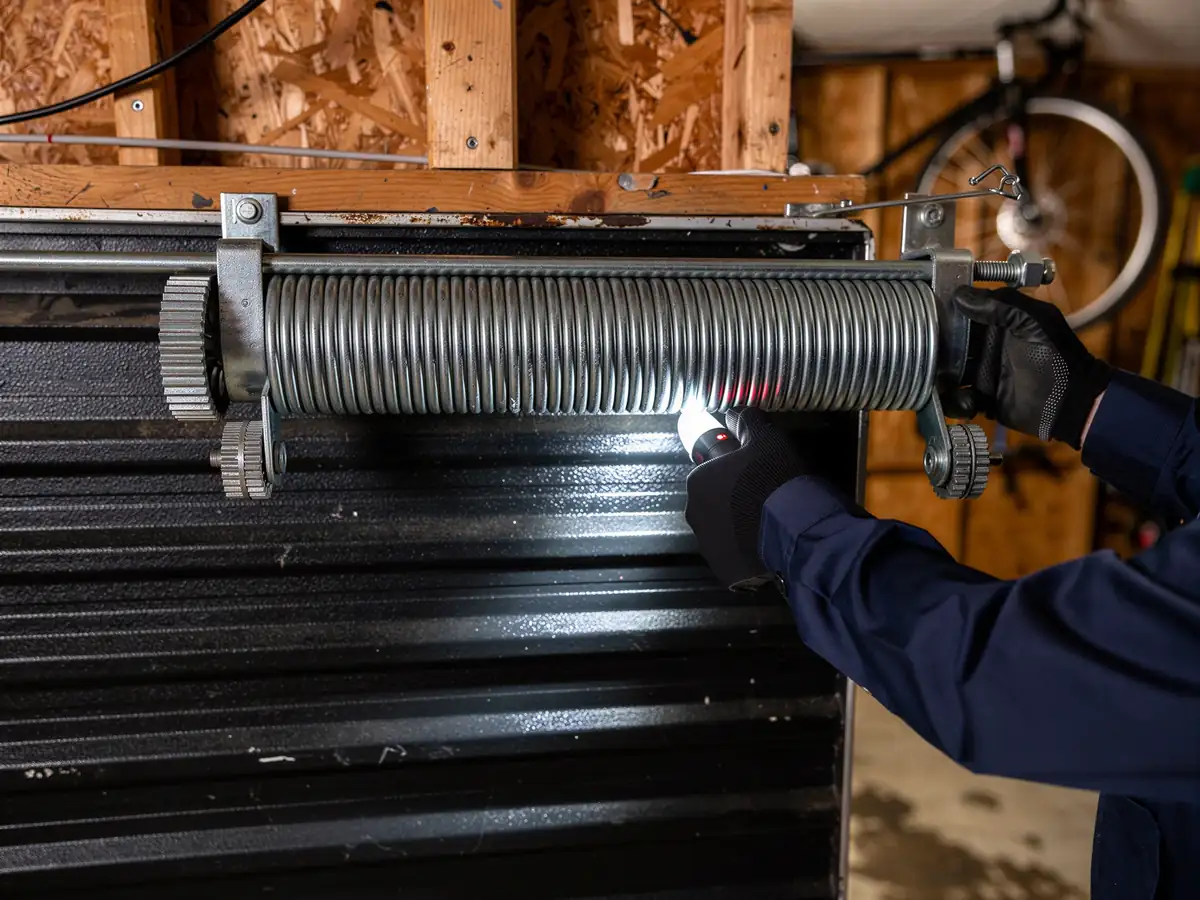
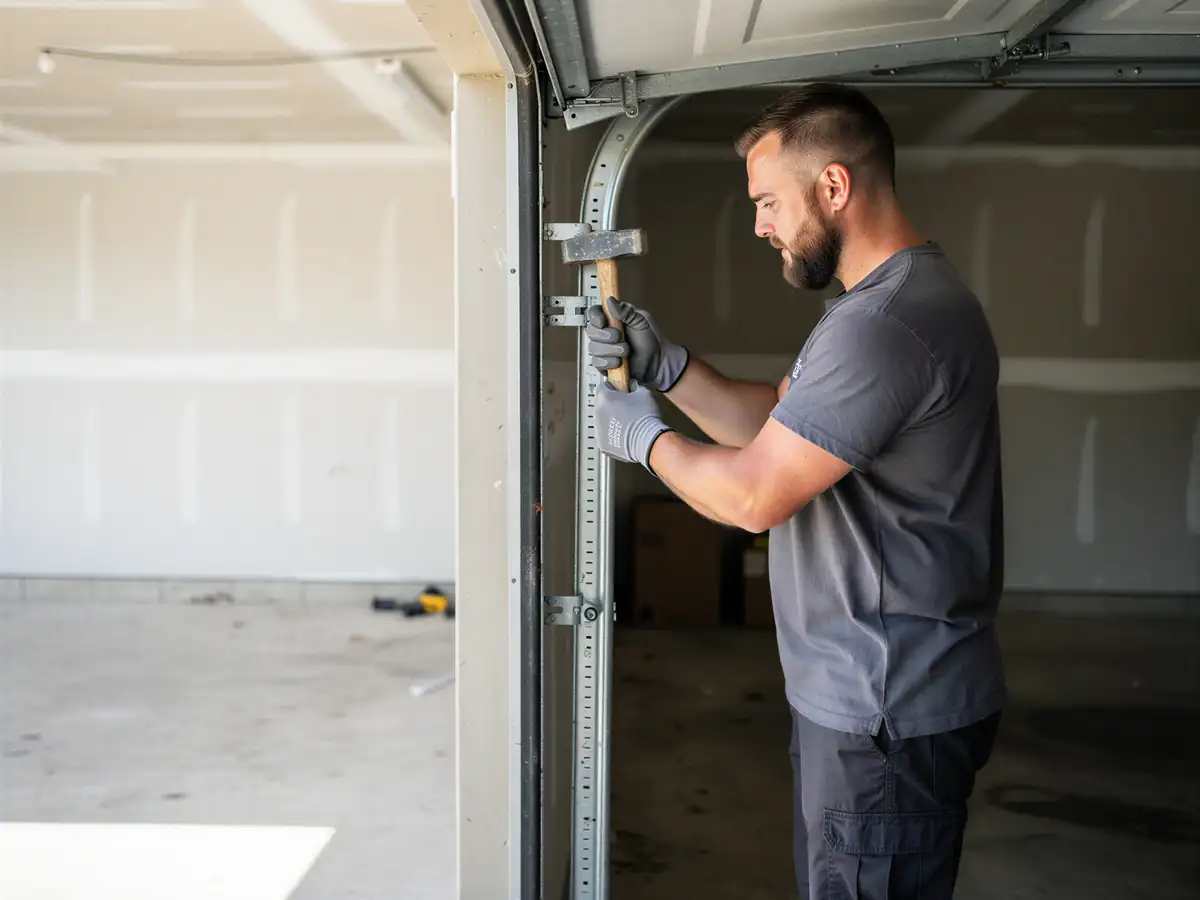
Most houses in this part of the metro went up between 1956 and 2004, with the typical one landing around 1973. That matters because a lot of garages still run original torsion spring setups on side-mounted track, hardware that newer parts counters don't always carry. Before you call anyone, look at three things. First, the track: run your hand along it (door closed, opener unplugged) and feel for rust pitting or a bend where the track meets the wall bracket - common on doors this age. Second, the cables at the bottom bracket - fraying strands mean replace, not lubricate. Third, the photo-eye sensors near the floor; a stray cobweb or a knocked-loose bracket is behind more "broken door" calls than people expect. What you should not do is touch the torsion spring itself or the bolts holding its center bracket. That spring is wound under enough tension to break a hand, and on a door this old the winding cone may already be fatigued from decades of cycles. If the door won't move, or moves unevenly, stop there and call it in.
The Problem
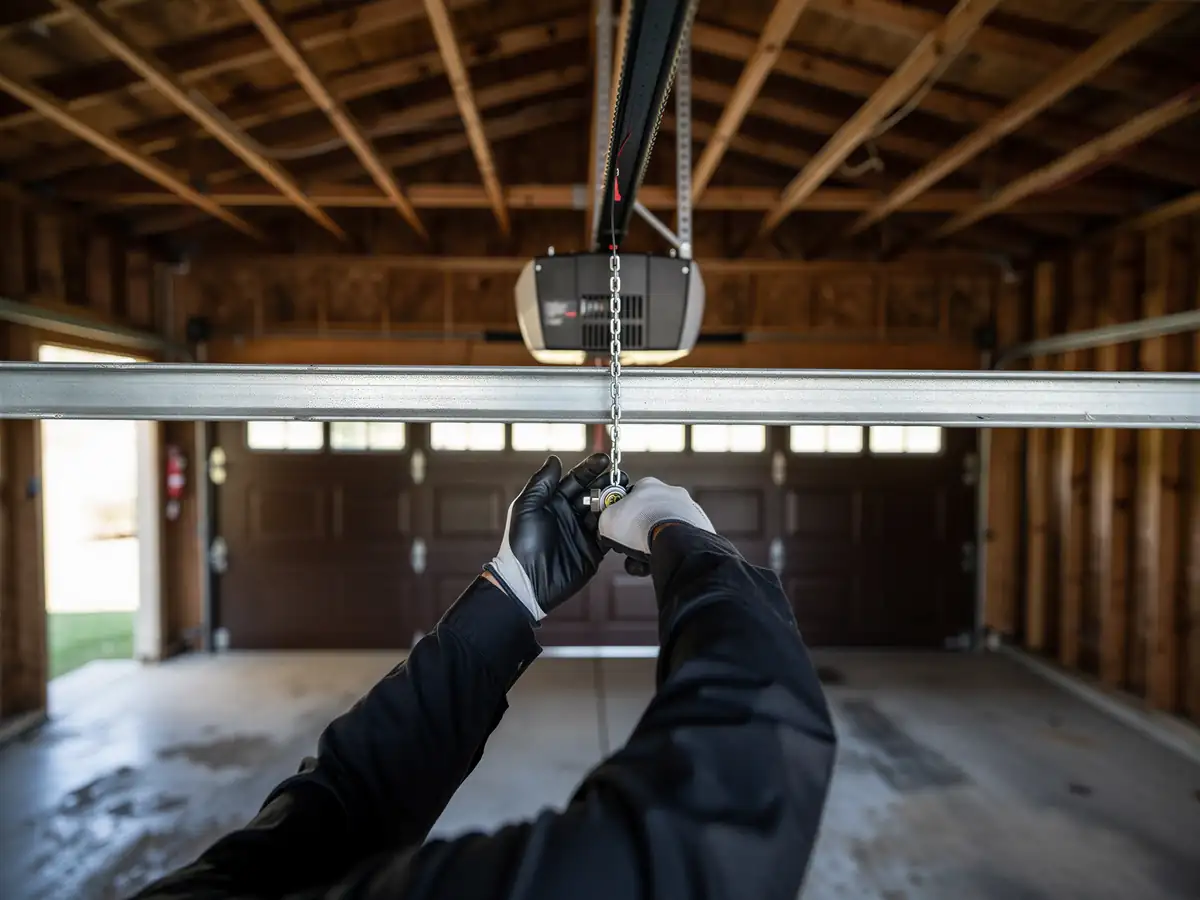
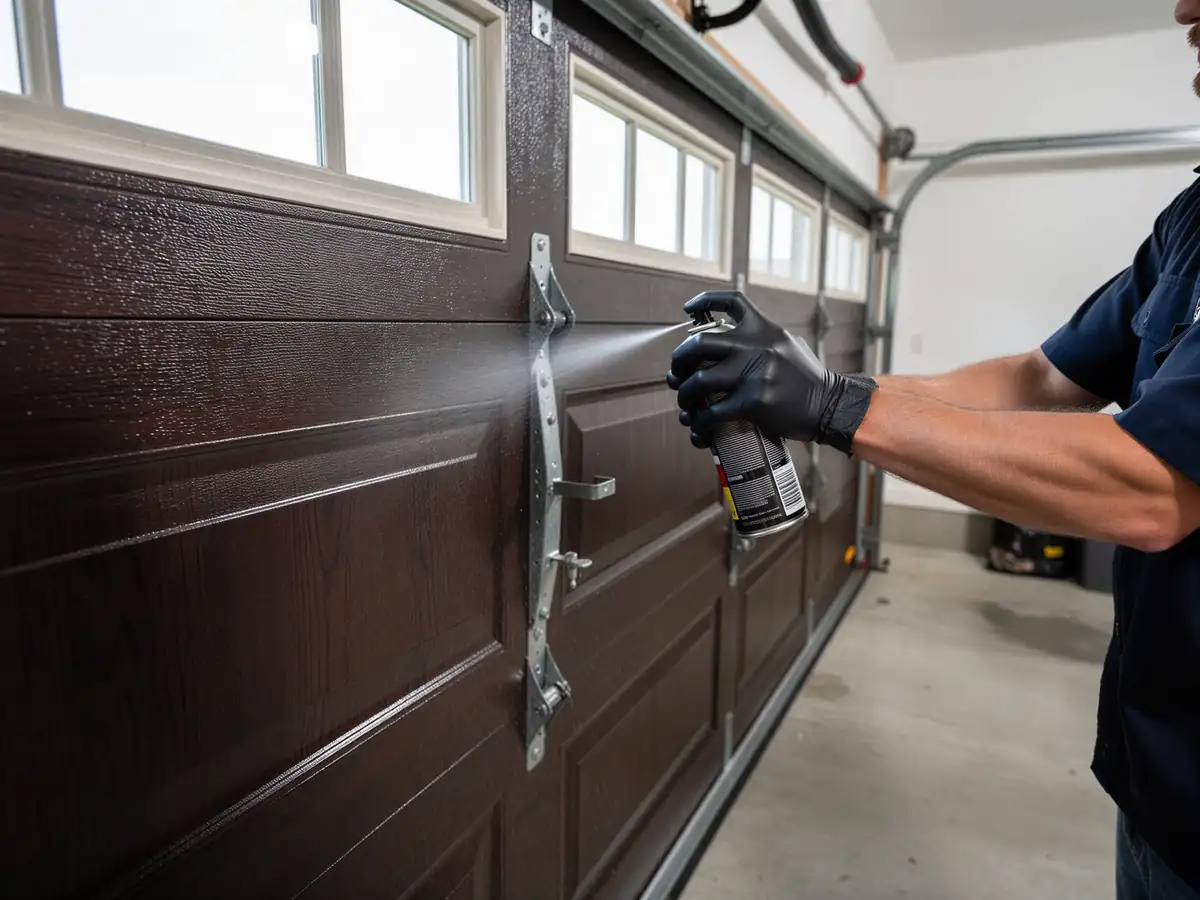
We sit in a cold-moderate climate band here, and that shapes failures more than most homeowners realize. Steel contracts in cold weather, and on a track system installed decades ago with looser manufacturing tolerances than you'd get today, that contraction is enough to bind a roller that ran fine all summer. Lubricant that was fine in July gums up and stops doing its job once temperatures drop, which is why a door that's been quiet for months suddenly starts grinding in late fall. Openers feel it too - the gear and sprocket units common in older installs slow down and strain harder to lift a heavier, colder door, which accelerates wear on a motor that's already thirty or forty years into service. None of this is dramatic. It's steady wear that shows up as a once-a-season call instead of a disaster, which is exactly why catching it early during a seasonal check costs less than waiting for a cold snap to finish the job.
How Local Conditions Play In
Across the roughly 37 named areas in our service territory, the housing stock runs heavy toward 1960s and 70s construction, which means the garage door problems we see are a narrow, repeatable set: original torsion hardware, steel tracks never upgraded, openers original to the house. With median household income here at $92,940 and roughly 104,140 owner-occupied houses among 241,852 households in the broader area, we see plenty of owners weighing a full replacement against another repair on an aging door - and for a door built before double-wall insulated panels were standard, replacement often wins on energy and noise alone, not just reliability. We run jobs within a tight radius of home base, out to places like Mendota Heights, Inver Grove Heights, West St. Paul, and South St. Paul, which keeps us working on the same housing-era patterns call after call instead of guessing at a town we don't know.