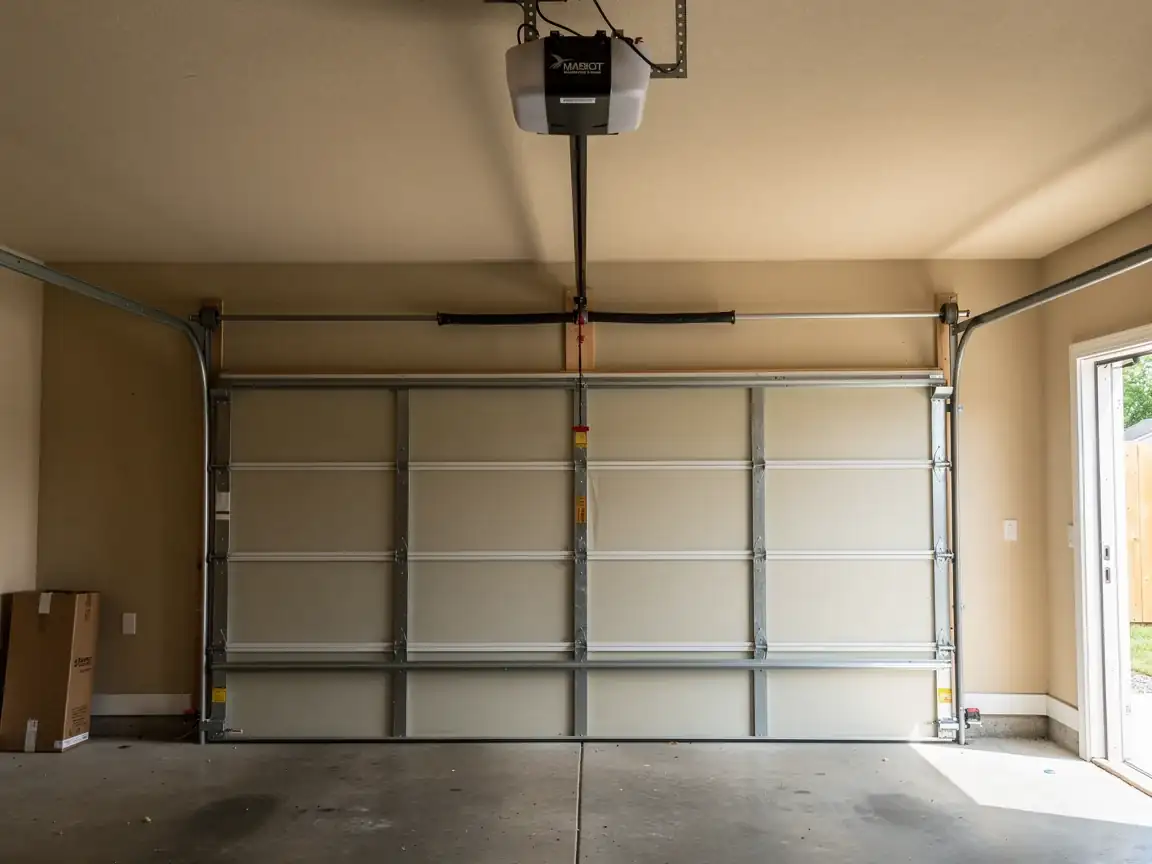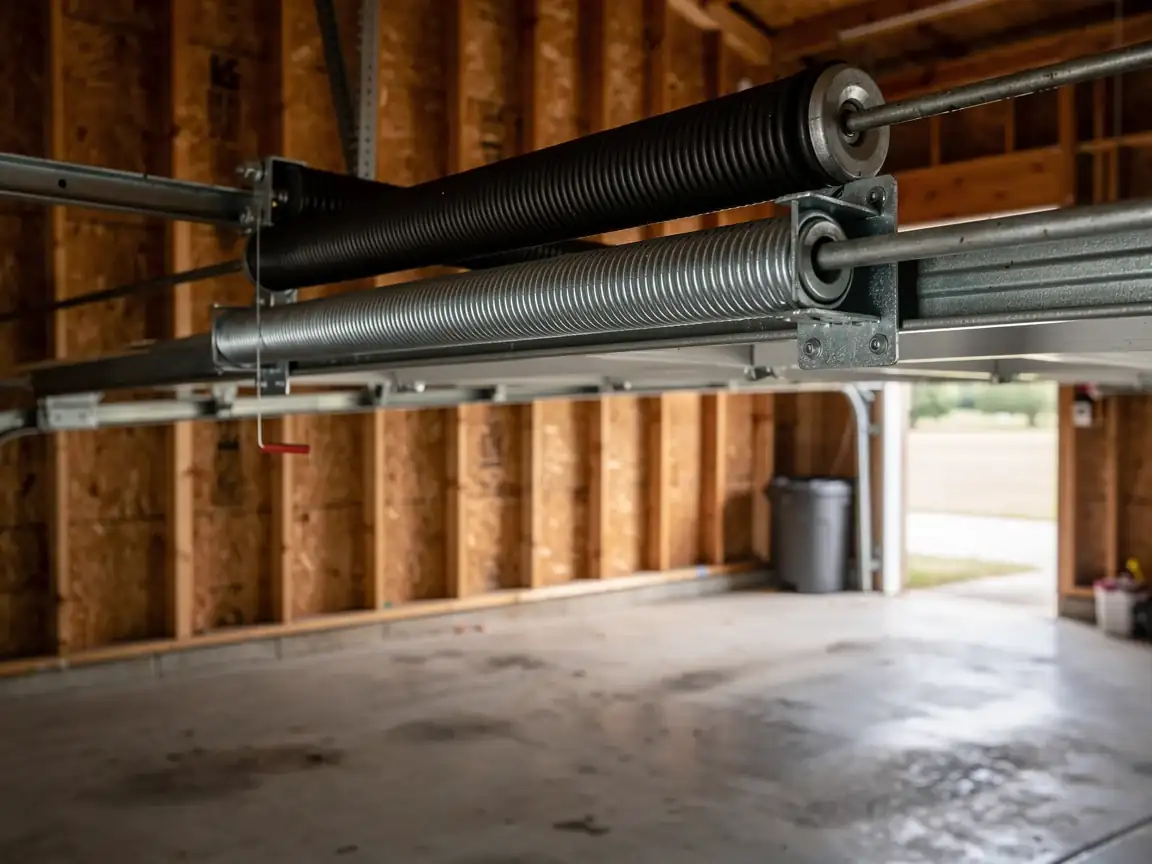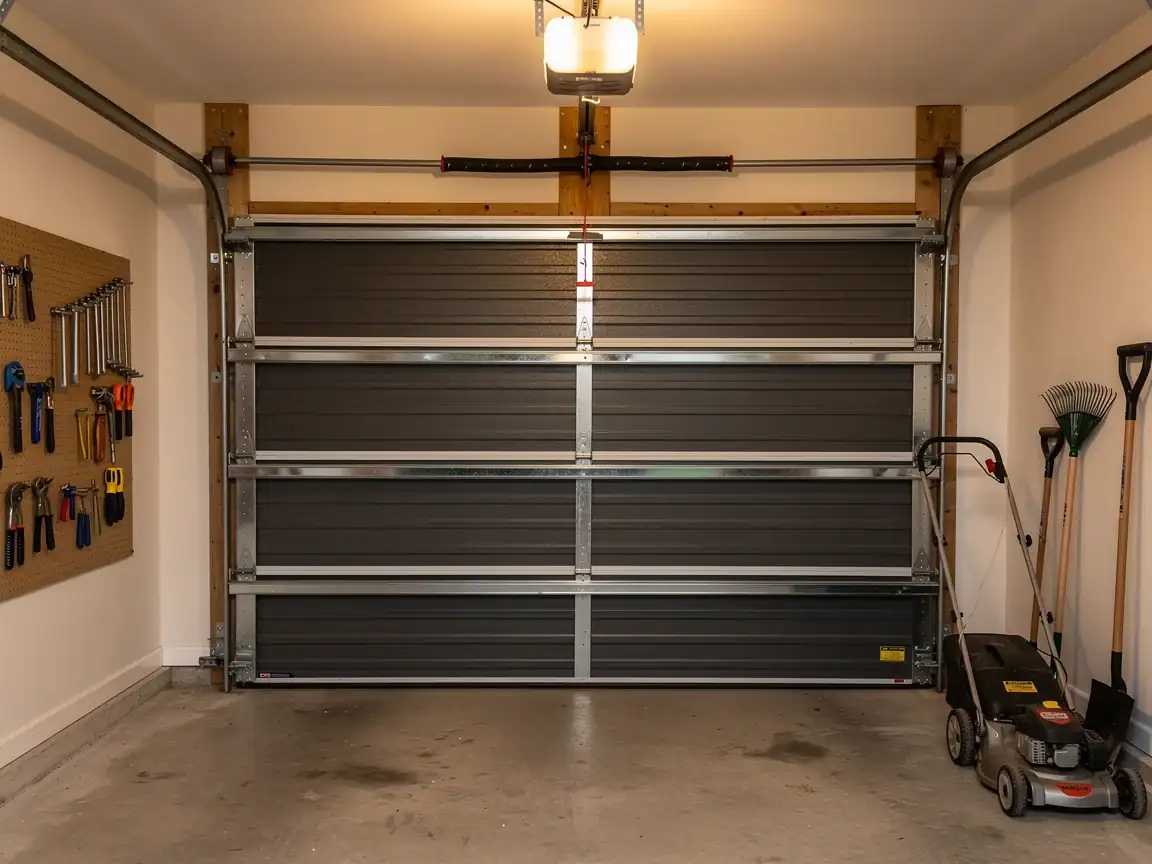
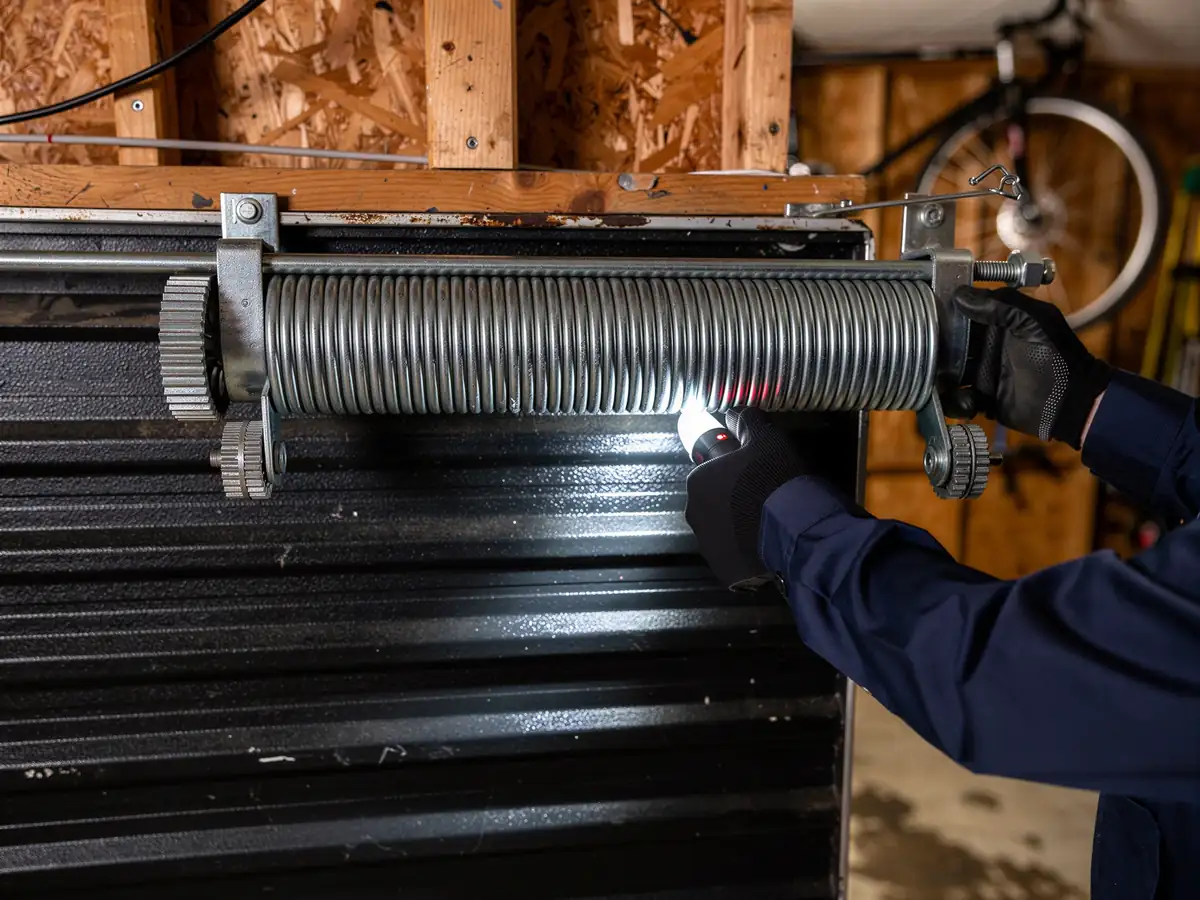
What You Are Seeing
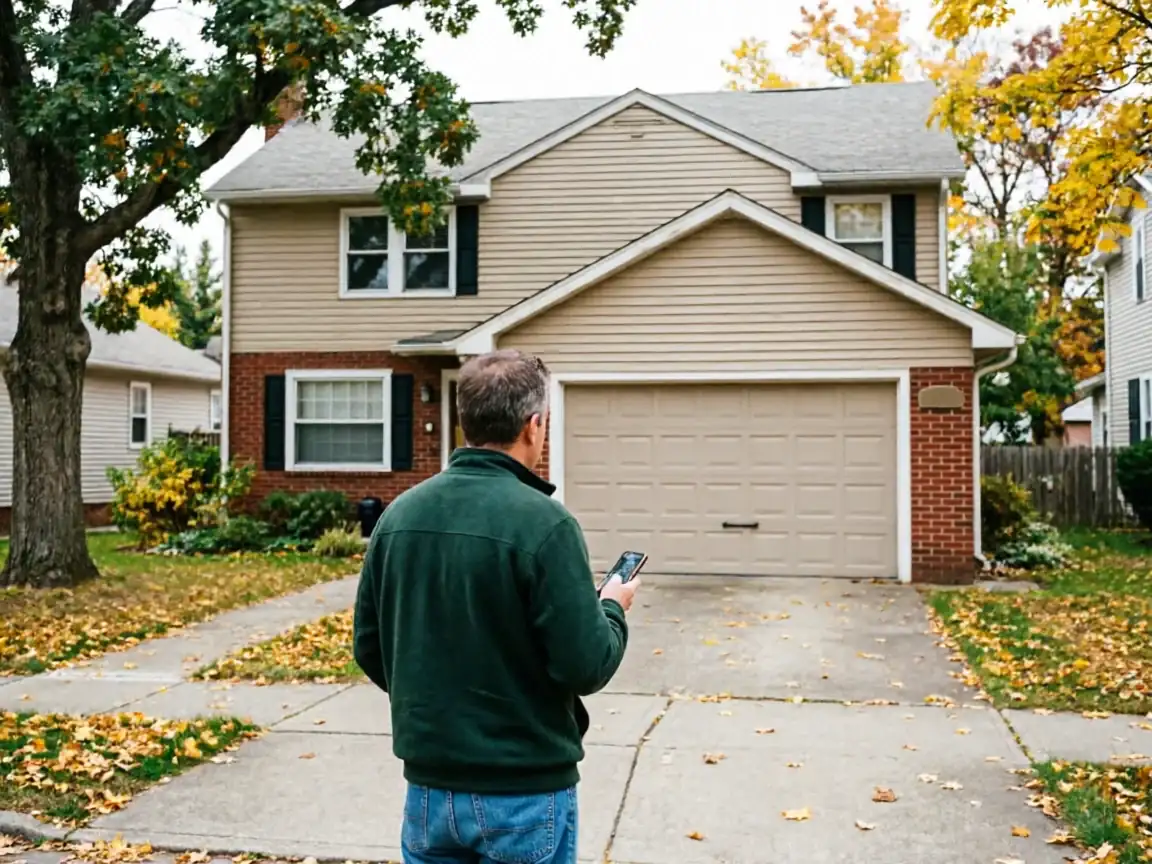
The door won't budge, or it slams down the last foot of track instead of settling. Maybe you heard a bang from the garage an hour ago and now the opener just hums while the door sits an inch off the floor. That's a broken torsion spring, and on a lot of Roseville garages it's the original one or a replacement from decades back, not something installed last year.
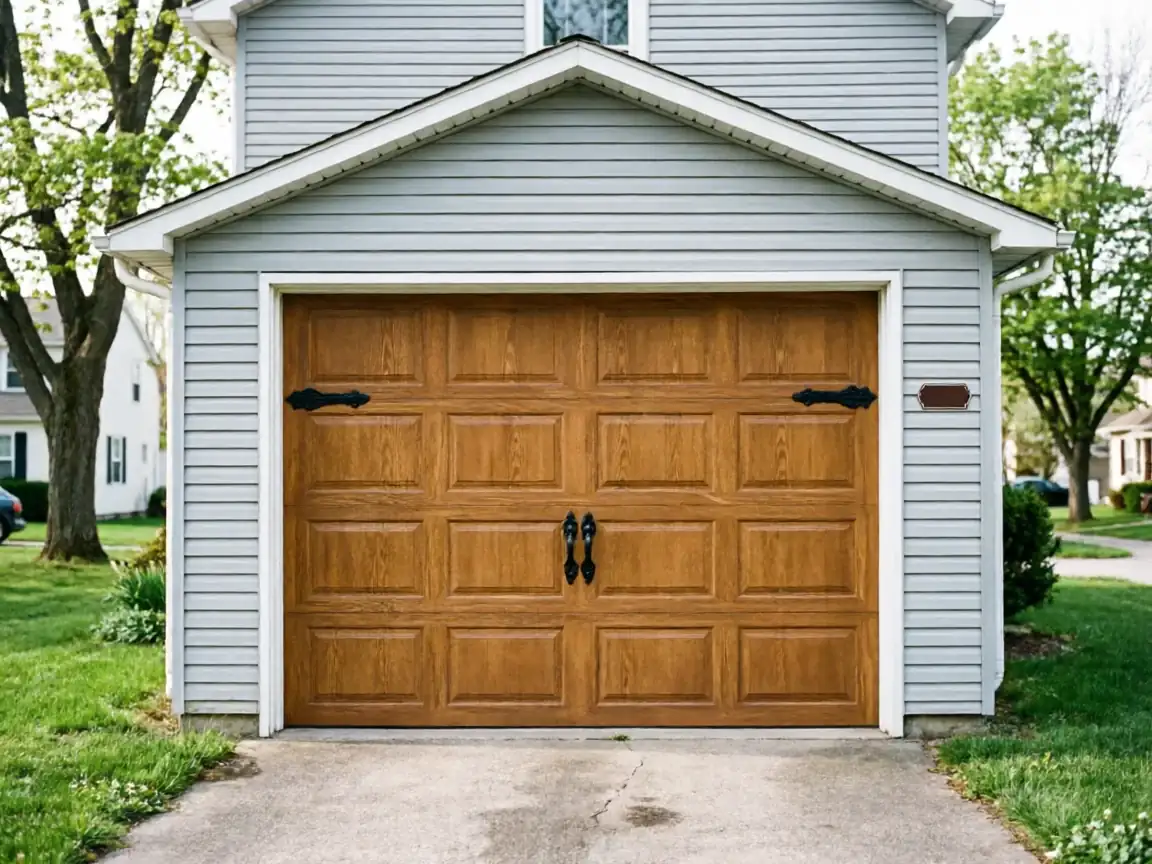
Roseville's housing stock mostly went up in the 1960s and 70s, with a median build year around 1968 for homes in town. That matters here because doors from that era often ran on torsion hardware sized for lighter, thinner panels than what gets sold today. When a spring on one of those setups finally gives out, it's not a simple swap-in-the-same-part job - the shaft, the drum, and sometimes the whole header bracket were built to a different standard than current stock parts.
Some owners also notice a slow fray rather than a sudden break: a cable starting to kink, or the door drifting crooked as it comes down. That's usually the spring unwinding unevenly before it fails outright, and it's worth a call before it snaps the rest of the way and takes a cable or a panel with it.
What Causes It Around Here
Torsion springs are rated for a number of open-close cycles
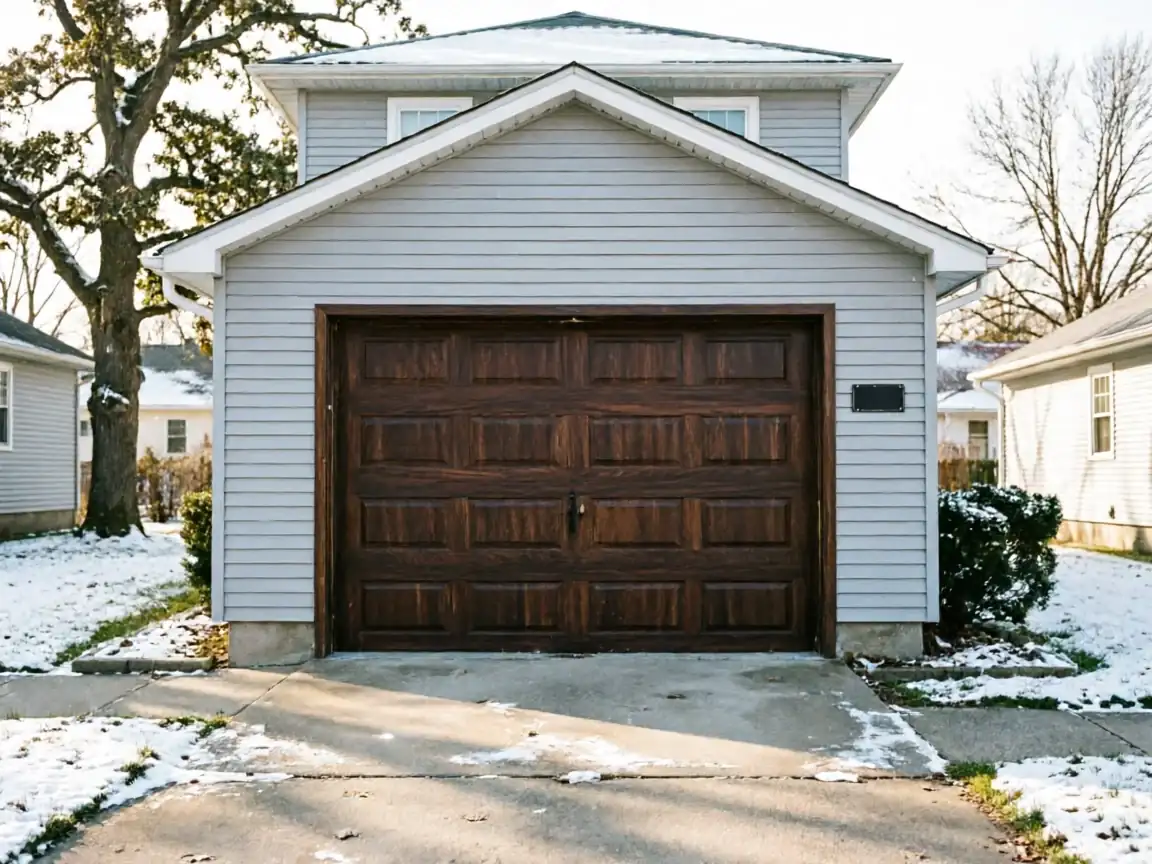
And cold weather shortens that number. Roseville sits in a cold, moderate climate band, which means the steel in these springs goes through repeated cycles of contraction in winter and expansion in summer - year after year, that fatigues the coil faster than it would in a milder climate. Add a door that's opened and closed several times a day and a spring that's already 20, 30, or more years old, and the failure isn't really a surprise. It's overdue.
Homes built in the 1960s and 70s window also tend to have single springs sized for the original door weight
Not for a heavier insulated replacement door that may have gone in at some point since. If a previous owner swapped the door but kept the spring, that mismatch adds stress nobody notices until the coil lets go.
We don't have specific wind or snow-load data for Roseville beyond the general cold-climate classification
So we're not going to claim a storm caused your spring to fail - more often it's just years of cycling on original or undersized hardware finally catching up with the door.
How We Fix It
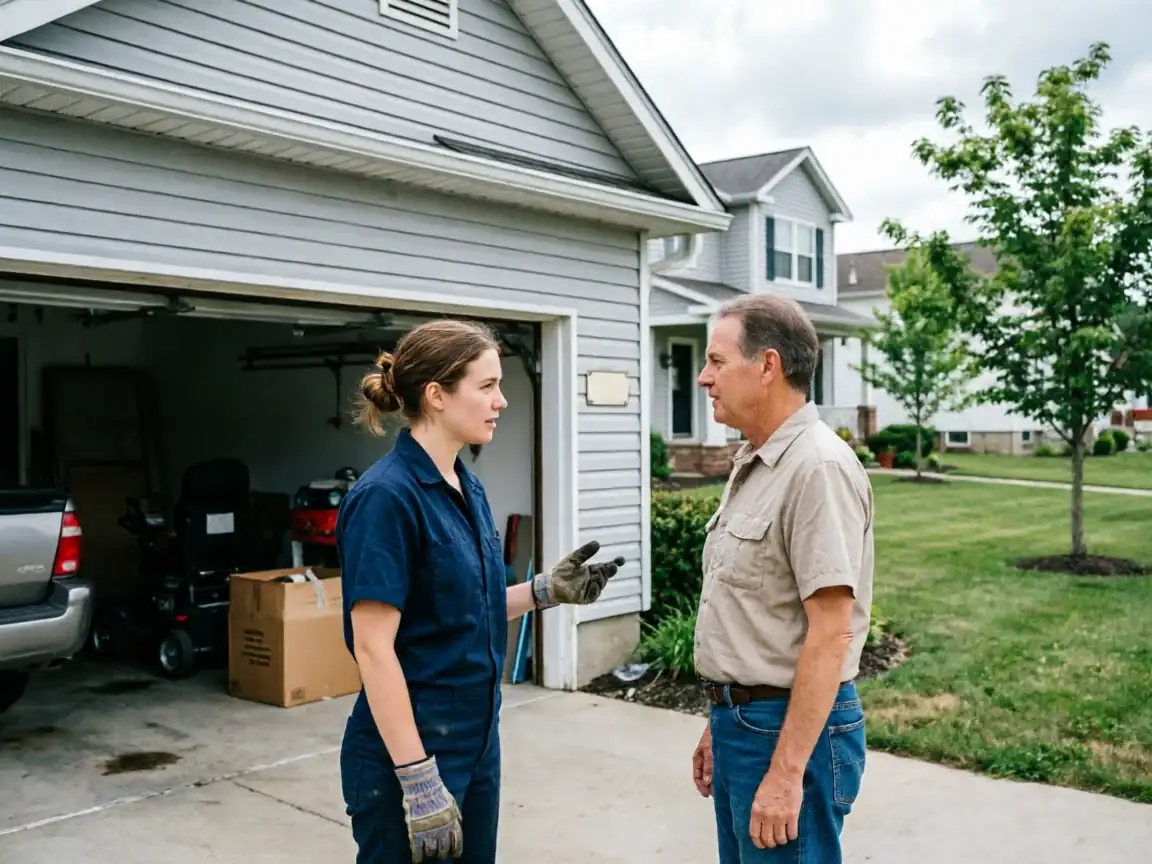
We travel the 14 miles from Eagan to get to Roseville jobs, so we're not working out of a Roseville depot or claiming a local response window - just naming that plainly so you know what to expect. Once we're on site, the fix depends on what's actually broken: a single snapped torsion spring on an older, lighter door usually gets a straight replacement matched to the door's actual weight, not just whatever size was in there before. If the spring was undersized for a heavier door that replaced the original at some point, we'll size the new one correctly instead of reinstalling the same mismatch.
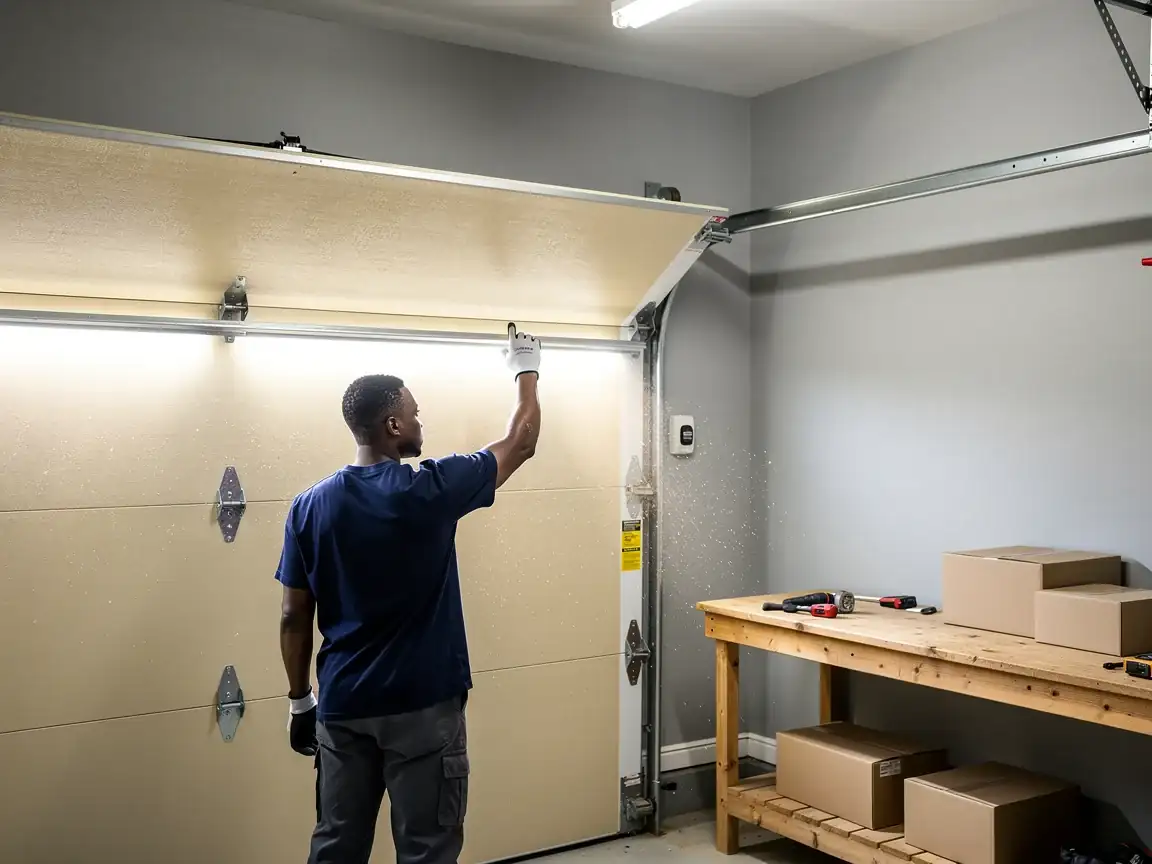
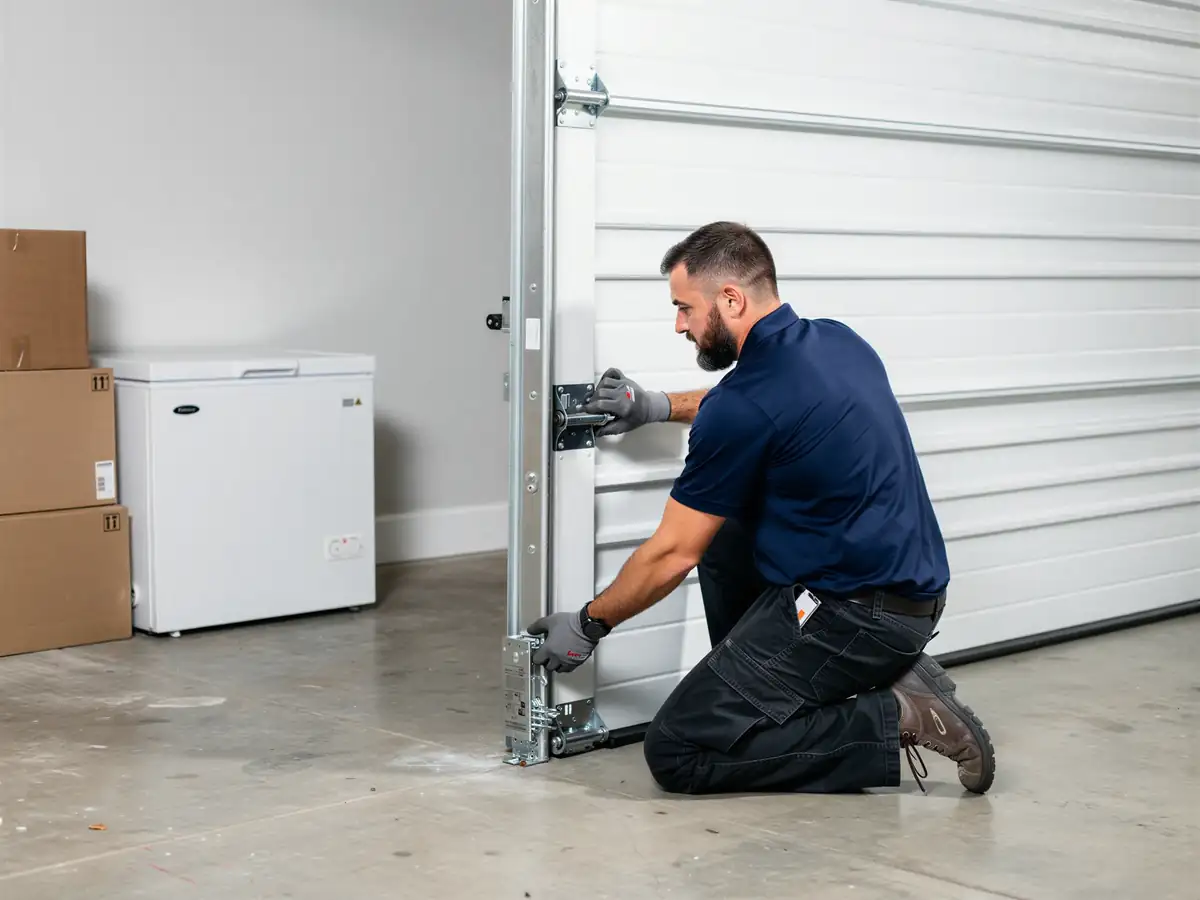
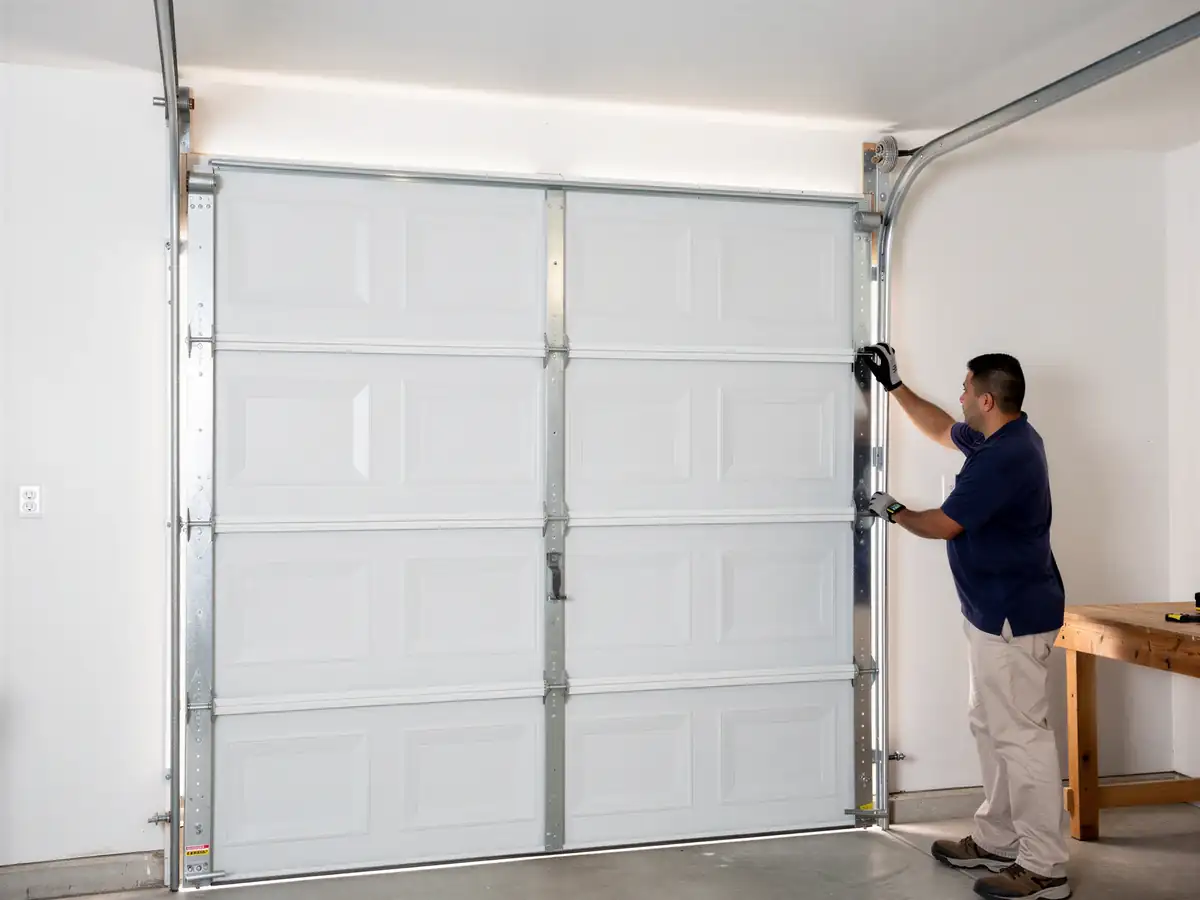
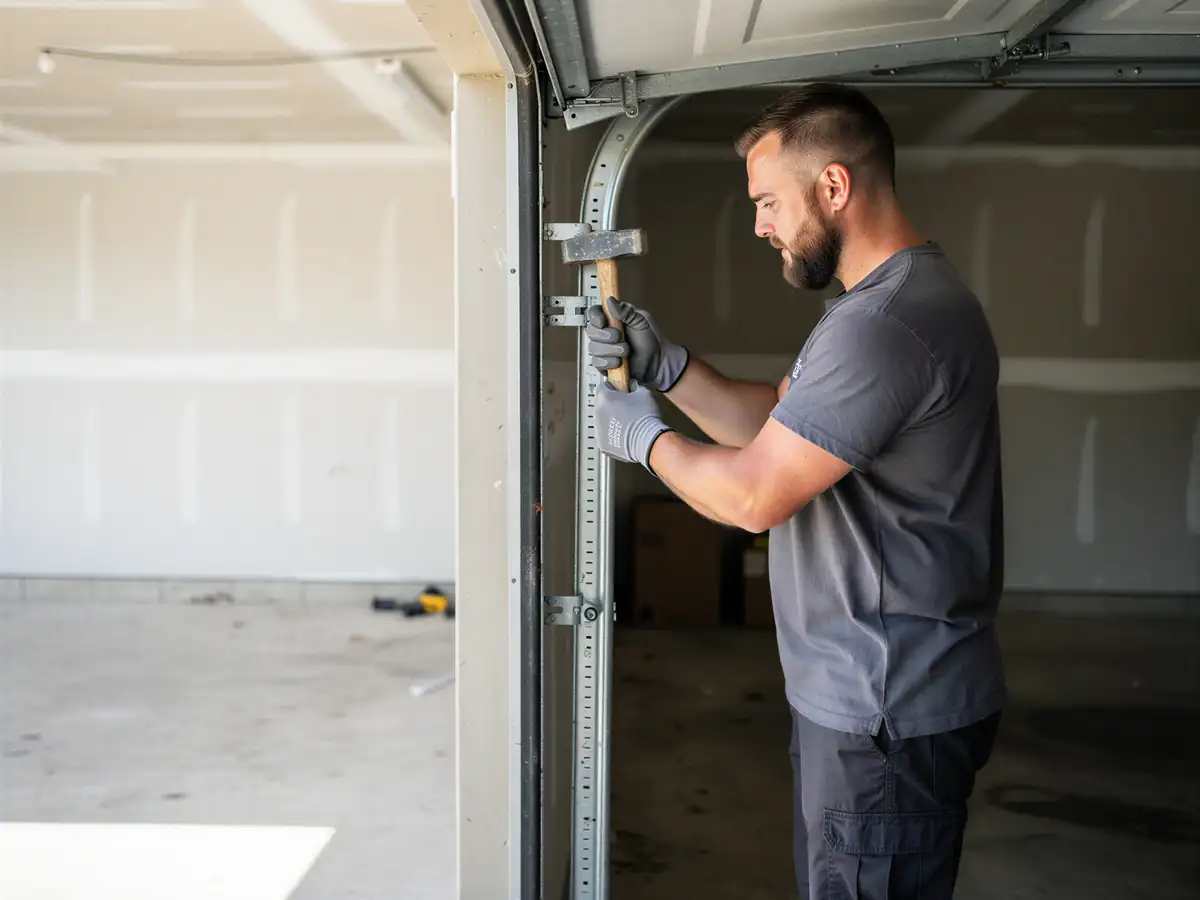
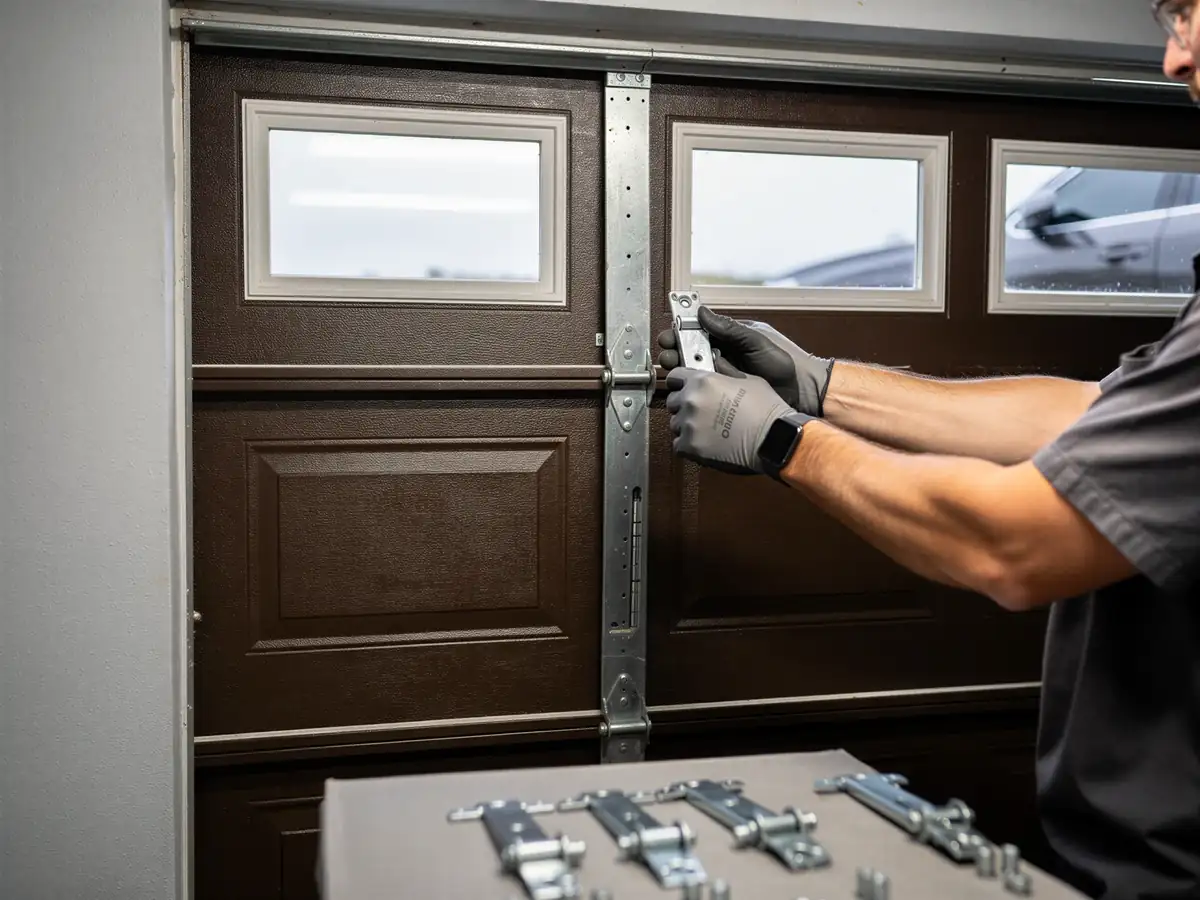
We also check the drums, the shaft, and the cables while the door is open and unloaded, since a spring failure on older torsion hardware often stresses those parts too, even if they look fine at a glance. If a bracket or drum is cracked from decades of cycling, we'll say so before we close the door back up - no sense bolting a new spring to hardware that's about to fail next.
One limit worth knowing: if your garage uses an extension spring setup instead of torsion, or the hardware is nonstandard for its age, parts can take longer to source than a same-day fix allows.
Doing It Yourself
Don't. A torsion spring holds enough tension to break a bone or worse if it lets go while you're working on it, and that risk doesn't go down because the door is old - if anything it goes up, since decades-old hardware can shear or crack under the wrench instead of releasing cleanly. Winding bars, a firm ladder footing, and knowing the exact turn count for your specific spring are the bare minimum, and even then this isn't a job most homeowners should take on solo.
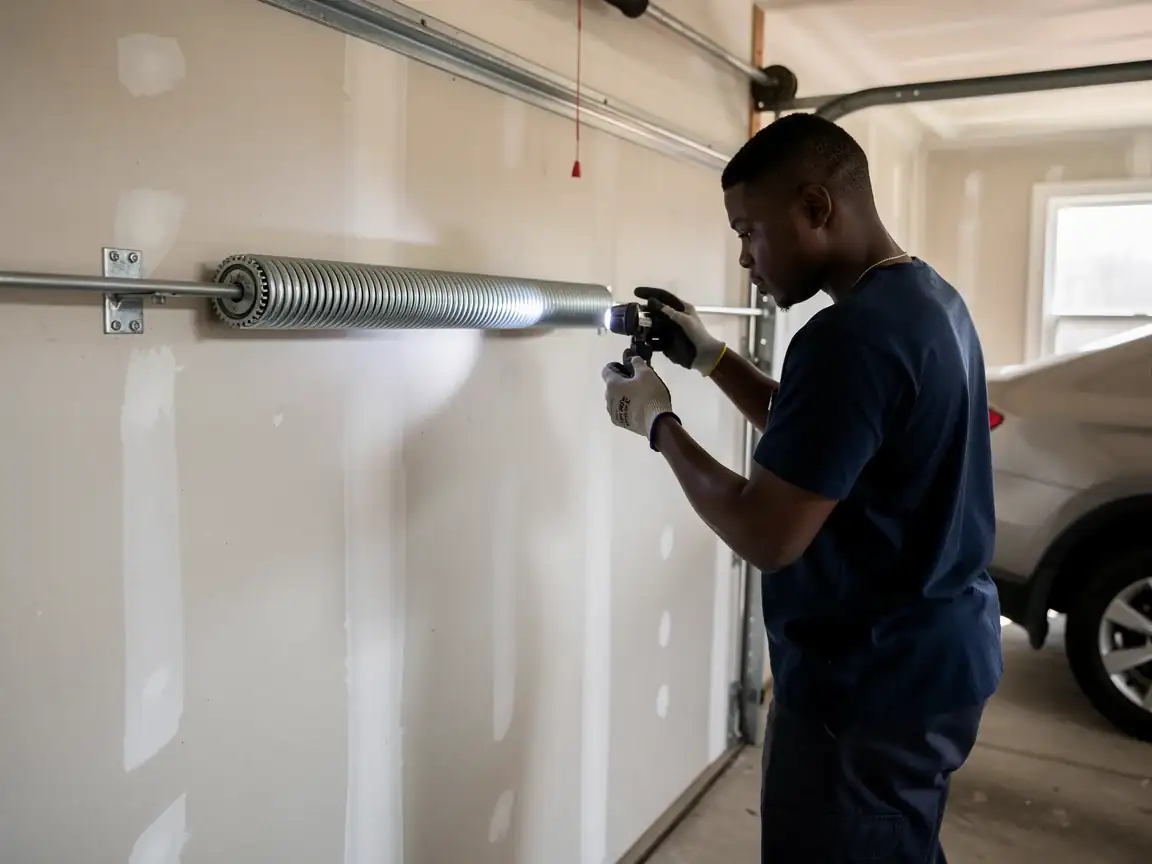
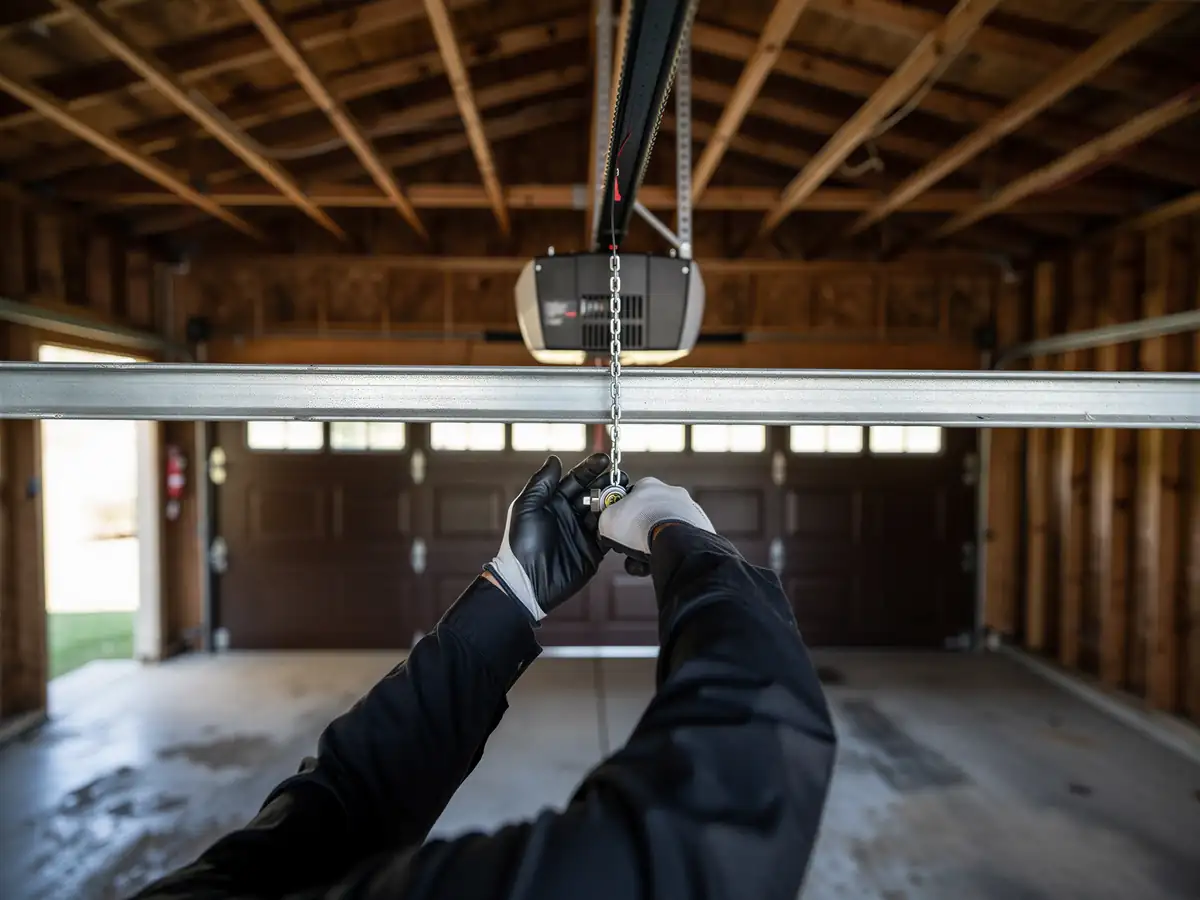
What you can safely check yourself: look at the spring (above the door, over the header) for a visible gap in the coil, and check whether the door feels balanced when a helper lifts it by hand with the opener disconnected. A door that's hard to lift or drops on its own usually confirms a spring problem before anyone touches a wrench. Note anything odd - a crooked drum, a frayed cable, a bent bracket - and mention it when you call, since that changes what parts we bring out.