What It Costs
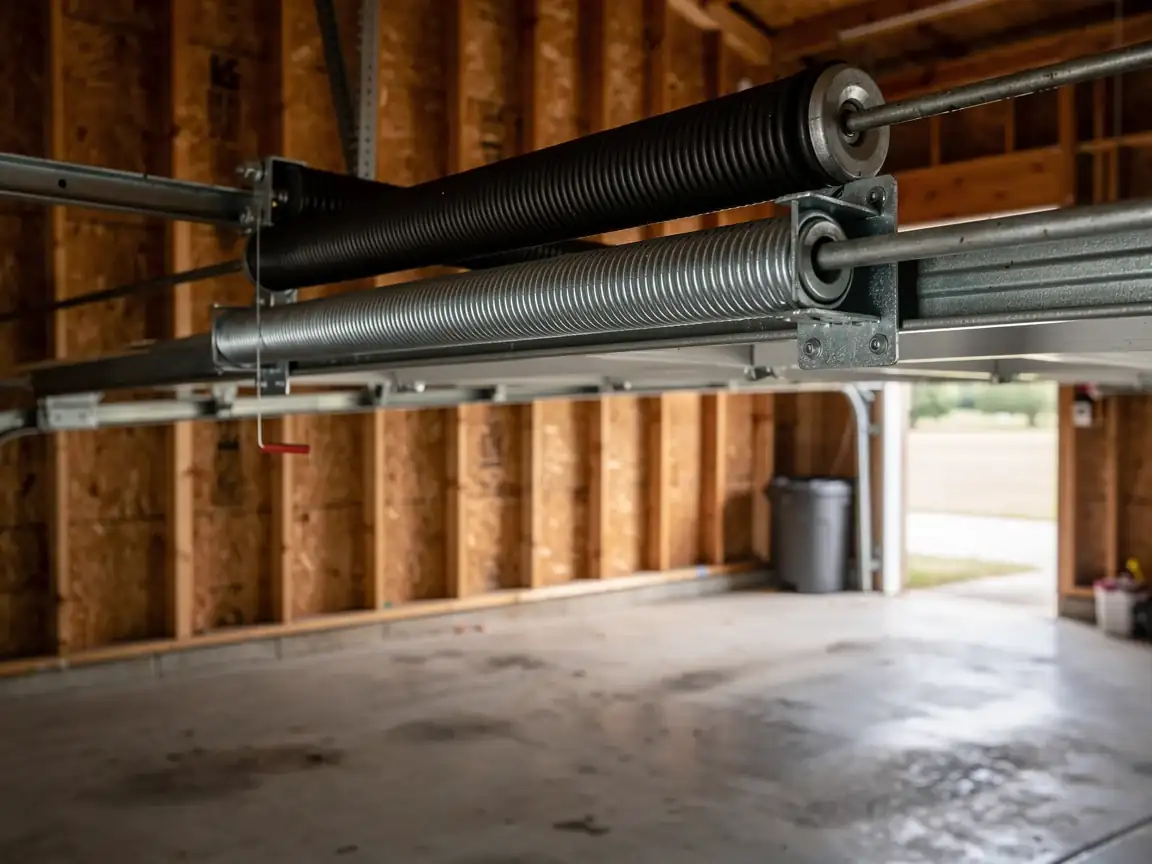
We don't post a flat number because what you're paying for depends on what broke and what's behind the wall. A torsion spring job is a different bill than an opener swap, and a bent track from a backed-into door is different again. What we can tell you is what tends to drive the bill up in St. Louis Park specifically: houses built close to 1965 often still carry their original hardware, and original torsion springs on a door that old are usually wound for a lighter, single-layer steel panel. If a homeowner added insulation or a heavier door later without upsizing the springs, that mismatch costs more to fix than a straight spring swap would. We'll tell you on the phone, before a truck leaves Eagan, whether your symptoms sound like a quick fix or something that needs a look first. We don't pad an estimate to cover a drive we were going to make anyway.
What Can Go Wrong
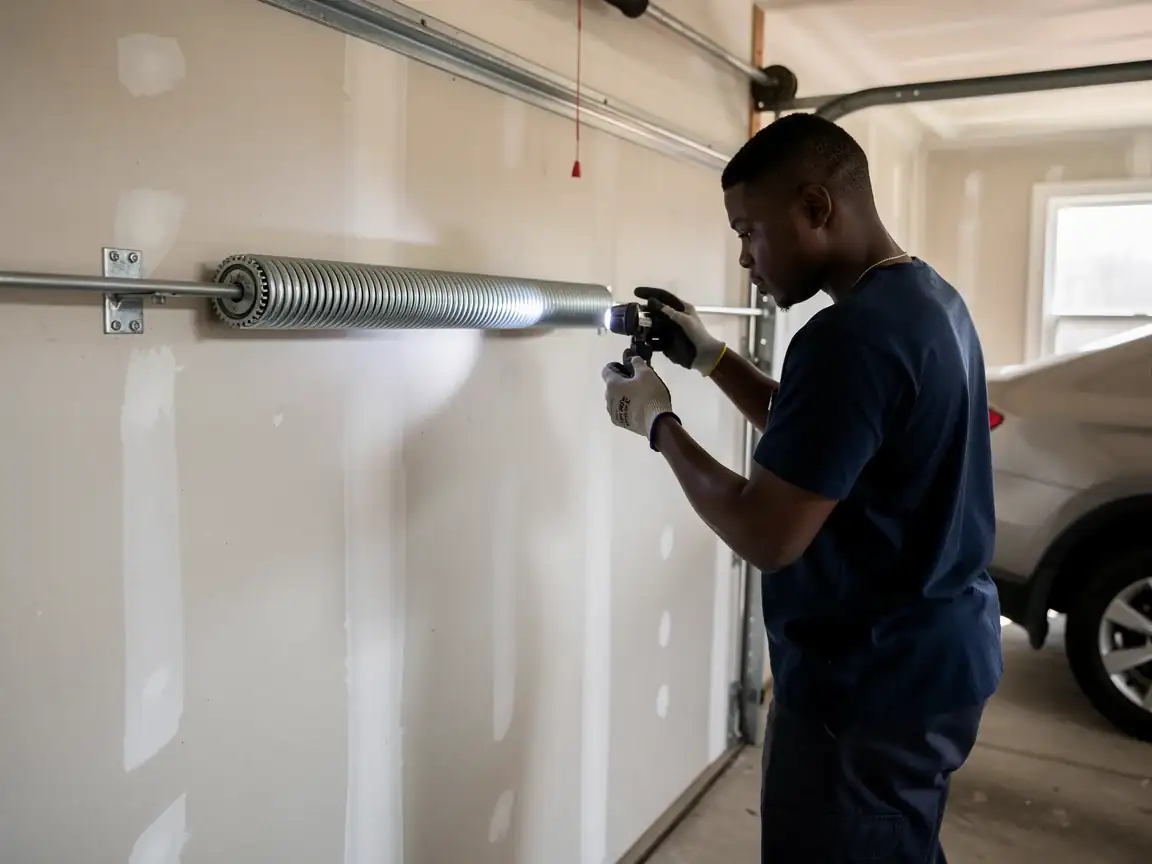
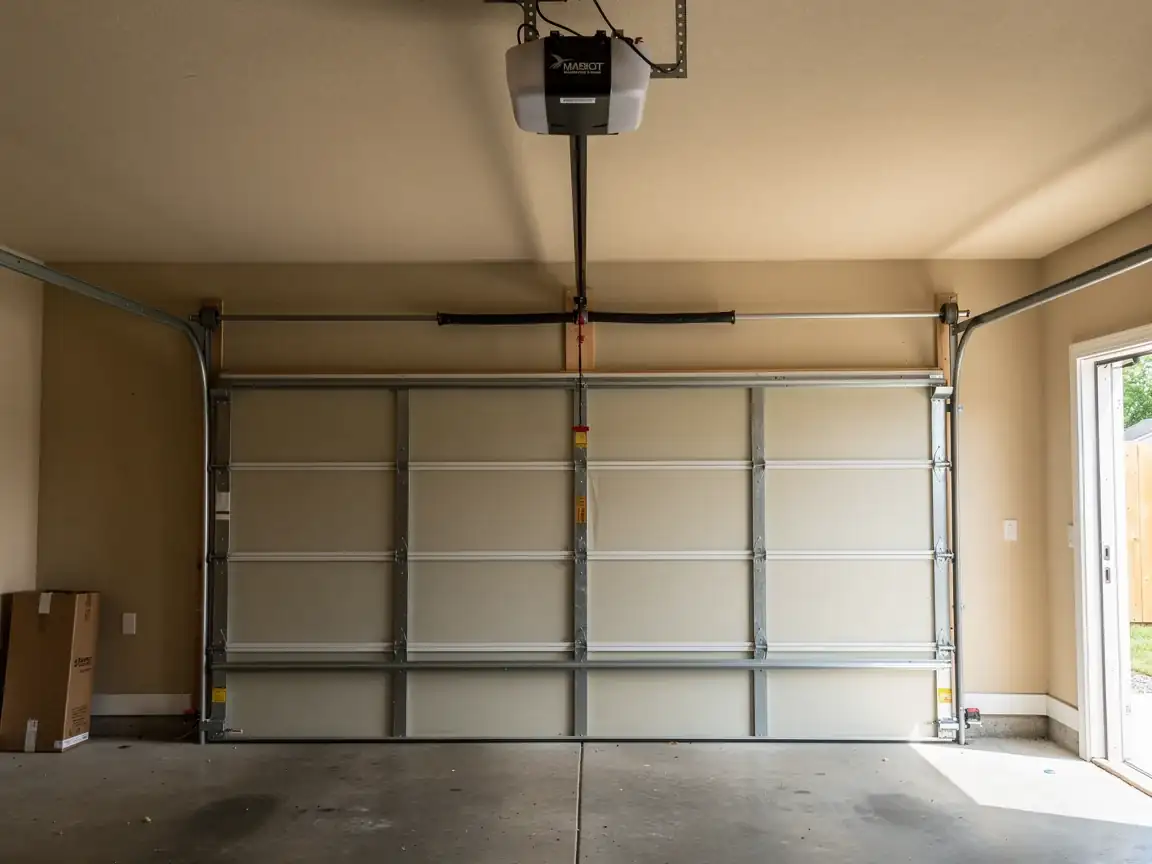
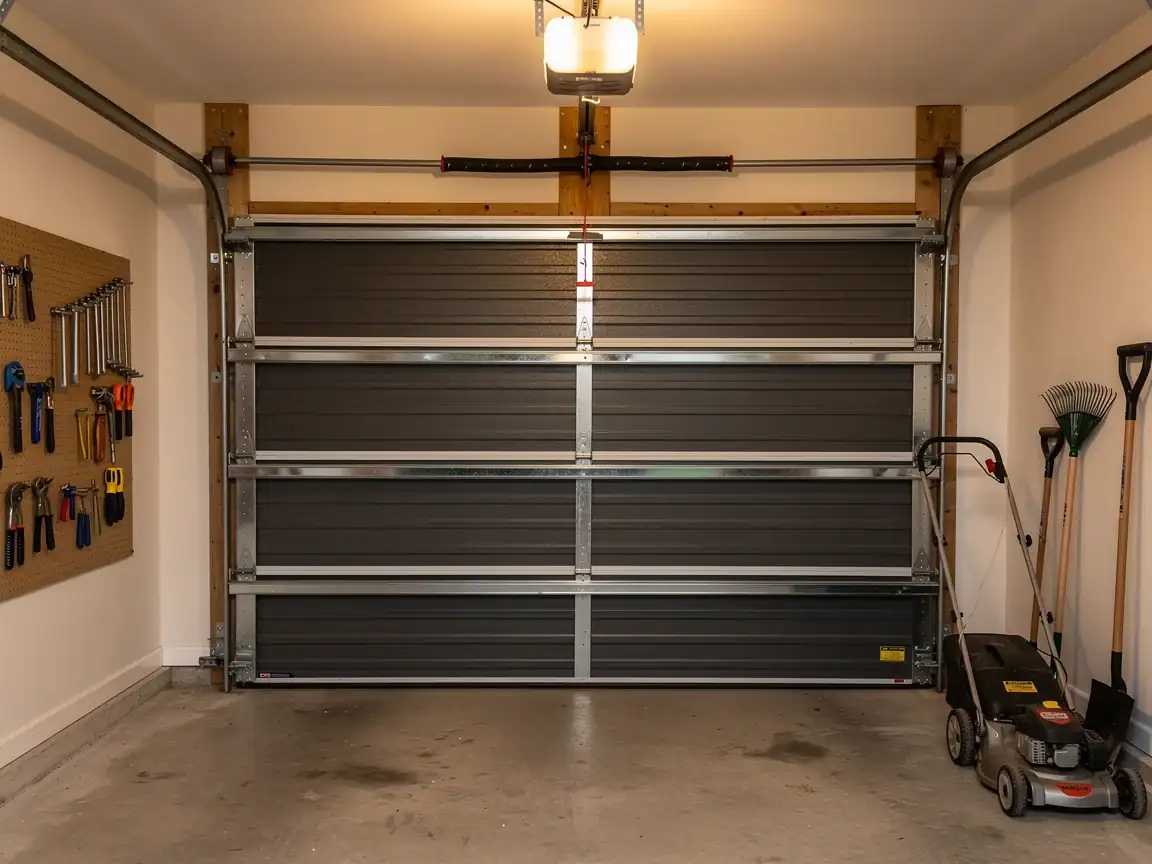
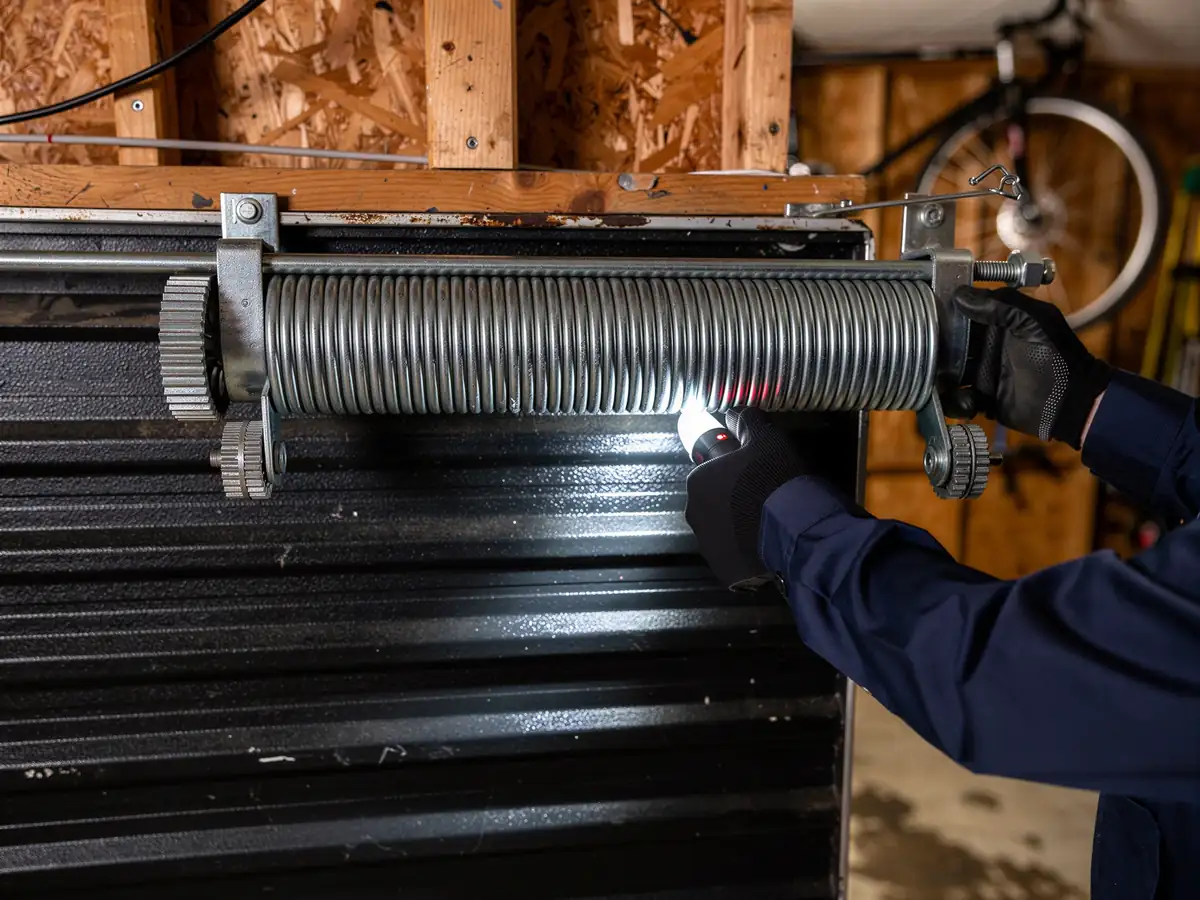
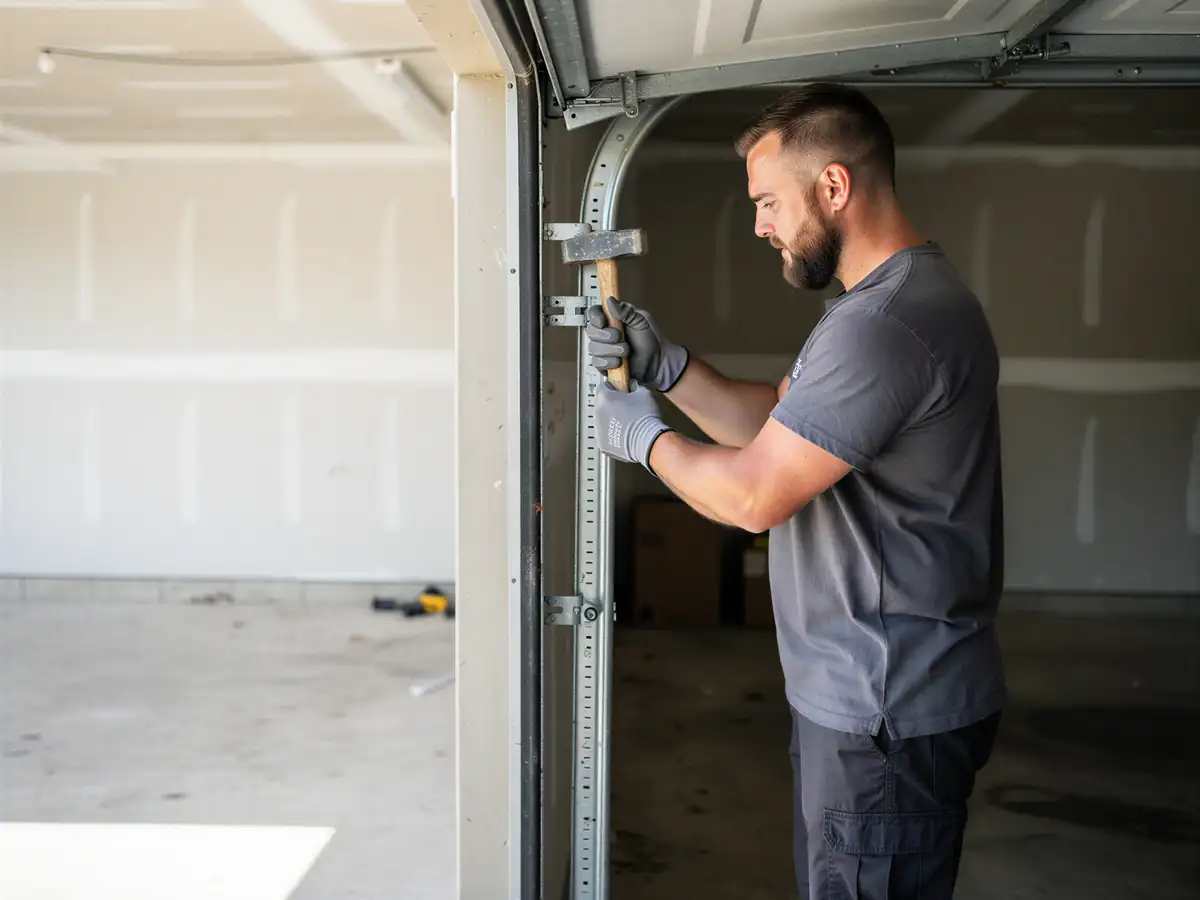
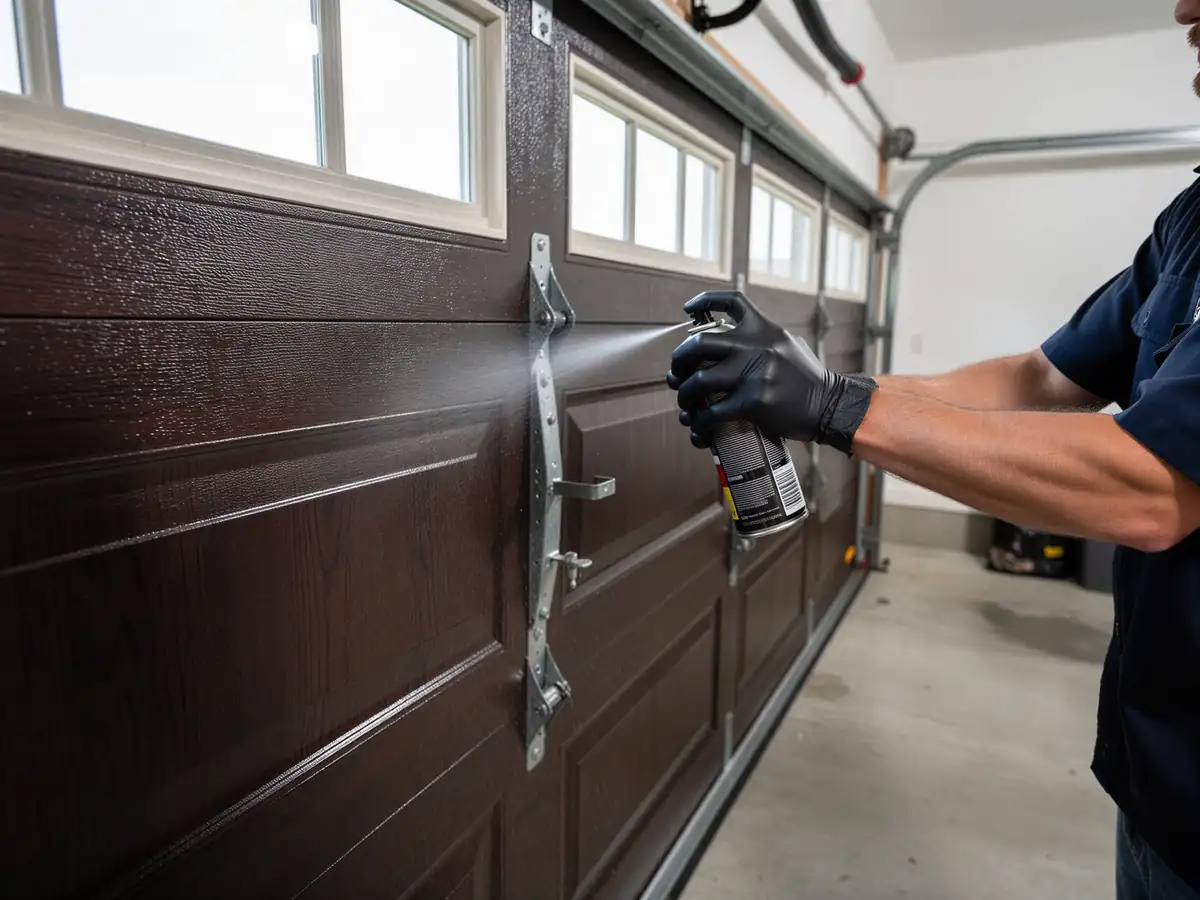
On a door this age, the torsion spring is the part most likely to let go first, usually without warning, usually on the coldest morning of the week. Cables fray where they wrap the drum, especially if the spring's already weak and the cable's been carrying more than its share of the lift. Rollers that have never been replaced bind in the track and can walk a door off its rail entirely if nobody catches the noise early. Openers from a retrofit install sometimes have travel limits set wrong for the current door, which shows up as a door that reverses for no reason or won't seat all the way down. We've also seen single-layer steel panels from this era dent and bow at the bottom where water sits against the slab - not a safety issue by itself, but it throws off the door's balance over time. The honest limitation: if the track is bent badly enough, or the door's warped past square, replacement is usually cheaper than chasing a repair that won't hold.
How Long You Are Without the Door
We run this job from Eagan, and St. Louis Park is a 14-mile drive from there - the same distance that separates Eagan from Roseville, Credit River, and Vermillion. That's not a complaint, it's just the geography, and it means we schedule the visit rather than promise you a truck in twenty minutes. For a stuck or broken door, we'll talk through whether it's safe to leave the car in or out before anyone arrives, since a door off-track or down on a broken spring shouldn't be forced either way. Once the technician's on site, most spring and roller jobs close out same visit - the parts for a 1960s-era torsion setup are common stock, not special order. Where it stretches out is a part we don't carry on the truck, which happens more with openers than with springs. We'd rather say that up front than have you waiting on a promise we can't keep from fourteen miles away.
Parts We Carry
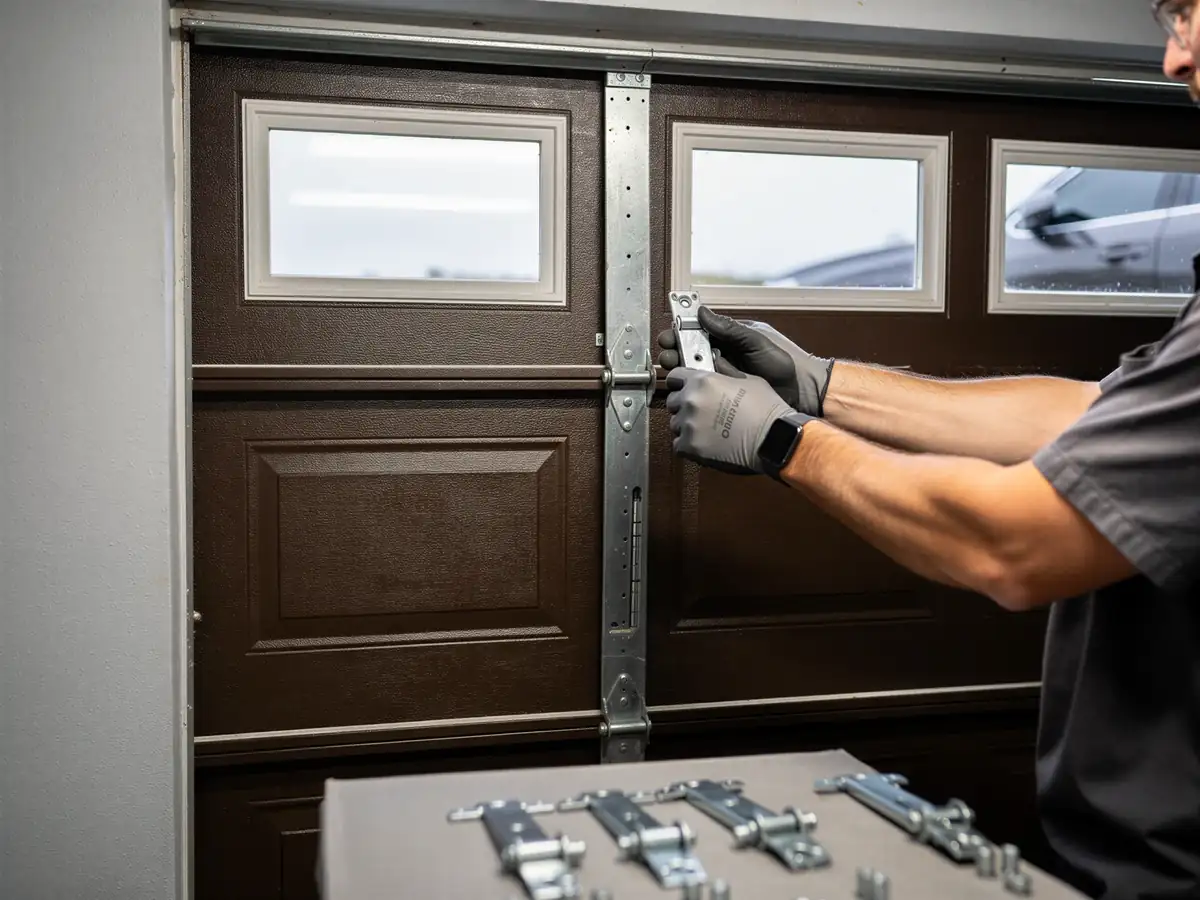
For houses built around the mid-1960s, which describes a lot of St. Louis Park, we stock torsion springs sized for the standard single and double door widths that were common on that era of garage. We carry replacement rollers - nylon and steel - cables, and standard drums, since those wear together on a door that's been running the same hardware for decades. We keep universal travel-limit kits for openers that were added after original construction, since getting those set correctly is often the actual fix on a door that seems to have a mind of its own. What we don't carry on the truck is specialty hardware for high-end or custom doors - if yours is one of those, we'll tell you what we need to order rather than jury-rig a part that won't hold. For most of the doors we see in this town, the common stock covers it.