Serving Eagan, MN & nearby
(651) 401-2195
Eagan, MN

Garage Door Maintenance for Golden Valley Homes

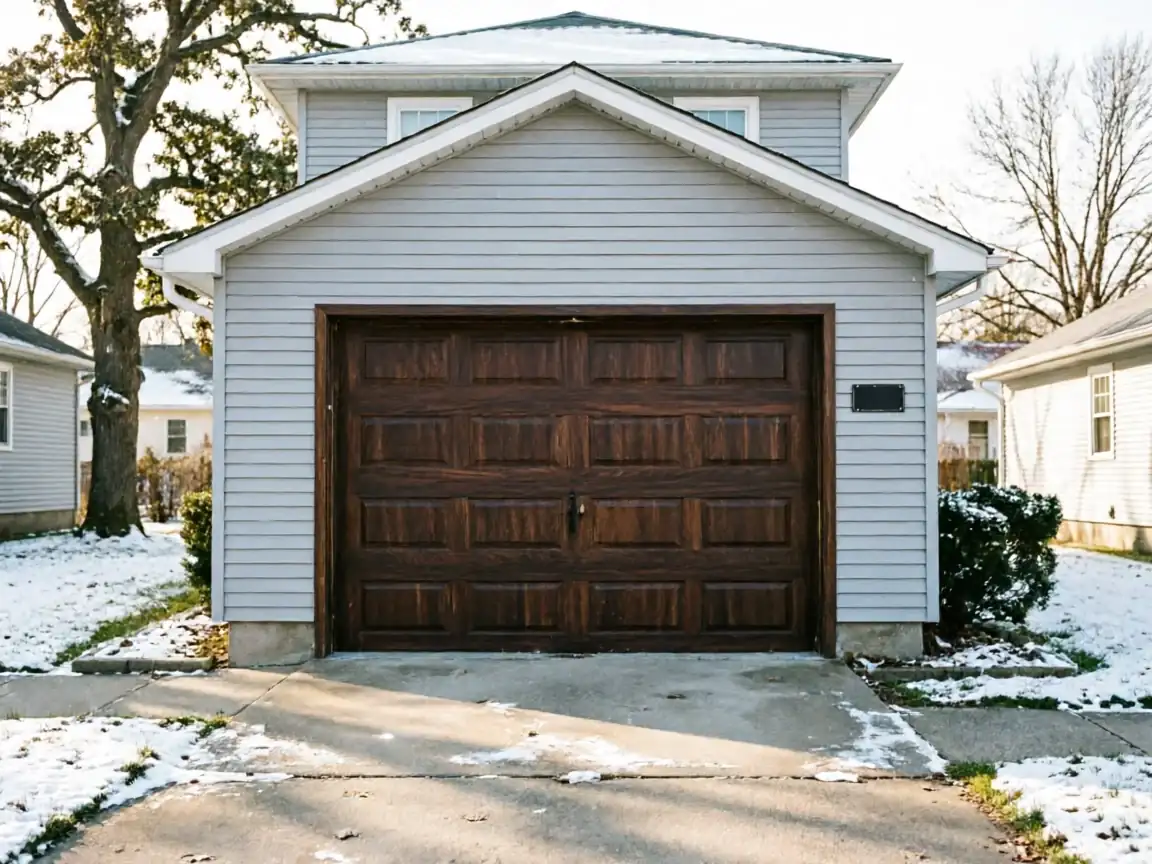
Garage door maintenance for Golden Valley homes, most built around 1966. We drive the 15 miles from Eagan to service torsion hardware that's aged past its original hardware life.

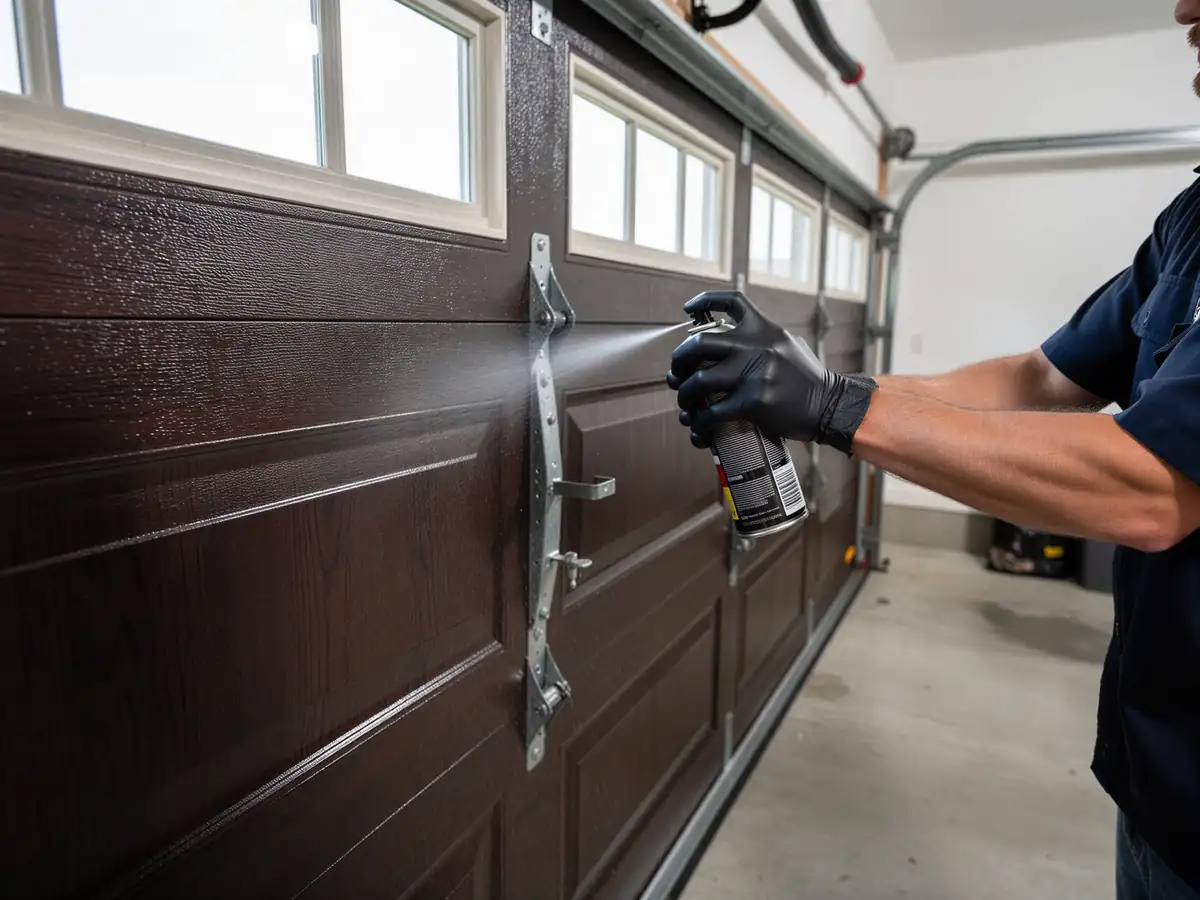
A technician in black gloves sprays lubricant on a brown garage door hinge.
Eagan, MN
8 services
7 service areas
Diagnosis first, then the fix

Parts We Carry

Golden Valley sits about 15 miles from our Eagan shop, and that drive shapes what we load on the truck before we leave. Houses here went up around 1966, which puts a lot of doors on torsion springs and roller hardware that predates the lighter steel and nylon rollers common on newer builds. We stock standard torsion springs in the sizes that fit that era's single and double doors, steel rollers, lift cables, and weatherstrip kits sized for older track widths. Across the wider service area, housing runs from 1956 to 2004 with a median around 1973, and the stock here leans toward that 1960s-70s band that shows up in dozens of neighborhoods we cover. What we don't carry on the truck is anything specialty or discontinued - if your door takes an odd-width track or an obsolete opener gear, that part has to be ordered, and we'll tell you that up front rather than make a second trip look routine.

We also carry basic opener drive components - chain, belt, and screw-drive gear kits - since a 1966-era door often got a retrofit opener added decades after the door itself went in, and the two don't always match.

What It Costs

We don't post a flat number for Golden Valley because the job itself decides it - a tune-up on an original 1966 torsion setup with one working spring is a different scope than a full hardware replacement on a door that's been patched twice already. What we can tell you is that Golden Valley's median household income runs higher than the service area average of $92,940, and in practice that means more owners here ask for the full tune-up - spring balance, hinge and roller check, track alignment, weatherseal - rather than a single-point fix. That's a choice, not a requirement; a one-spring repair still stands on its own. The honest limitation: if your opener is old enough that replacement parts are backordered or discontinued, we'll say so rather than quote a repair that won't hold.

How Long You Are Without the Door

Because this is a drive-out job from Eagan and not a town with its own crew, the clock on a Golden Valley call runs a little differently than a call five minutes from the shop. The 15-mile trip means we build the visit around getting everything needed in one pass - diagnosis and fix together where the part's a common one, which most 1966-era torsion and roller jobs are. Where the fix needs an ordered part, the door may sit out of service longer than a same-neighborhood repair would, simply because the part has to arrive before the second trip makes sense. We're not going to promise a same-day turnaround we can't back up from 15 miles out; what we will do is tell you, before we leave the driveway, whether your fix is a one-visit job or a two-visit job.

What You Are Seeing

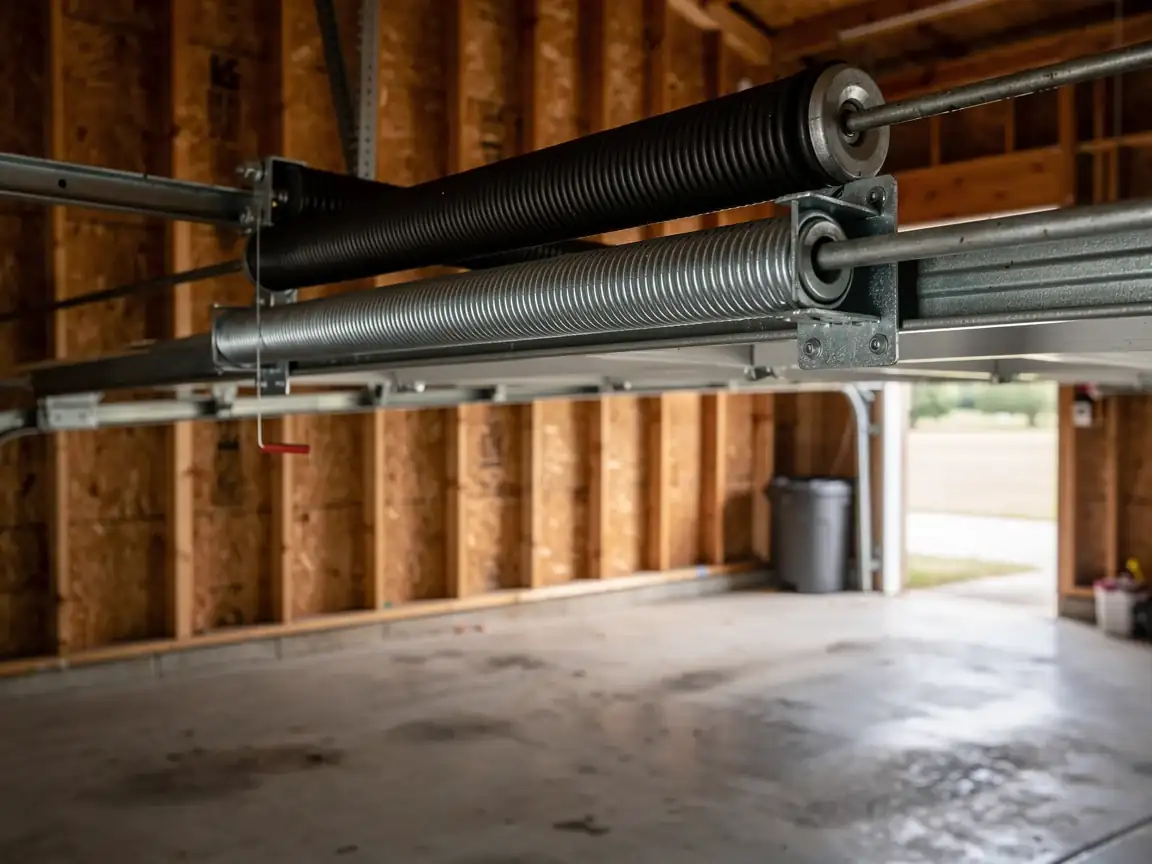
On a door that's been in service since the 1960s, the symptoms tend to repeat house to house. A door that's heavy to lift by hand, or that an opener strains against near the top of travel, usually points to a torsion spring that's lost tension - normal fatigue on original hardware, not a fluke. Rollers that grind or stick in the track, especially on the first cold mornings, are steel rollers original to an older door rather than the sealed nylon kind installed in newer builds. Sagging at the bottom corner of a wood-composite panel, or a cable that looks frayed where it wraps the drum, both show up more often on doors from this build era than on anything put in during the last 15 years. None of these are emergencies by themselves, but they're the early signs of the two failures that are.

What Can Go Wrong

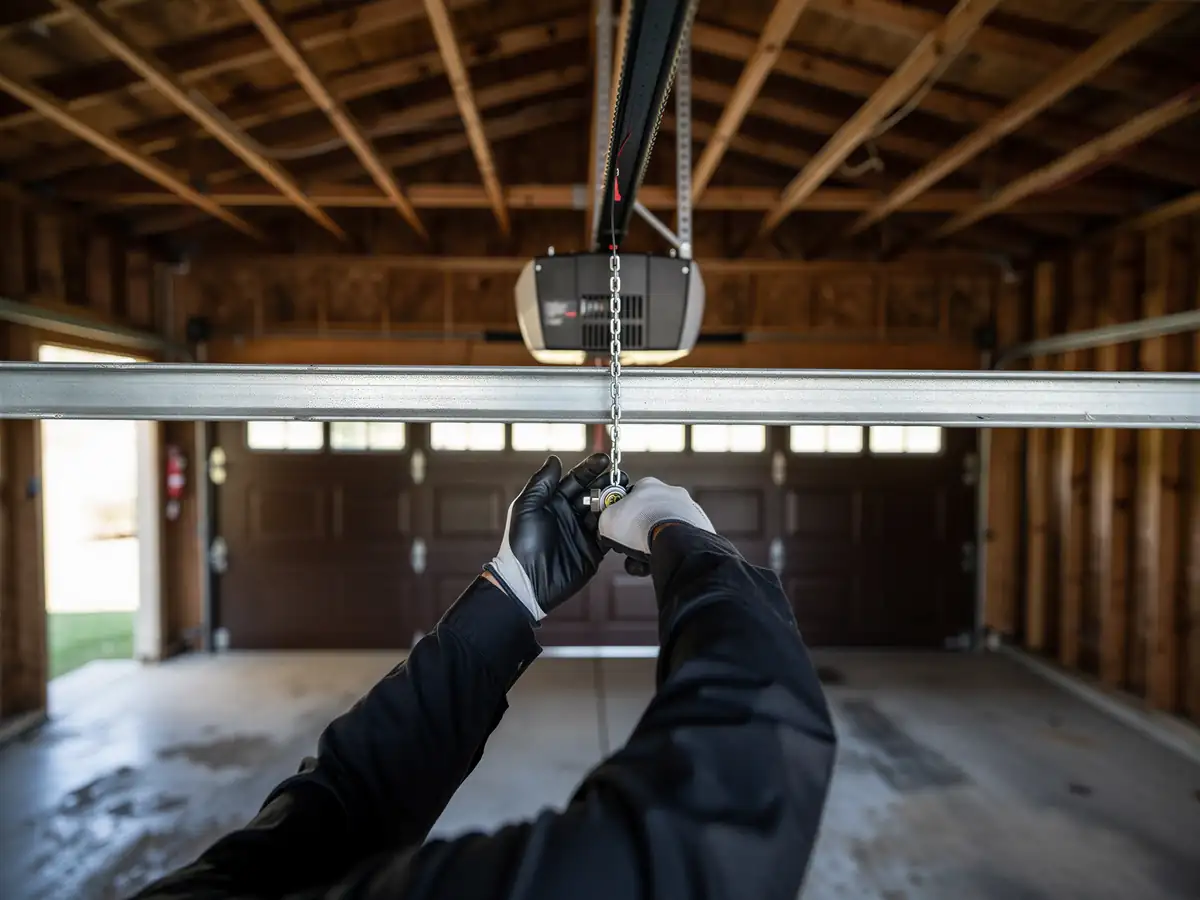
A torsion spring under tension that lets go without warning is the main hazard on an older door, and it's also the most common reason a Golden Valley owner calls us rather than scheduling ahead. A cable that's frayed and finally snaps under load can let a panel drop unevenly, which bends track and can crack a panel on the way down. Opener gear - especially the plastic drive gear on chain-drive units from this era - wears down slowly and then fails all at once, usually with a grinding noise for a week or two first. None of these failures are unique to Golden Valley, but a 1966-era door is statistically more likely to be carrying original or first-replacement hardware that's reaching the end of its service life than a door installed in the last two decades.

What Causes It Around Here

The service area sits in a cold moderate climate band, and that matters most for lubrication and seals - grease that's gone stiff in January doesn't move a roller the way it does in July, and that extra resistance is what finally snaps a spring that was already close to failing. Golden Valley's housing, concentrated around 1966, puts a lot of doors right at the point where original torsion springs - rated for a set number of cycles - have logged decades of winter use without a cycle count anyone tracked. With 9,671 households in Golden Valley, that's a meaningful number of doors built to the same era's hardware standards, which is part of why the symptoms repeat: it's not bad luck, it's the same spring, roller, and seal design aging out across a lot of houses built in the same few years.
How it works

From “it’s stuck” to “it’s fixed”

  1. 1
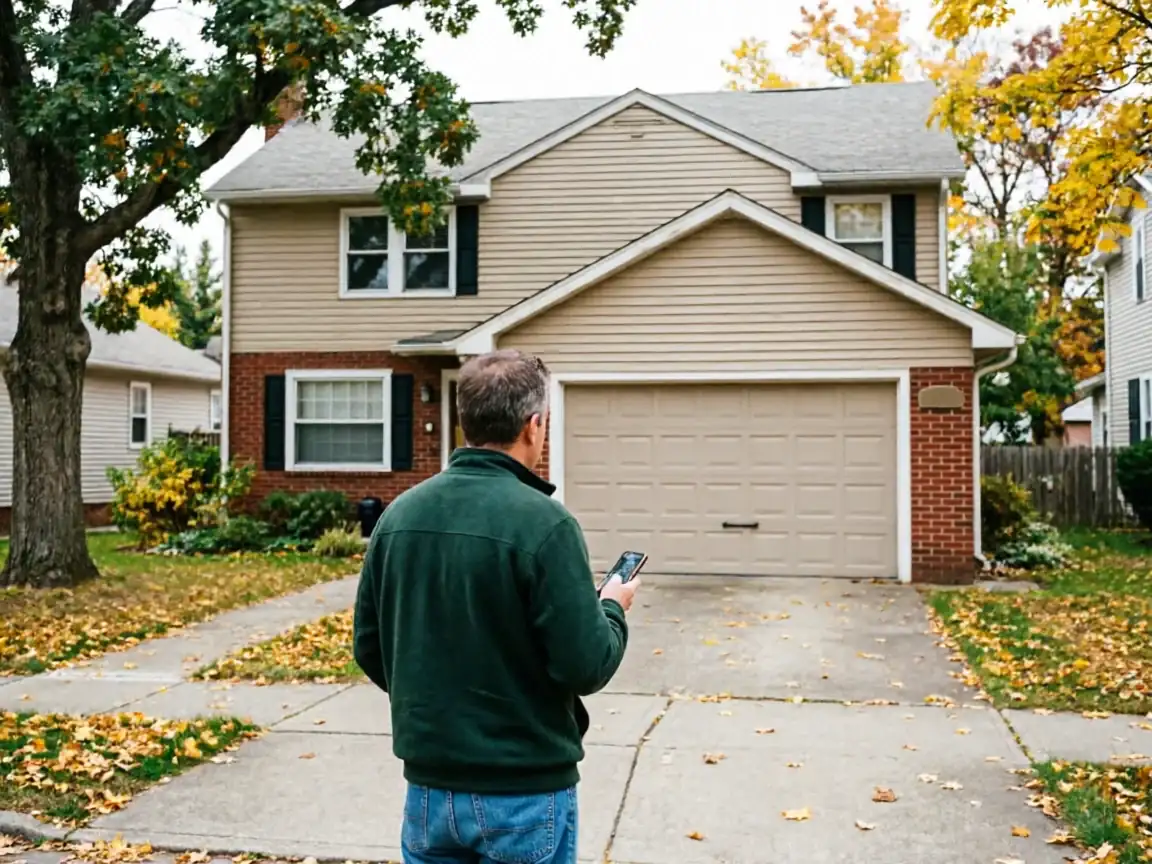
    A man stands in a driveway looking at a phone in front of a house.

    Tell us what’s wrong

    Describe the symptom - won’t open, loud bang, opener runs but the door won’t move.

  2. 2
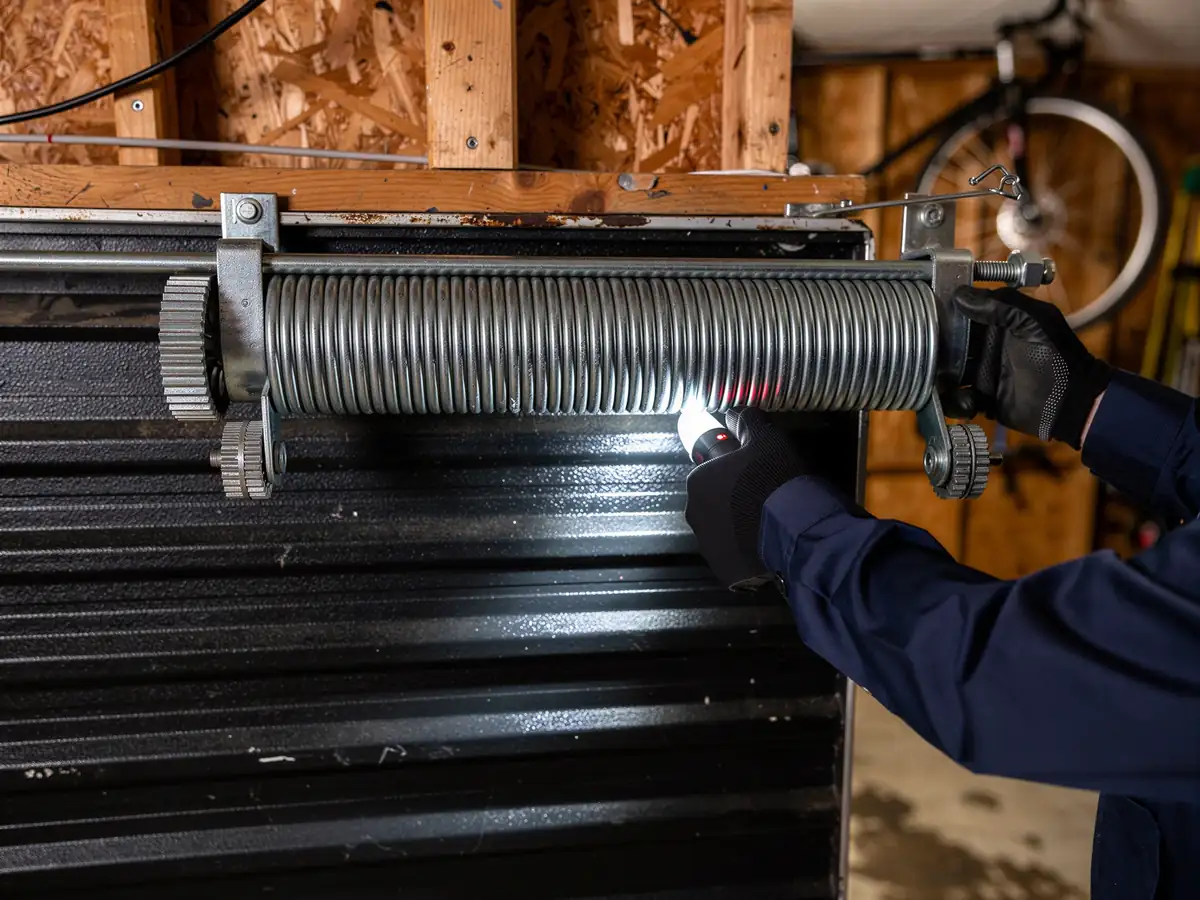
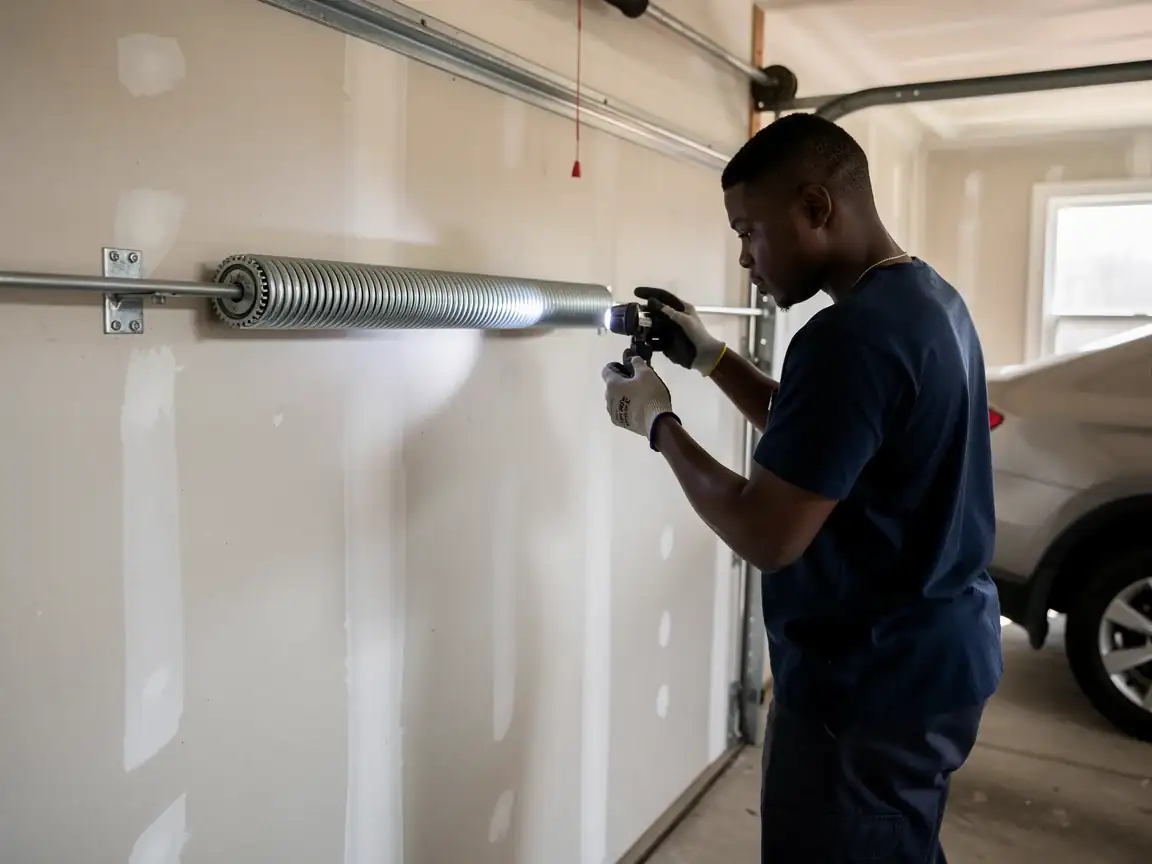
    A technician shines a light on a garage door torsion spring.

    On-site diagnosis

    A technician tests the door under power and by hand and finds what actually failed.

  3. 3
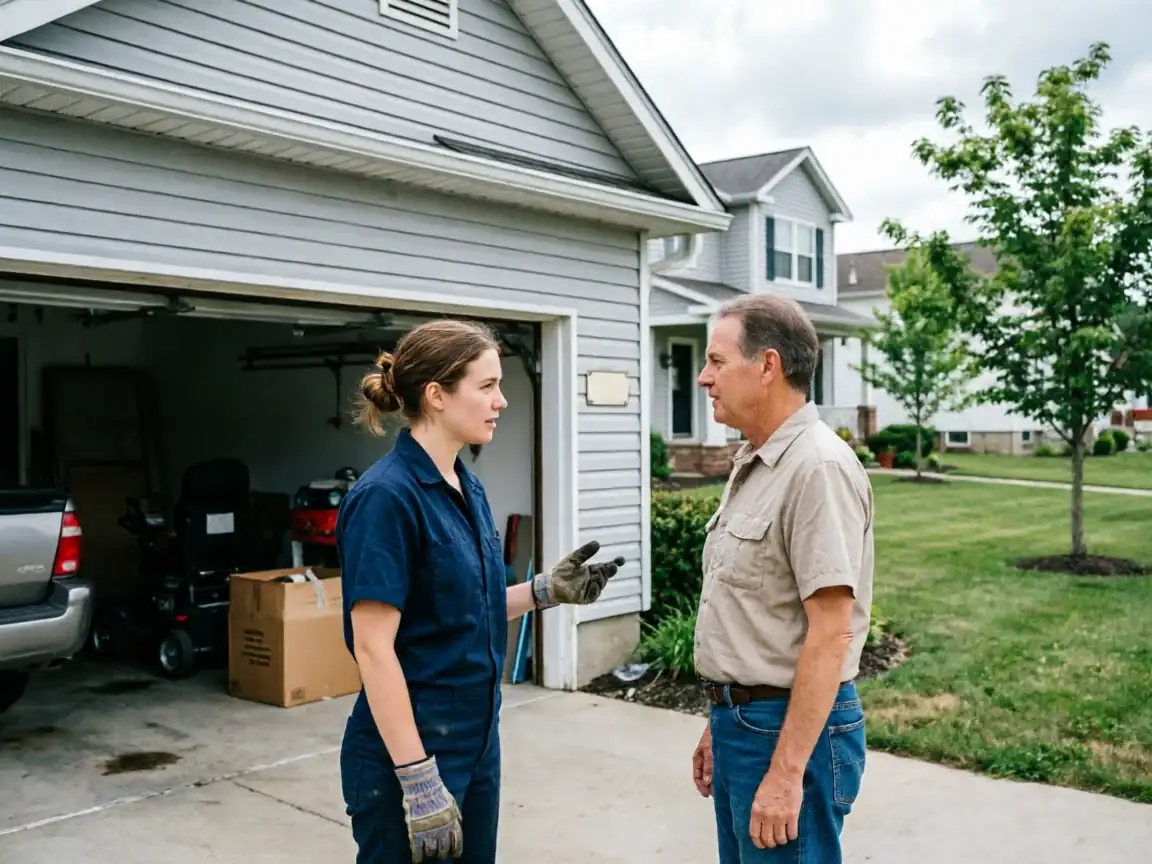
    A technician in a blue uniform talks to a man in front of an open garage.

    Clear, up-front plan

    You get the fix that’s needed and what drives the cost - before any work starts.

  4. 4
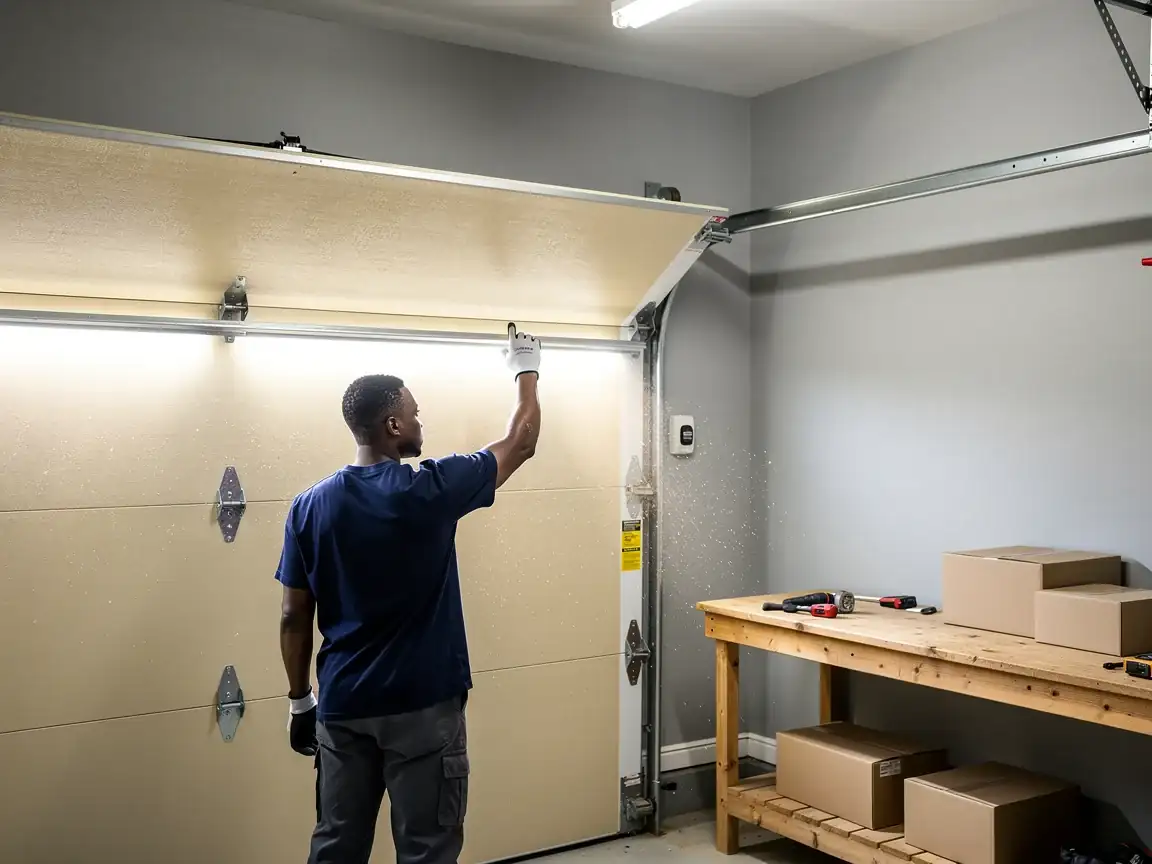
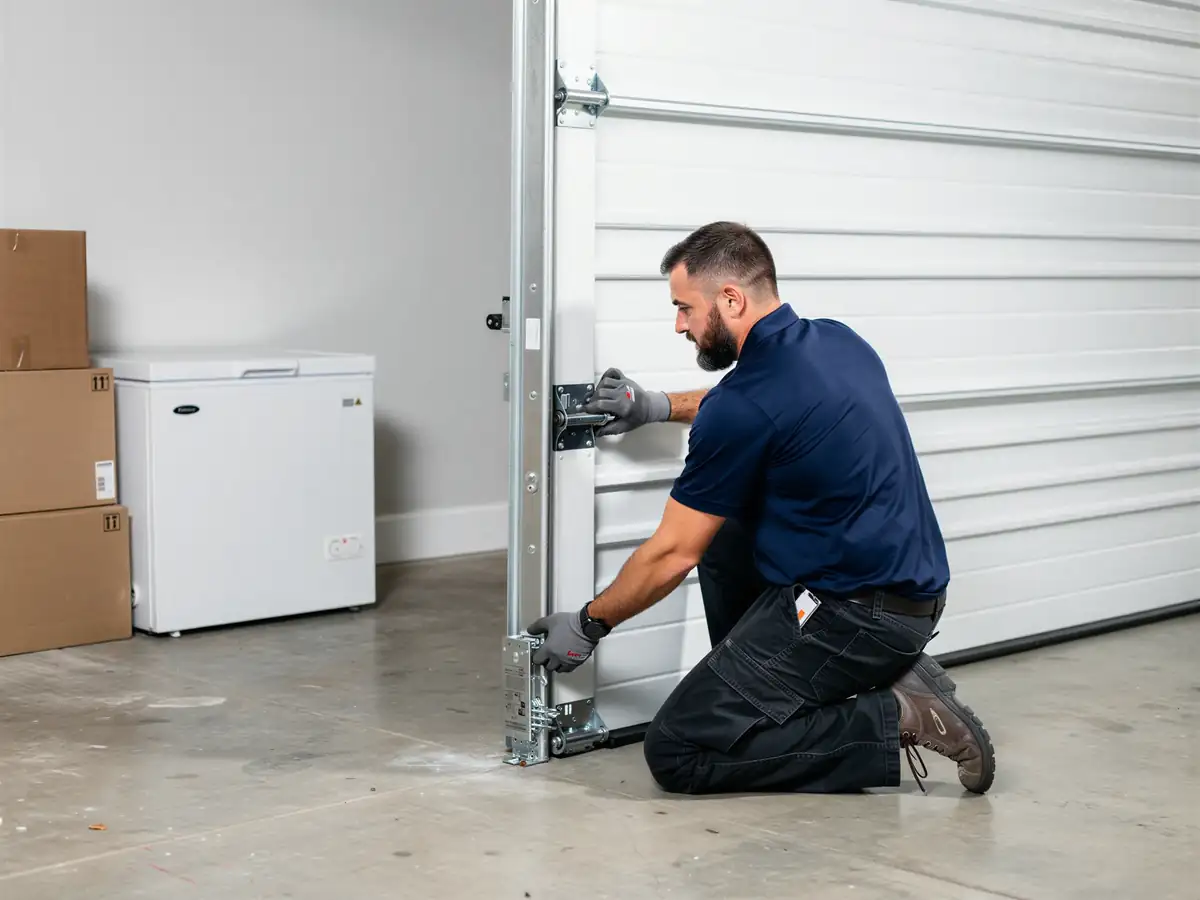
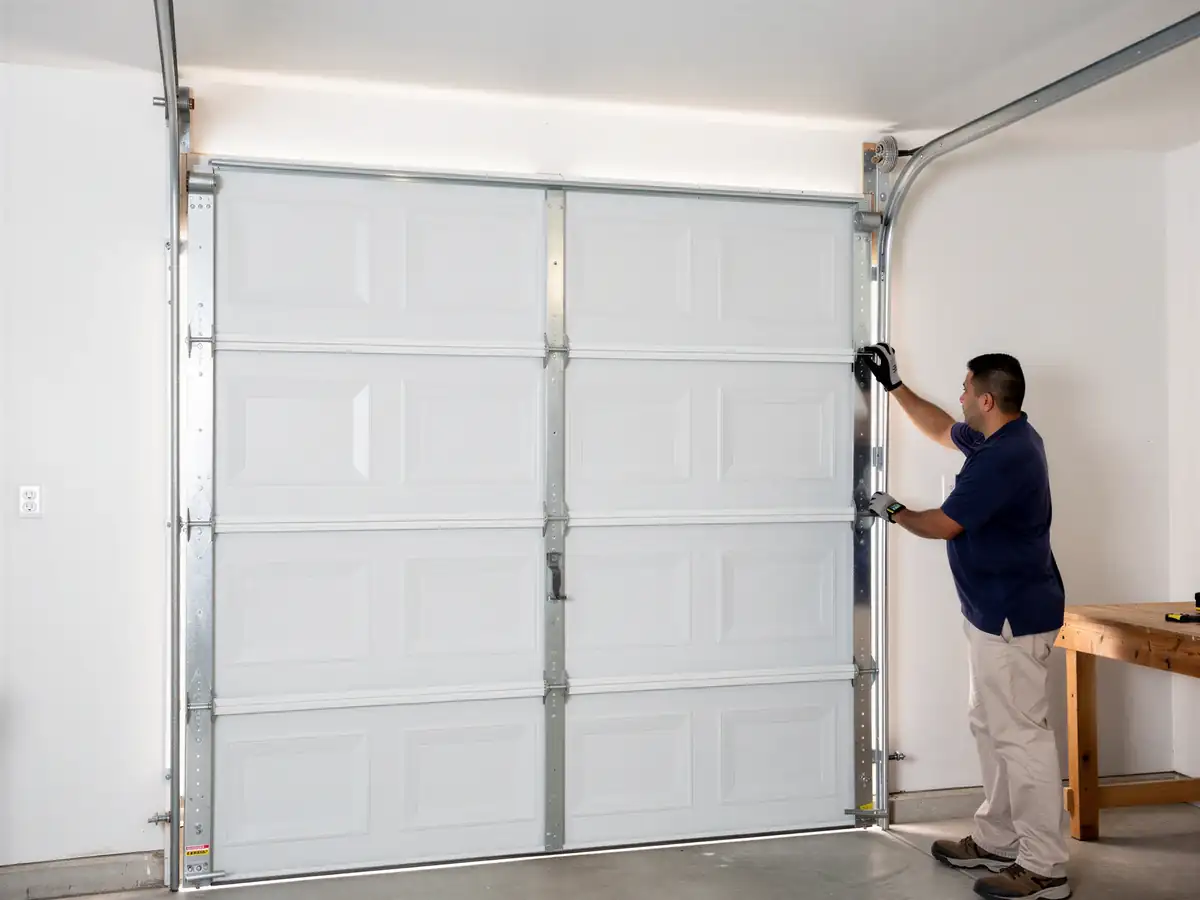
    A technician in gloves adjusts a beige garage door.

    Repaired & tested

    The repair is done, the door is set true and tested, and the work area left clean.

Not sure which repair your door needs in Eagan, MN? Describe what it’s doing - every job starts with a diagnosis.

How we work

What to expect

Diagnosis firstEvery visit starts by finding what actually failed - not a pre-written parts list.
The right part for the doorSprings and openers matched to the door’s weight and age, so the fix holds up.
Straight answersWhen a repair makes more sense than a replacement - or the reverse - you hear it plainly.
Clean, careful workTension released safely, hardware set true, the door tested under power before we leave.
66,286Residents in Eagan
8Garage door services
7Neighborhoods & suburbs
MNServing Eagan, MN
Questions

Frequently asked

Straight answers about garage door repair in Eagan. Still unsure? Ask us directly.

How often should a garage door this old get serviced?

We don't have a fixed interval that fits every door, but on hardware from the 1960s era common in Golden Valley, an annual check of spring tension, roller condition, and cable wear catches most problems before they become a stuck or dropped door. If your opener strains or the door feels heavier than it used to, don't wait for the yearly check.

Do you have a shop in Golden Valley?

No. We're based in Eagan, about 15 miles away, and we drive out for Golden Valley calls. That means we plan each visit to cover diagnosis and the fix in one trip where the part's a common one, and we'll tell you up front if your job needs a part ordered first.

Is it worth maintaining an original 1960s door instead of replacing it?

Often yes, if the panel and track are sound - a spring, roller, and cable service can add years to hardware that's otherwise fine. If the panel's cracked or the track is bent from a past cable failure, replacement usually costs less over time than repeated patch repairs.

Why does my door act up more in winter?

Cold stiffens the grease on rollers and hinges, which adds resistance right as metal contracts and becomes more brittle - a bad combination for a spring that's already near the end of its rated cycles. It's less about one cold snap and more about years of winters on hardware this age.

Ready to get your garage door sorted?

Tell us what it’s doing and where you are in Eagan - we’ll take it from there.

Request a QuoteCall